So - you have a great idea for a story. Even if you haven't outlined it (you don't have to), you probably have a sense of your characters and some of the plot in mind (however sketchy that might be, and that's okay too), but where to begin?
The Mad Hatter tells Alice to begin at the beginning, and when you get to the end, stop. On the surface that's sound advice, but what is the beginning? No person (character) springs to life full grown, but unless the story is about how this person came to be who s/he is, then skip the biography.
Other advice you'll often hear is to start in the middle of action. That also seems sensible, but...
Here's starting in the middle of action:
A woman walks to a door, and as she's getting keys out of her purse, a car comes tearing around a corner and there are gunshots. Okay. Who is she, was she hit, and why did someone shoot at her? That's a hook and a half. It presents mysteries, and the reader has to keep turning pages to find the answers. The problem is - Why should the reader care? It's not as if the character has been developed yet. If you're a really good writer, you can evoke a lot with that scene. You can make it horror, noir, maybe even comedy. Instead of character, you'll be setting the tone and scene up front. But very soon, you're going to have to give the reader a reason to care about the woman, which means interrupting the action and going back to character development. I've seen it done well, but I've also lost interest in books that opened like this and then got bogged down in backstory. So be wary of starting with pure action.
In Gone With The Wind, a great deal of the story is how Scarlet deals with the loss of her expected world and adapts to the new one, comparing her survivor nature with others around her (Melanie and Ashley) who can't/don't adapt. The agent of change in that story is the American Civil War. But the story wisely doesn't begin with the war. It gives the reader a little taste of Scarlet's pre-war environment so that the reader understands where she's coming from. Right away, there are rumors of war, and she angrily dismisses them, but soon it's clear that ignoring it won't make it go away. The real action begins with a rider galloping up to the party and breathlessly announcing that the war has begun.
When you think about it, most stories are about how a character handles upheaval in his/her life. So it's fine to start a little before the action. However, if you're going to have that long of a lead in to the action, you better make it worth the reader's time. Gone With the Wind works because Scarlet is such a compelling character that you're willing to follow her around a bit. And you better foreshadow what's coming.
Please don't foreshadow by saying something along the lines of "Little did Scarlet know that the ball at Ashley's plantation would be the end of life as she knew it." Mitchell skillfully handled it by having Scarlet's suitors bring it up when she expects them to be fawning over her. The reader knows it's going to ruin more than an afternoon of pleasant gossip and that she won't be able to ignore the war by resolving to think about it tomorrow. That little taste is enough at that point. And the way Scarlet reacts to it tells us something important about her character, because that's the way she'll continue to react to the war.
Gone With The Wind begins very close in time to a life-changing event for Scarlet. That's where I'd suggest you open your tale. I'm no Mad Hatter, but I say:
Show a little of the world before the action, a lot of how the conflict affects your main character, and when you get to the part where the conflict is resolved and your character has been changed in some way, stop.
Wednesday, August 19, 2009


Sunday, August 16, 2009
Damn ISP
I can't wait to fire Earthlink as my ISP. I had a long entry ready to go, and as I was posting it, Earthlink crashed - again. Like it always does. Total crap service. The worst part - they know it, and pretend to be surprised every time we call and tell them it's crashed yet again. Worse, they act as if rebooting will fix everything, as if we haven't tried that a bazillion times. Morons.
Anyway, now it's late and I have no energy left to rewrite the post.
Anyway, now it's late and I have no energy left to rewrite the post.
Sunday, August 09, 2009
Back
One of the worst parts about vacation is the work that piles up while you're gone.
One of the best parts is lovely packages awaiting your return. Such as:

My story Words Like Candy Conversation Hearts appears in this anthology. I was flattered to be included, and amazed at the fast turn-around. POD rocks.
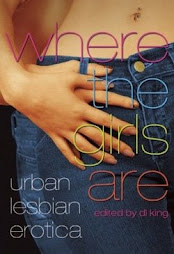
I also saw some great reviews of Where the Girls Are (here, and here), and Broadly Bound.
Wednesday, July 22, 2009
Two Weeks, No Computers
Maybe some computer access, but I think it'll be good for me to step away from the internet for a while. Or I'll go into withdrawals and it'll be ugly. I have my tiny netbook, which has a great keyboard, so at least I can write if the mood strikes.
Sunday, July 19, 2009
Hunting the Elusive Call for Submissions
Most of this info is aimed at the erotica short story market, but I know a few other places to look.
The most comprehensive list of calls for submissions for erotica anthologies (and info on publishers) is on ERWA, the Erotica Readers & Writer's Association website. Without going into the whys - which I don't know and don't care to know, so please don't fill me in if you're hooked into the gossip - the notable exception is that Logical Lust's calls for submission aren't posted on ERWA, so you have to go to their site to find out what Logical Lust is looking for.
Please read books produced by any editor or publisher before you submit to them. Know the difference between literary erotica and romantic erotica. Don't waste your time or an editor's time be submitting the wrong style of story. You may think I say this too much, but I talk to editors, and you wouldn't believe how many writers can't seem to understand this basic idea. Those writers, of course, end up in the rejection pile. Since so many writers seem to suffer terribly over rejection letters, save yourself the emotional pain and only submit your work where it belongs. Really. No one will make an exception for you. This is tough love, but I've lost my patience for neurotic writers and their diva moments.
And speaking of tough love - if you're looking for other markets (other publishers in other genres), get out your Google fingers and search for Duotrope's Digest (play nice and make a contribution to them) or for the Gila Queen's guide to markets. Or just search for calls for submission. Really. If you don't have enough spunk, so to speak, to do a damn Google search, then you don't deserve to be published - ever. M'kay?
Saturday, July 18, 2009
Calls for Submission
I thought I'd continue my hints for new writers series until I leave for vacation. While I've talked about how to behave after you submit, I haven't discussed calls for submissions. As my writing credits under this pen name are in erotica, most of this information will be pitched at erotica writers. However, we all like to stretch out from time to time (thus my other pen names), and all of this is applicable to other markets.
A call for submissions is a public notification that an editor is seeking stories. Normally, these are for anthologies of short stories based around a theme. In the call, an editor who knows what s/he is doing will include vital information such as the type of stories s/he is looking for, length, the pay, rights, publisher, contact information, and guidelines about format and story content. Don't skim any of this. Take it all as gospel. Repeat this mantra: I am not a precious snowflake, and no one will make exceptions for me.
Type of story: paranormal romance, travel erotica about exotic locations, vampire sex, etc. Even though this seems fairly clear, you'd be amazed at what people will submit. If you're not exactly clear what paranormal romance means, politely (always politely) ask. Since you're on at least one writer's list (you are, aren't you?) ask there before you bug the editor. If your story sort of is, sort of isn't, then ask the editor.
Length: always expressed as a word count. Publishers like books to run a certain number of pages, and they have a good idea how many words will fit on those pages. Print anthologies usually run from 18 to 22 stories, and the total word count has to be allocated between them. If your story if running a bit short, but you can't think of anything to add without obviously padding your word count, ask the editor if a bit shorter is okay before you send it. The same holds true if you run long. But please - if the editor says 3,000 to 5,000 words, don't submit your 12,000 word novella. Don't even ask. Find another anthology that wants novellas (such as an epublisher)
Pay: Not negotiable. Yes, it's a pittance. Yes, your editor wishes s/he could pay you more. But it's not in his/her hands, so leave him/her alone. If it isn't enough money, don't submit.
Rights: Never, never, never give anyone all rights forever unless they pay you over $300 for your short story, and even then, think twice. Rights are an entire blog entry unto themselves.
Publisher: Look up the publisher on Predators and Editors. Try to talk to writers who have been published by them before. Just because you recognize a publisher's name doesn't mean you'd want to work with them.
Format: If the editor says "Mail me a hard copy with one inch margins, in Times New Roman 12 font only," you have a choice - do exactly as s/he asks, or don't submit. Don't argue about it. Just don't.
Content: If an editor says "Please do NOT submit a story about a dumpy guy picking up a hottie in a bar, but SURPRISE! she turns out to be his wife," then don't. Even if the editor doesn't say that, don't do it. This isn't in the guidelines, but damn it, if you write a genre, you should read it. (People who write erotica but sniff disdainfully at reading it mystify me. Okay, not mystify. They strike me as stupid.) And if you read your genre, you already recognize hack crap plot #3b when you see it. For the love of all that's hot and sweaty, don't write more of it. But back to the editor - if s/he states that s/he wants to see a twist on the old vampire myths, don't rewrite Dracula or Interview With the Vampire. If s/he asks for noir, find out what noir means. If s/he wants happy endings only *sigh* then don't submit anything too deep or challenging.
I rarely see calls for submission for novels. If you're looking to submit a novel, follow my previous post about finding a publisher. Once you're found that dream publisher, find out if they are currently open for submissions, and if you need an agent. Go to their website (no website? Yikes! In this day and age? Are they going to publish you on stone tablets?) to find that information (if it isn't on their website, you probably need an agent to submit to them). As with anthologies, take every word as gospel.
Next entry - finding calls for submissions.
Wednesday, July 15, 2009
Small Press versus Big Houses
This isn't a subject that I can speak from personal experience, as most of my publishers would be classified as small press, but I've heard plenty from authors published by the big NY publishing houses - usually after the 3rd martini - to at least pass on the gist of the differences.
Small presses tend to be started by people with a passion for books. Once upon a time, all big houses were small houses, but the giant media conglomerates that buy them are a bit like slake moths (read Perdido Street Station to get that reference) that leave them alive, but soul dead.
Small presses are usually run by very small staffs, so the decision makers are accessible.
Because the owners have a passion for books, small presses tend to take risks on books that slipstream (fit more than one genre description, one of them usually being science fiction) or that appeal to a smaller audience. Most GLBT focused publishers fall into this category. Many small presses also take risks on newer writers. Many are willing to publish books that have long tails rather than selling most copies in the first six weeks following release.
Most e-publishers will publish a wide spectrum of lengths from individual short stories to long novels. They will keep your book up for sale for as long as your contract states they have it, so e-published works tend to have an extremely long tail. (One of my short stories was on a best-seller's list for almost two years.)
However, small presses have small budgets. They have difficulty getting their books on bookstore shelves. They tend to have little promotion budget (not that the big houses spend anything on promotion these days) And advances tend to be smaller or non-existent (advances are disappearing from the big houses too). I don't know of any e-publishers that pay advances. (let me know if one does)
You can't submit directly to most big houses. You'll have to get an agent who will submit your work. (That subject is worthy of a post of it's own). Big houses want product. They want a book they can slap on the front table at a mega bookstore that has wide appeal and that will sell well in six weeks. If you write best-seller material, they are definitely your best best as they will pay you the most up front and get the wide distribution necessary to drive sales. They will give you exposure in bookstores and on online booksellers (who wouldn't dare accidentally on purpose disappear your NY published book or delete your bio if it included words like gay or queer). The quality of editing in NY has been slipping - they probably laid off the staff - but it's still some of the best work out there (horrifying thought).
The problem - okay, one of the many problems - with going to a big house is that they want writers who will give them the exact same book, only different, each time. They don't want you to experiment. Once you have your audience, your audience has you. It's possible to break out of a genre rut, but not easy. So if big sales are important to you, and you feel you can keep your work fresh and creative within a narrowly defined niche (it can be done), and your work has wide pop culture appeal, then go for it.
With the current dismal state of the publishing industry, it's hard to know where to go with your book. So let me pass on what I've heard from small press publishers: go ahead and try to find an agent and try to get your book published by a big house. Just make the effort. Ultimately, it might not be for you, but traditional NY publishers still have snob appeal, so while the benefits might be an illusion, it's at least worth a shot at the dream, right? After you've decided that route isn't going to work for you for whatever reason, then try to smaller presses.
My advice is this: Every writer has a different definition of success, and none of them are wrong. Figure out what suits your book and your personality, and take that route. You'll be much happier.
Monday, July 13, 2009
Your Dream Publisher
As promised, let's talk dream publishers.
You may have a dream publisher in mind, but that isn't necessarily your best fit. All publishing houses have a personality. Some dominate a genre, some are known for a type of book within a genre, others are known for treating the writers they publish well - or not. How do you find out? Research.
#1 - Find a house that publishes your genre. As an extreme example, don't submit your puppy training book to a house that only publishes romance novels. Road trip! Go to your local independent bookstore and look for books like yours. What's that? No book is like yours? Yours is unique? Okay, how about this. Picture the perfect reader for your novel. What else are they reading? Who publishes it? Aha! There you go. But wait! There are nine publishers who fit that criteria? Or what if you've decided to go with an e-publisher? Time to follow steps 2 and 3. BTW - self-publishing may be your key to a good publishing experience. Many of these tips also apply.
#2 - Find books even more like yours. If you're writing science fiction horror, find who produces the dark, edgy stuff with a similar feel. At least you'll know that the editor likes it.
#3 - Find books you like the look and feel of. Check the cover art, the quality of the paper, and the binding. This seems a bit extreme, but you're not going to be happy if your book falls apart in a reader's hands. And since you'll have almost no say over the cover art (but you'll get blamed for it), if magna style twinks wit blue hair irk you, stay away from publishers who put out those kinds of covers.
#4 - With your narrowed list now in hand, check Predators and Editors online and get the scoop on the publisher. If you don't understand the issues disgruntled writers have raised, do more research and find out what it means.
#5 - If you're going with an e-publisher, check out their website to see how easy it is to buy one of their books. Does the site look professional? How long ago was it updated? Then go to Fictionwise and see if their books are listed for sale there, because most readers use Fictionwise for their e-shopping. Also check to see if the publisher has a social list where their writers post. Lurk for a while and get a feeling for the general tone. Lots of new writers? That may be a good sign, but check to make sure the writers who were working with them two years ago are still working with them. Writers who are e-published tend to be very accessible online, so don't be afraid to ask them (off-list) for their views on publishers. Many epublishers also do print books now also, but those print editions aren't always available in bookstores.
#6 - If you're going with a traditional print publisher, see how easy it is to find their books where you, and your readers, shop. Small, independent publishers have a harder time getting shelf space in bookstores, but their books are available at online bookstores. To submit to a big NY house, you may have to have an agent. Smaller presses tend to be more approachable and take bigger risks with experimental books. You're going to have to decide which is the best option for you. Unfortunately, there are so many factors involved that I can't cover it all in this post.
#7 - Join. Join writer's groups online, join writer's chats. Get out there and connect with people. The internet has been a huge boon to writers not just for the research aspects, but for the way it allows us to connect. Writing is a solitary pursuit, but it doesn't have to be isolating.
It took months to write your novel. Be patient and be be willing to invest a bit more time to make sure your book is submitted to your best fit publisher. Your ultimate goal is to be happily published - satisfied with the experience, content with the product, ready to do business with the same house.
Sunday, July 12, 2009
Simultaneous Submissions
This subject has come up a lot recently with several of my publishers, so I thought I'd give new writers a heads up.
Simultaneous submissions means that you submit (send) your story to more than one publisher at the same time.
Publishers hate this. If they invest the time to read your story and prepare to put it into their publication schedule or anthology, they don't like to find out later that you sold it somewhere else. they get grumpy about it, and probably won't bother to read anything else you submit to them. Ever.
Writers feel that they increase their chances of selling a piece, and selling it faster, if they submit to all potential markets at the same time. Some publishers are notoriously slow about responding, and some don't bother responding at all if they're not interested, which leaves the writer wondering for months on end if it's safe to send the story out to someone else. That's pure rudeness on the publisher's part, and the industry is rife with it.
So what is a writer to do?
You might be chomping at the bit to get your story published, but unless you write highly topical books, your words aren't going to go stale. So have some patience, and some class. Unless a call for submissions specifically states that simultaneous submissions are okay, assume they aren't. Send your story to your dream publisher* first. If they say they'll be back to you in four weeks, and it's been five, send a very respectful letter** asking if they received your submission and when you can expect to hear back from them. They will probably admit that they passed. At that point, send it to your second choice. If they don't respond to the polite note, assume rejection and move on. If they do suddenly say yes later, you covered your ass with the note and they don't have the right to get huffy about you sending out to a different publisher. I'd caution you against working with anyone who shows such poor communication skills though - especially someone in the media business.
So to recap - submit to only one publisher at a time, no matter how tempting it is to send to more than one. Simultaneous submissions = bad reputation.
* I'll talk about dream publishers in my next blog.
** respectful letters do not include demands, threats, diva attitude, or anything else that will warn a publisher that you're a nitwit who will be a pain in the ass to work with. Strangely enough, in most cases, diva attitude is in inverse relationship to talent.
Wednesday, July 08, 2009
More Thoughts On Black Lace
So - the print erotica market has been abandoned by the last major publisher. On one hand, I'd like to believe that no publisher would be stupid enough to kill a profitable line, but on the other hand, we're talking about NY publishing houses. Look how quickly the Neon line imploded.
Where does an author of erotic literature submit hir/her/hir work now?
Most ebook publishers publish more erotic romance than literary erotica, so it seems as if that avenue isn't the best fit for the literary writer.
The only print erotica coming out now seems to be anthologies.
But...
I just finished reading Gordon Dahlquist's The Glass Books of the Dream Eaters and The Dark Volume. Those books are saturated with sensuality I haven't seen in ages, probably since Interview With the Vampire. (Don't go off on an anti-Anne Rice rant. For a book that had no sex scenes in it, it still had you reading with wiggling fingers clamped between your moist thighs. Just admit it and move on.) Could it be that we're the ones who missed something? From Killing Johnny Fry:A Sexistential Novel (Walter Mosley) to SoMa (Kemble Scott) contemporary literature is infused with erotic content (some good and some oh so very bad). Even pop culture books are dabbling. True Blood, the Anita Blake series, several writers for Bantam's paranormal lines... to some degree, they're all sexing it up.
For all those writers from Black Lace who don't want to write romantic erotica or who aren't interested in e-publishing, let me toss out this idea. Try writing a literary or contemporary pop culture novel. Use your honed erotica skills to bring good sex writing to the reading public. Submit your work to publishers outside the erotica genre and see who bites. After all, they've invaded our playground. The least we can do is show them how the naughty kids do it.
Sunday, July 05, 2009
Black Lace Books
Current scuttlebutt in the erotica community is that Black Lace Books has stopped acquiring titles. As per the usual published MO, this announcement blindsided authors who have titles pending release. For companies that exist with spread communications, publishers truly suck at it. Or maybe they just lack common decency. Or perhaps they hold writers in more contempt than the rest of the world does.
If you aren't familiar with Black Lace, its premise the past 15 years has been erotica written by women for women. I never submitted anything to them, but I suppose they have some sort of panty check to make sure no icky boys slipped them otherwise perfectly acceptable books their readers might have enjoyed.
15 years ago, most erotica novels were what most people would call porn (while slightly wrinkling their nose) and were written for a male audience. (Women were welcome to write those). The Black Lace came along and supposedly changed all that. The covers were less obvious. They cleaned up the language. They changed to POV to a female character and added touches that weren't exactly the stuff of romance novels, but featured similarities.
Therein lies Black Lace's problem. 15 years ago, no one published stuff like that. Now, many e-publishers do. Even Harlequin has a line of racy novels. The competition is rough. Combine that with the notorious terms of their contracts (the major reason why I never bothered to submit anything to them), writers could find a better deal elsewhere.
While I feel for the writers who have no idea what this announcement means to them, I'm sure that they can find new publishers. It's not as if the entire genre suddenly disappeared. But as for Black Lace, I feel about them the same way I feel about most traditional publishing houses. That is - With willful blindness, they chose to become obsolete, and they've achieved that goal. Congratulations, I guess.
Monday, June 29, 2009
Where The Girls Are

I received my contributor's copies of Where The Girls Are: Urban Lesbian Erotica in the mail. The reading tour starts in August. I'll keep you posted you dates and places.
Sunday, June 28, 2009
Mystery Solved
The UPS dude brought a package on Wednesday - 5 contributor's copies of Zane's Caramel Flava II, and a check. So I guess I am in it. (Unenthusiastic whoo hoo)

Exciting news - Coming Together Against the Odds is being released in print.

And Broadly Bound will be out soon. (I don't have a buy link yet)

Plus - I'll be on the road for a reading for Where The Girls Are in August. Info posted as soon as I have it.

Exciting news - Coming Together Against the Odds is being released in print.

And Broadly Bound will be out soon. (I don't have a buy link yet)

Plus - I'll be on the road for a reading for Where The Girls Are in August. Info posted as soon as I have it.
Sunday, June 14, 2009
A Big Win!
I just got an acceptance letter from Maxim Jakubowski for Mammoth Book of Best New Erotica 9! This is always an honor. Remittance Girl and Thomas Roche also announced that their stories will be included. Tough competition. Maxim said he received over 450 submissions. The last time I made it in was 6, so I'm very happy.
Saturday, June 13, 2009
Huh. What do you know.
Well. Three years and zero answered emails later, Caramel Flava II is finally out. I have no idea if my story is in the final edition as the table of contents isn't available, and the publisher's site says nothing about contributors. No check. No contributor's copies in the mail. No communication. Oh, I have a signed contract, but pffft. I guess I'll have to traipse down to a bookstore and look through it to find out. As you can imagine, that's not high on my priority list.
Saturday, June 06, 2009
Oh Get A Grip
I'm a guest blogger over at Oh Get A Grip. This week's topic - writing characters outside your gender and sexuality.
Wednesday, June 03, 2009
Broadly Bound's First Review
Jean Roberta from Erotica Revealed reviews Broadly Bound.
Jean says:
Kathleen Bradean’s “Opening Night” focuses on a pair of performance artists, the submissive femme Carrie, who tells the story, and the androgynous Zell, who demonstrates shibari (Japanese rope bondage) on Carrie, the model, for the crowd at Broad Horizons. ... Here the author explores the complex relationship between life and art, or reality and fantasy, as well as the social ambiguity of a relationship between a “lesbian” and a person who is not female-identified.
Beth Wylde, D.L. King, Syd McGinley, and Cassandra Gold have stories in this anthology as well. I understand Beth is working on the next Broadly Bound edition.
Broadly Bound will be available through Phaze next month. I'll post a link when it's released.
Tuesday, June 02, 2009
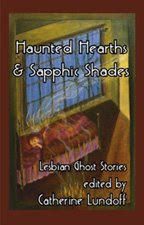
Haunted Hearths!

Haunted Hearths and Sapphic Shades (Lethe Press, ed. Catherine Lundoff) is nominated in the Best Speculative Fiction category for the Golden Crown Literary Awards!
Plus, my story, Words Like Candy Conversation Hearts was selected (along with the marvelous M. Christian and Melissa Scott) for the first annual Best Lesbian Fiction anthology from Bedazzled Ink. I know Catherine Lundoff submitted my story, so a big thank you to her.
Thursday, May 28, 2009
I've Been Falling Behind
It always takes me a while to recover from Saints and Sinners. This year was a huge networking year for me, so I've been chatting away with new and old friends. And I jumped right into a novel as soon as I got home. So I'm a bit behind, but here's the good news:
Coming Together Against The Odds is out! If you don't know about Alyssa Brio's Coming Together anthologies, they raise money for charities. Most of the proceeds from Coming Together Against The Odds will be donated to autism research. All writers and the editor donated their work to this worthy fundraiser. The EPPIE nominated Coming Together anthologies raise money for different charities, so check out the entire line.

Coming Together Against the Odds features erotic mysteries. My story is The Booty Call Caper, a wicked homage to my favorite 1940s madcap movies - The Thin Man series. Georgie and Jack are friends with benefits, only their benefits seem to always get interrupted by a mystery. Jack wants to investigate the scene of a possible crime; Georgie wants her booty call. The pair manages to satisfy both desires while on stakeout. Nick and Nora Charles were never this naughty.
Tuesday, May 19, 2009
Back From Saints and Sinners
I had an amazing time, as usual, but always a different amazing time. D.L. King was a blast as a roommate. I loved seeing everyone. Met some new people I liked a lot. Schmoozed like crazy.
But
There's always a but, and this year it's a big one. I haven't been to the erotica panel in a couple years since it's always the same three people. But this year I figured what the hell then left thinking What The Hell?????
Did every person on that panel actually admit that they don't read erotica? Did one person go on to say they preferred to read "good writing" when they have time to read? Great. Erotica writers calling erotica worthless crap. I-- Fuck it. Never again.
This AM: I can't let this go.
In another panel, one of the "name" people at the conference was talking about his short story collection and how he wanted people to feel it was erotic, but not erotica, because he wanted it to be considered literature. He also left out his science fiction short stories for the same reason. I am so sick of this snobbery.
Thank god for Peter Dube' on the literature versus genre fiction panel. He was the one person who said genre and literary are arbitrary divisions that have no value. Good writing is good writing.
Tuesday, May 12, 2009
Off to Saints and Sinners
I'm not leaving until Thursday morning, but I doubt I'll have time to make another entry before then.
I blog about Saints and Sinners, the GLBT literary festival held in New Orleans, all the time, so you're probably already aware of it. Still, if you're waffling about going, let me praise it once again.
There's something indescribable about being in a room full of other queer writers. It's comfortable, it's familiar, it's home. Through the years, I've made many friends there, so a lot of the fun is socializing with people I normally only get to talk to via email, facebook, and writer's lists. Plus I get to be fan girl.
The feature that sets Saints and Sinners apart from most writer's conferences is the focus. The first day of master classes is all about improving your craft. Other writer's conferences I've been to have given a nod to craft, but the real focus is usually selling novels. That's important, and every writer who wants to sell stories needs to hear the basics about how to go about being a professional writer. By their nature, those types of conferences are suited for beginning writers. It's the same basic information over and over. Once you've been, there's no reason to go back. On the other hand, Saints and Sinners offers different classes every year, and I take away something new each time.
This year, I have a wonderful roommate who hasn't been to S&S, so I get to introduce her to everyone and hang out with her in the evenings. I'm looking forward to that. Many writers from my publisher will be there, so we're going to have a meet and greet. Unfortunately, the publishers couldn't make it this year. And this year, I hope to finally go on an official tour of New Orleans.
When I get back, I'll try to share the highlights. I'm usually so overwhelmed that I can't, but I'll try. Or better yet, come yourself.
Saturday, May 09, 2009
Do-Over
I was about 8,000 words into a novel when I decided to scrap it and start over. I'd written about 5,000 words of it several months ago, set it aside, and jumped into it again recently, adding the last 3,000 words.
I know there are writers who can crank that word count out in days, but I'm not one of them. So when I decide to walk away after committing that much effort, it's because I know I can't make it work. I lost faith in the story and didn't find it terribly interesting. The funny thing is that I mentioned this to someone in a forum when he asked how my writing is going, and the resident loon jumped into the conversation and called me a shitty writer for scraping it.
This is how I can tell writers from non-writers. I'll bet most writers have written the first chapter or so of many novels they've never completed. Being able to tell if a story will work or not is a sign of experience. Wasting time and sanity trying to make something work is pointless. Only someone who has never written a novel would believe that you sit down, craft the first sentence, follow that up with the exact right sentence, and move on in that manner until the last word. It just doesn't work that way. Paragraphs get moved. Whole sections get deleted. Characters get cut. Dialog gets trimmed. Sometimes, the whole damn thing gets thrown out.
Is that bad writing? Rhetorical question. Of course it isn't.
I'd been discussing a co-authored project with Helen E.H. Madden for some time. While we'd both love to do it, we simply can't. I'd envisioned this great opening scene for our project. Now that it's been shelved, and my novel has been shelved, I still have this strong opening in my head that I hate to waste. So I'm going to take that first scene and run with it. We'll see how I feel at the 8,000 word mark. Hopefully, I'll be just as enthusiastic about it.
Sunday, May 03, 2009
Temptation
In publishing, it's who you know that matters.
I hear this sentiment a lot, usually from people who haven't been published. It isn't entirely true. Trust me, there's no great conspiracy to keep great writers off the market. The publishing industry desperately needs breakout hits. Then they need other writers to create derivative works to cash in on the popularity. No one in the publishing industry makes a killing at it. Most scrape by. They're in the business for the love of it. If they read something that knocks their socks off, they're going to champion it in a big way.
But notice that I said "entirely true." It helps to know people. And by help, I mean that you get a better picture of how the publishing industry works by talking to many published writers. You hear about trends in publishing as they're happening. You get to learn from someone's bad experience, saving you the trouble of a do-it-yourself disaster. Then there are the opportunities that drop into your lap because you know someone.
In the past few months, I've been offered some wonderful opportunities. The temptation to get involved is strong. The potential benefits are almost worth it. And I always regret opting out when I see the project moving forward. But here's the thing - I only have so much time in my life. I do not churn out stories. I am fascinated and astounded by people who can. I'm just not one of them. So I have to pass on anything that isn't a pet project. That kills me, because through years of networking with writers and editors, I finally know people. And it doesn't do me any good.
Wednesday, April 29, 2009
Updates
Finally! I've started to write again. What a relief.
I'm getting a bit worried that I have too much story for the novel I'm working on (a constant problem for me) but at least I'm working on it! I can scale back later. Right now, the only thing that matters is getting it down.
I knew I'd get back to writing. I've been through enough of these down cycles that I don't get too worried about them anymore, but they are frustrating. It's not that I completely stop working on writing, it's just that I stop putting down words. During these breaks, I think a lot about the characters.
People talk about character driven fiction, and I believe in it, but not the way most people think about it. Yes, everything a character does has to seem natural and right for that character. Most events in the story have to be a result of their actions or their reactions to other characters. But, back up a bit. If the writer wants certain things to happen in the story, the writer first has to create a character who would believably be in that situation and act in such a way as to naturally bring about the events the writer desires. So even though I start of with characters in mind and start writing about them, I need the time when I'm not putting words down to step back and figure out if I have the right characters. If not, they have to change. So yes, I write character driven plots, but I definitely tinker with the make-up of the people doing the driving to make sure they're headed where I want them to go. Forcing characters to follow a plot that doesn't suit them is just bad writing.
The great thing about time away from putting down words is that I can get comfortable with the idea that these are the right characters. Once they're ready to go, so am I. I don't think I could get back to writing without going through that, but it sure is nice to have it flow so easily now that I am putting words down again.
Sunday, April 26, 2009
LA Times Festival of Books
The LA Times Festival of books is a huge 2-day event held on the campus of UCLA. You'd think I'd go every year, but I've only been once before. The good news is that it was still packed at 3PM on Sunday. Several areas were jammed with people.
But...
Few people had anything in their hands. The few people who had bags with books in them were kids, but before you praise the heavens for a new generation of readers, most of those books had a toy packaged with them, and the biggest tent by far in the kids area was Target. Yes, Target. Not a tradtional book store. The longest line I saw was to get autographs from Pixar animators. And the biggest crowd was at the stage where authors of cookbooks were speaking.
I have nothing against cookbooks or their authors. Far from it. I have at least 70 cookbooks. I bought a new one two weeks ago. But flipping through them for dinner ideas isn't the same as reading The Unbearable Lightness of Being.
I have nothing against Target selling books, or Wal-Mart. But they heavily censor the types of books they sell and probably pick those books for cover appeal, not content, which is like serving 2,000 calorie hamburgers at a fast food joint.
I have nothing against a kid getting a toy. But that's not showing them that a book can be enjoyable itself. Chances are the book never gets read and the toy gets recalled as a choking hazard. The only way to turn kids into readers is to read to them, cuddle while you're reading, and read them a story that makes their eyes light up with anticipation.
Call me a glass half-empty kind of girl, but I wasn't heartened by what I saw today. I prefer to think of myself as seeing the glass half-full - of reality.
Thursday, April 23, 2009
It's Coming
(warning - very artsy-fartys entry)
After a four month drought in my writing, I can feel it coming back. It's hovering just beyond. Patience, and will come. It has the heavy feel of monsoon clouds.
While I wait, I'm exploring other erotic visions. Right now, unless they grip me in unexpected ways, I don't want to deal with words, so I'm looking at photography. I'm enjoying John Santerineross' Dream: The Exploration of the photographic image as a manifestation of dream inconography and Jeffrey Scott's Visions from Within the Mechanism.
Interesting to me, and probably only me, is that it's the black and white photography that grips me. I have almost no interest in color. Santerineross' and Scott's images are not easy to look at. Yet they are compelling. Unfortunately, I lack the vocabulary to discuss what I'm seeing. But I have that feeling that what I'm seeing in those photogrpahs isn't what's there. I have that same feeling in Catholic Churches and voodun shrines. I mean, when I visit an altar, I see a candle. But to someone who understands the faith, that candle isn't a candle. It's something else, something more. Or maybe it isn't. I don't know how much of what I see is fate or personal touch, and how much is symbolism. If there's an orange feather on an altar, is it there because orange means something, or is it there because the feather store was out of every color except orange, or maybe the offering was made by someone who just liked the color. And see - I'll never know. I'm not even sure how much of trying to understand is pointless. Which all comes around to this - art isn't always meant to be understood, deciphered, and read. Sometimes, it's just meant to be experienced on your own terms.
That's the frame of mind I want to be in when the words come back.
Sunday, April 19, 2009
Ugh. I've Been Forgetful
I realized today that I haven't been updating my submissions file as I should. I could only think of three submissions I've done lately. On one hand, I hope I remembered everything. On the other hand, how sad is that? Three.
One has already been placed.
The second, well, he never likes my stuff, except the one time he did, so I try every other year in the hopes that I'll strike gold again. Chances? Not likely. But at least I'll have tried.
The third one, I have no idea. I love the publisher and what she's doing. But just because I like reading what she publishes doesn't mean I can write it. So we'll call that one a 40-60%chance of being accepted.
And oh yeah, I have one out at a contest. I guess I should add that to my submissions file too even if it's not strictly a submission. ADDED: Amazingly, last night I found out that I took first place at the Seattle Erotic Arts Festival short story competition under my Jay Lygon pen name.
I need to submit more stories. I should go through the calls for submissions to see if any spark interest. I haven't done that in a while either. I keep forgetting.
Tuesday, April 14, 2009
Saints and Sinners is only a month away!
Saints and Sinners Literary Festival will be held May 14-17th in New Orleans. If you write, want to write, this is the best writer's conference I've ever been to. It's not to late to sign up!
I talked D.L. King (editor of Where the Girls Are: urban lesbian erotica pub. Cleis Press) into coming this year, and I know Vincent Diamond is coming, so you know I'm going to have a good time. Cheesy Ghost Tours! I can't wait!
I talked D.L. King (editor of Where the Girls Are: urban lesbian erotica pub. Cleis Press) into coming this year, and I know Vincent Diamond is coming, so you know I'm going to have a good time. Cheesy Ghost Tours! I can't wait!
Sunday, April 12, 2009
Amazon Fail
Amazon is pulling the sales rankings on many GLBT books, including those without erotic content, and books listed as erotica. What does that mean? It means that books are quickly becoming almost impossible to find on Amazon, even though they still sell them.
The growing list of censored books
Amazon Fail the definition
Add your voice to the protest
Added: The LA Times comments on the growing Amazon protest
The growing list of censored books
Amazon Fail the definition
Add your voice to the protest
Added: The LA Times comments on the growing Amazon protest
Saturday, April 11, 2009
This is an interactive post
I'm not going to make you sing campfire songs or scream Aloha (I can't hear you!) or any of those other group torture things that only masochists enjoy. But I do have some questions, and I'd really appreciate your opinion. Your insights will help me with a project I'm working on. Code name: 5150.
When you read erotica, is the story more important to you, or the sex?
Do you expect to get turned on by reading erotica?
Have you ever skimmed the graphic sex to get back to the story?
If you write erotica, do you feel you have to add explicit sex so that it will sell?
Where do you find literary short stories (of any genre)? Or are you having a hard time finding them?
Thanks!
Thursday, April 09, 2009
Feminism and Sex
I toyed with calling this Feminism and Porn, or Feminism and Erotica, but since it all comes down to sex, that title won.
Last night at In The Flesh LA was great fun. I love hearing new writers read their work. Reading for an audience is never easy, so I'm in awe of new writers who are willing to do it. Also ran into long-time friend Kate Dominic who disappeared for a while. She says she's writing again! Whoo-hoo!
Stan Kent, the wonderful host of In The Flesh (along with Jolene Hui, who was sick last night) announced a terrific line-up for next month featuring seven (Seven!) readers who will discuss feminism and erotica. So you know where I got the idea for this post.
I grew up in the age of feminism. People forget how important that movement was. They seem to dwell on the negative side. There's lingering distaste for the term feminism, and many young women flatly reject it. They have no clue that their ability to choose education and a profession is the direct result of the feminist movement.
But there has been a downside, and that's the vilification of porn. Some fringe feminists, and religious fundamentalists, share the view that porn is evil. The funny thing is that the world of erotica is dominated by female writers and editors. Women are stepping into the adult movie business. The idea seems to be that those of us who dare to produce sexual content are traitors to our gender. Come on. Was the aim of feminism repression of women's sexuality, or liberation? And if it's liberation, why is it bad to take control and say, "Yes, I like sex."
We're adults, damn it. We should have dominion over our own bodies, and our sexuality. We should be able to express healthy interest in sex and not be shamed into silence by anyone. Don't tell me you know what's best for me. Don't protect me me from images and ideas you've decided are dangerous. I can bloody well make my own decision, thank you. Wasn't that the goal of the feminist movement?
Monday, April 06, 2009
In The Flesh LA
I'll be at In The Flesh LA this Wednesday. It looks like a great line-up. Eden Bradly is smart and gorgeous, and her books have a large following. I have a feeling I'll run into a friend I haven't seen in a couple years. And I believe Jeremy Edwards is the phone sex reader this month. I've been seeing a lot of Jeremy's work lately, and it's good. I'll be talking about Erotica Revealed's reviews this month, and then engaging the audience in a conversation about one of the books. This is a fun venue, and the hosts are marvelous, so come out and talk sex with us!
Saturday, April 04, 2009
First review of Personal Demons
My thanks to Jean Roberta for this wonderful review on the Erotica Readers and Writers Association website. She covers the whole trilogy, not just Personal Demons. Yay!
Sunday, March 29, 2009
That Delicate Balance
Not all writers want to be published. Everyone is entitled to their path, so I support anyone who decides to keep their work private. Others desperately want to be published. I can understand that too. All writers are driven by an inner need to create though, and therein lies a delicate balance.
While being published doesn't make a writer's work good or better, it provides feedback that can help a writer hone his/her craft. Handing out stories to friends is usually good for ego strokes but little else. Friends either don't have the ability to do a useful critique, or they don't want to. Who can blame them? Too many of us on writer's lists have been burned by a diva reaction, so we sympathize with those who don't want to open themselves up to it. And man, do we ever regret those hours we spent pouring over the work of someone who demanded honest critique and then went apeshit when they got it. At least we don't have to see the diva every day after the tantrum. Real life friends aren't so lucky.
Online friends met in writer's groups are different. You can live in a tiny town, but the internet allows you to meet people from everywhere who share your writing interests. I live in LA, a metro area of at least 10 million souls, and even I have a hard time finding other writers. Online, I've met several hundred. In a writer's group, you can find people who are able to give good critiques (and bad). Even better, they're willing to. Workshopping stories through a writer's group is a great way to get feedback needed to hone your craft. But even that has limits.
Which brings us to publishing. Most publishers have a passion for books, but it is a business. So they have an obligation to find quality work that people want to read. They aren't completely objective, but when the product is art, who can be? But they are the most objective judges of writing out there. So submitting to them is a test of your craft.
I believe that there are many writers who want to be published because it fulfills a dream, but part of that dream is recognition that the writer has honed his/her craft. It's a milestone, and the best measure of a writer's skill.
All of that rambling leads me to this point. For writers who use publication as a test of their craft, there's an uneasy balance between writing with an eye to publication and the desire to follow a creative path. I used to only write stories when I felt the artistic urge. Quirky and experimental, those stories were truly works of creative inspiration. Now I find myself writing more often to calls for submissions. The calls are the starting point for, yes, creative work, but the impetus is outside of me. These stories written for calls, for the most part, get published, and I celebrate every acceptance, but that doesn't change their origins. I miss the time when all my stories came from ideas that sprang to mind of their own accord.
I still occasionally get a mad idea and run with it. Those are the stories I love most. But they hardly ever fit anywhere, unless I take broadly interpret a call for submissions almost to the point of willfully misunderstanding it. Sometimes the risk pays off, sometimes it doesn't. Those stories can sit unpublished for years. I take them out and tinker with them when I get a chance. As time passes, my craft improves, and I like to keep those stories as polished as I can just in case the elusive perfect fit call for submissions is posted. It has happened. A story I've been working on for at least three years went out today. It was time to let that one go. But what if I never found a fit? Does it make that story less worthy because it's never been published? And are the stories that I write to specific calls lesser works because they were crafted solely with intent to publish? I don't think so, but it is a delicate balance between the creative and commercial goals I've set for myself.
Sunday, March 22, 2009
Alone Again
Everyone who possibly would have been a roommate at Saints and Sinners Literary Festival has had to back out this year, so it looks as if I'm on my own again this time. On one hand, I don't mind being absolutely free to follow my whims. On the other hand, it would be nice to have an evening companion. *resists temptation to quote Streetcar Named Desire*
If you are going, and would like to share a room, let me know. If you're going, and want a dinner or drinking date, you know where to find me. If you're still trying to decide if you'll be going- talk to me. And if you want someone to take a cheesy tour with you... oh boy, am I ever your girl. The campier the better.
If you are going, and would like to share a room, let me know. If you're going, and want a dinner or drinking date, you know where to find me. If you're still trying to decide if you'll be going- talk to me. And if you want someone to take a cheesy tour with you... oh boy, am I ever your girl. The campier the better.
Sunday, March 15, 2009
Calling All Erotica Writers
If you write erotica, you know how hard it is to promote your work. Bookstores shelve our stuff in the back aisles, and don't respond well to requests for readings. But there are a couple venues (I'd be glad to hear about more) that welcome erotica: the original In The Flesh series, hosted by Rachel Kramer Bussel in New York, and the west coast version, In the Flesh LA.
I've read at In The Flesh in New York. Held in the appropriately named Happy Ending Lounge, it's a great place to step up to the mike. Don't let anyone tell you New York is intimidating. The venue is comfortable, the audience enthusiastic, and Rachel is a great host. If you're going to be in New York, contact her about a reading.
Last Wednesday, I read Ashley Lister's review of Ultimate Burlesque from Erotica Revealed at In The Flesh LA. Cohosted by Stan Kent and Jolene Hui at Hustler West Hollywood, In The Flesh LA has a west coast vibe. The audience is a bit more laid back, but the venue is great for people watching, both inside the cafe and out the windows overlooking Sunset Boulevard. Stan and Jolene are actively seeking readers, so if you're in LA, or planning to be here, contact them through the In The Flesh LA blog. Don't be shy. This is a great way to reach out to your audience, meet some interesting people, and promote your book. Afterward, much of the audience follows Stan to a bar for drinks and chat about erotica.
But wait - you might be saying - sure, I have a novel or anthology coming out, and I'd love to read, but I simply can't travel. Not to worry. In The Flesh LA has a phone sex segment. Stan calls a writer and holds his mobile to a mike as the writer does a remote reading. Yes, you can phone it in! The audience loves it. You should love it too. No more excuses. Contact Stan. Really.
And BTW - if you're thinking, hmmm, but my story is gay/lesbian/something else that I don't think will fly at a Hustler store, let me assure you that I scanned their excellent book section (my local bookstore should be so well-stocked) and found plenty of gay and lesbian titles, both fiction and non-fiction. As the store motto goes - Relax. It's just sex.
Sunday, March 08, 2009
I'm Twittering Now
I have to thank Stan Kent (of the fabulous Shoe Leather series, and of In The Flesh LA) for this idea. Oh, and Jolie Du Pre for her never-ending supply of energy and promo ideas.
A couple months ago (has it been that long already?) Stan, D.L. King, and I went to lunch and talked about the future of In The Flesh LA, which he'd just inherited. During that conversation, he mentioned having a Twitter Erotica event, where writers could post a quick bit of suggestive prose (in 140 characters or less). I kept playing around with the idea, but didn't do anything about it. However, Jolie Du Pre kept talking up Twitter, and she can be very persuasive, so I decided to take the plunge. You can see the result on the right hand side of this page. I still have some bugs to work out with the system, but I'm sure a few emails with Jolie and Helen Madden (of Oh Get A Grip and Cynical Woman fame) will solve all my issues.
My plan is to do a couple a week. I guess I'm going to have to do that writer thing and keep a notebook on me at all times to jot down ideas, because I'm going to need a lot of them. So if your libido needs a weekly affirmation, click on the link over to the side to follow me.
Thursday, March 05, 2009
Books On Writing
When I started writing again, I bought several books on the craft. They didn't help. As it turns out, the best writing "class" I ever took was being edited by a very patient, and strict, editor. She changed the way I thought about storytelling. Other helpful classes have been the master classes I attend at Saints and Sinners Literary Festival every year. My favorites have been the ones taught by Jim Grimsley. He knows how to teach the subject. I still refer to my notes from his sessions. The panels are fun, but the master classes are where I learn.
By far, the act of writing seems to be the best way to learn the craft. Reading helps a lot too. Read inside your genre. Read outside your genre. Read classics. Read best sellers. Read trashy fun little things. Read TDS - truly dreadful stuff (not too much though. a little goes a long way)
But as I'm heading into another novel, I decided to pick up those how to books I haven't touched in years, because I figure I'm still on a learning curve and plan to continue improving. Thus the second try at these instructional books. I'm getting a lot more out of these books this time around than I did last time. Having wrestled with plots, developed characters, and tried to pitch my inexplicably complicated tales a few times, I can finally see what they're getting at. However, I can't help but feel that they're over-complicating the whole creative process. You either are creative, or you aren't. If you are, you need to learn how to translate your vision so other people can share it, but really, is interviewing your character going to help you create him/her/hir/it/? I don't think so. If the character doesn't exist in your imagination as a fully dimensional person, then making lists about her won't help. I think these books don't really exist to help people to write better. I think they exist to be sold to hopeful writers.
When I was in high school, several of my teachers banded together to raise money to send me to a writer's conference because they had faith in my talent. That was incredibly wonderful of them, so I didn't have the heart to tell them that it was a miserable experience. The first class I went to, the instructor pointed at me and demanded to know how I chose to write in first or third person. I had no idea what that meant. After ridiculing me for a bit and explaining it (from the flurry of note taking, I have a feeling many others in the class had no idea either), he said something snarky along the lines of, "Now that I've explained this basic concept that I can't believe you didn't know, tell me how you decide." I shrugged and said, "It depends on how the story comes to me. It either feels right, or it doesn't. I do what feels right." "WRONG!" he shouted and wagged his finger in my face. "You're doing it all WRONG!"
I didn't dare write again for years.
Now that I'm writing again, I know that professor was wrong. Not me. Picking the voice is an intuitive thing for me, and I think it is for many writers. Yes, it's possible to start in the wrong voice, but eventually most writers figure it out and fix it in the re-write. There's no reason to read a book about voice. A book can give examples, but if you're ever read anything, you've already seen examples. A book can suggest reasons why one might work better than another, and talk about the pluses and minuses of each voice, but it's all going to be general theory. It will never be specific to your work, and really, isn't that the level of help we need to improve our craft? I'm not saying that all books on writing are a waste of money. Browne and King's Self-Editing for Fiction Writer's is a must have, IMHO. But the others??? I'm determined to re-read these books on my shelves. I keep thinking that there has to be more in them, something I wasn't ready to hear the first time, but now I'll be receptive and have a eureka moment. All will become clear. Or I'll be thoroughly pissed (again) that I wasted my money.
Sunday, March 01, 2009
Pushing, Forcing, or Coaxing?
As the new month starts, I'm taking stock of where I am with my writing. It isn't pretty. Oh sure, I have a couple anthologies on the horizon, and a novel coming out at the end of this month, but after that? Nothing. I should be submitting to anthologies, but haven't been writing short stories. Heck, I haven't been writing anything. And while I'm a big advocate of taking time away from writing to recharge, refresh, and reclaim sanity, having only one story out on submission (and I have a feeling it won't be accepted, so I'm not counting on it as a sale) is a bit scary.
It's been great having time to read. I'm caught up on my reviews. My TBR pile is manageable once again. I read some crap, some very good stuff, and a lot between those extremes.
I spent most of last week in San Francisco on a trip for the day job. I walked alone in the rain late at night through part of the city - under a freeway, over shattered sidewalks, through puddles with oil-slick rainbows. It was very peaceful and beautiful in a way that maybe only I appreciate. I realized that maybe I don't spend enough time alone, relying on myself.
And speaking of relying on myself - there is no muse who will come swooping down with inspiration. Motivation always has to come from within. And since motivation is the opposite of inertia, the biggest part is getting B.I.S. - butt in seat - and just typing. So that's my plan this month. Just write. Call it pushing, forcing, or coaxing, I'm going to get moving. It's time.
Saturday, February 21, 2009
The Science of Desire
Last weekend I read The Other Side of Desire by Daniel Bergner. A conversation on the Erotica Readers and Writer's association writer's list mentioned the book, but to my recall, no one said they'd read it. Desire should interest erotica writers. It's usually (but not always) the catalyst for sex. So I read the book.
It's not truly about desire. It's more of an exploration of the variety of human sexuality (heterosexual) and a few attempts to explain it. Those attempts usually end with a scientist shrugging.
One of the most interesting parts was an attempt to measure female arousal by showing female subjects pictures of animals and humans engaged in sexual activity while the subject recorded her level of arousal. The upshot? The brain and the body aren't in sync - if one believes that the level of lubrication in the vagina is an accurate measure of arousal.
On one forum I frequent, a man made the astounding (to me) claim that women only knew they were aroused when someone else observed that they were wet. Oh boy. The amazing part is that this guy had been married for years. As far as he was concerned, his wife was in a state of complete unawareness of her own body and mind until he pronounced her turned on. She's either a very forgiving person, or she deserves him. Despite his delusion that he has complete ownership over her sexuality, his observations aren't that far off what scientists are claiming. If a woman is wet, she must be aroused, right? And if she claims she isn't, she's unaware of her own desire, or she's lying.
But men admit that their dicks sometimes get hard for no apparent reason. And all that Viagra is around for a reason - men who feel desire that isn't reflected in their cocks. So why should it be different for women? And why all this gibberish that female desire is so hard to pinpoint? I swear - it's as if through all these centuries, scientists and men have failed to take the simple approach.
Why don't they just ask? (And here's a novel idea - actually LISTEN to the answers)
Because, they would say, that wouldn't be scientific. It has to be measured. That presupposes that women can't or won't give honest answers. Trust me - I know what turns me on. (I'm even aware of when I'm aroused, no dipstick test required. Imagine that.) As for honesty - ever ask a man for specifics of his sexual fantasies? Most of them drop their gaze to the floor and hem and haw. Kinsey proved that even in anonymous reporting, men lie about dick size. And yet no one ever out of hand dismisses what men have to say about their sexuality when they do talk.
I'm tired of this idea in scientific circles and in the real world that women are mysterious and unknowable. We aren't. James Burke the scientific historian and author of The day the Universe Changed and Connections, pointed out that science has perfected methods such that researchers know how to design tests so that the outcome almost always proves the hypothesis, which explains a lot of the pseudo-science we see. If women are mysterious and unknowable to science, then that must be the way scientists want women to be. It's what they desire.
Thursday, February 19, 2009
Still Not Writing
Hell months are almost over. Now I can start to think about writing again. Not that I ever stop. But when you know you don't have to get serious about anything, you can afford to let wild thoughts run. That's not a bad thing to do. But now that I can start writing again I have to focus on the viable ideas.
I sent off my ideas to Helen Madden about our project, but until she has time to work on it, there's no sense in running ahead. I know she's crazy busy for another month.
I have an idea for a YA series that I've been mulling over. It turns out that my publishers are in town this weekend, so I think I'll kick that around a bit with them and check their reaction.
And then I have three other novels I've been putting off for a while. There's Vampires! In Space!, there's Jack and Georgie (but that novel is a can of worms I'm not sure I want to face right now) and then there's a contemporary that I've done about 6000 words on, and may not ever write word 6001. Maybe I'll stick with the YAs.
Wednesday, February 11, 2009
Well, Rats.
The cryptozoology book was a bust. I can't blame a book for not being what I was looking for, but page after page of sturgeons mistaken for whatever the local variant on Nessie is gets a bit dull. Plus it took itself way to seriously. Pffft.
What I'm looking for, I suppose, is a decent encyclopedia of paranormal creatures from around the world. And please, let it be written by someone who has a sense of humor. No deathly dull serious scholarly tone here. The sad thing is that I know I used to have one.
What I'm looking for, I suppose, is a decent encyclopedia of paranormal creatures from around the world. And please, let it be written by someone who has a sense of humor. No deathly dull serious scholarly tone here. The sad thing is that I know I used to have one.
Monday, February 09, 2009
My Other Weekend Reading
After I finished reading The Hakawati this weekend, I picked up Mary Renault's The Persian Boy, which I finished this afternoon. (Pesky work. I can't even read while I eat my lunch, so I had to wait until I got home to read the last 90 pages. Grrr.) I seem to be in a mood to read about the history of the region. Even in the book I'm browsing - How To Lose a Battle - I just finished reading an essay on how Darius lost to Alexander the Great.
I'm not as enamored with The Persian Boy as I was with The Hakawati. It was interesting and well written, but I suppose I would have enjoyed it more if I hadn't already known how, when, and where Alexander died. Even the writer seemed to lose interest, rushing through cataloging his last six months of life with a quick summary that was neither quick enough or interesting enough to grip me. I found myself skimming. Never a good sign. A little bit of mystery would have made it more bearable. But what could she do? It's not as if she were writing about some unknown person. So if you like historicals, give it a read, but now that I'm done with it, I probably won't give it a second thought.
The Hakawati, though, is lingering.
Next up:
The Other Side of Desire
and
Cryptozoology A to Z. Yes, cryptozoology. Nessie. Big Foot. Chupacabras. I hope it's written tongue in cheek like the absolutely fantastic Dr. Tatiana's Sex Advice to All Creation (A must read for anyone who writes science fiction. You want to come up with something so alien that it makes people's eyes pop? Well, young padwan, there are stranger things in your backyard than were ever dreamt of in the Star Wars universe.) This is research, people. Really.
Saturday, February 07, 2009
Story Telling
I just finished a book that I'm feeling passionate about. Unfortunately, the sites I review for don't cover general fiction, but since I feel so strongly about it, I have to tell someone.
If you write, I strongly suggest you pick up The Hakawati by Rabih Alameddine (Knopf, publishers). It's almost impossible to describe this book as it's many stories at once. You only get pieces of each, and it's hard to see where the narrative is leading, but the stories are so engrossing that I gave up linear thinking and happily followed them to the end (where the stories did converge).
Other than being a riveting read, the reason I suggest writers read this book is that I feel sometimes we lose a sense of where stories come from. For thousands of years, stories weren't written down. When we began to rely on print, I think we started to lose some of the great traditions of spellbinding storytelling. The Hakawati isn't just a story about a family, It's a story about their stories, and they way those stories are passed on.
Family stories are probably the last bastion of the oral storytelling tradition. We rarely write them down. The only people who know them are family, and we only bring them out when family gathers. They give us a sense of who we are, and give structure to the complicated ways we relate to blood.
This book made me think about the craft of writing. No - it made me think about the craft of telling a story. They should be the same thing, but if you write, I'm sure you understand the subtle difference. Literary writing too often focuses on the beauty of language, not on the story. And while words strung together like jewels may be beautiful, they tell us nothing.
Thursday, February 05, 2009
Time For My Annual Saints and Sinners Pitch
It's mid-February, and the rain has finally gotten serious here in LA, so where are my thoughts? In New Orleans, of course.
Mid-May is the Saints and Sinners Literary Festival. I've been to many writer's conferences. Most of them are centered on the business ofgetting published and advice for the hopeful new writer. That's sort of useful information, so I guess everyone should go to one of those for the experience. What sets Saints and Sinners apart is that the focus is on writing. Amazing how that's unique, but it is. Yes, there are publishers there. Yes, many of your favorite writers are there. So you can do the networking thing. But the panels and master classes are the real reason to attend. The classes change every year, so it's not like a typical conference that trots out the same old information. If you're no longer a beginning writer, these classes will still be
helpful. I still refer to notes from a class I went to the first year.
There's something very cool about walking around the French Quarter in the
evening and seeing people I know at every turn. It's kind of old home
week for me. Honestly, the first time I was there, I wasn't that into
the city (probably too much time spent in the real touristy straight
end of Bourbon St.), but by January, I was already checking my calendar
to see how long I had to wait to go back. If this were any ordinary
writer's conference, I wouldn't return every year. While I'm there, I
can hardly sleep because of all the ideas zinging through my brain, and
when I get home, I'm refreshed and eager to write. So if yo write queer
lit, read it, are afan of a queer writer, or just want to go to a
conference that is about improving your craft, then come to Saints and
Sinners this year. And if you see me walking down the street, say
howdy. It's that kind of conference, after all.
Tuesday, February 03, 2009
Does Gay Mean Erotic?
Well, of course it doesn't. Queer literature covers many genres, and explicit sex is only a small slice of the offerings. You'd think it would be obvious that a cozy murder mystery with a gay detective isn't necessarily erotic. It may not have a single sex scene.
And Yet.
To the straight world, that no-brainer seems to be impossible to wrap their brains around.
This came up in a conversation on Speak It's Name (gay historical fiction) that spanned days about RWA's habit of taking money from GLBT writers and then shunning them like lepers and refusing to extend the same services for that money that they extend to writers of straight fiction. Many of the writers on Speak It's Name write what should be classified as sweet romance. However, reviewers, many publishers, and
organizations such asRWA have decided that in order not to offend anyone, if a main character is gay, those sweet romances should be lumped in with erotica.
Okay, so you're thinking What's the Big Deal?
The big deal is that readers looking for a story with a queer main character but NOT looking for erotica don't know that everything from Westerns to sweet romances to science fiction are lumped together. A great/terrible example of this is Max Pierce's lovely The Master ofSeacliff (Max - if you read this, we bandied your name about freely and everyone agrees you need to write another book). The Master of Seacliff
has - to my memory - one very brief sex scene that isn't explicit. Love scene is a better term for it than sex scene. Many (female) readers were upset (to the point that they bashed Max) that the book didn't have explicit sex in it. If the book had been properly classified as a sweet romance, they would have known they shouldn't expect erotica, and the reviews probably would have been much more supportive. (As they should have been. Max - we're waiting for the next one. Hint. Hint.)
But as it is, the queer stamp on it means that most review sites won't touch it. They don't want their readers to get upset.
Readers should be up in arms about this. Do you really need to be coddled? Are
you so damn fragile that you can't abide the idea of a reviewer talking about a sweet romance that has queer characters? Would the books you want to read be tainted if they shared shelf space with queer romance? You're an adult. Do you need a censor to protect you? If not, then contact your favorite review sites and ask them to cover queer sweet romance and to treat it as sweet romance. Or start your own review
blog.
I write erotica. I don't write sweet romance. But I can completely sympathize with writers who get lumped into erotica when they don't belong there.
Queer ≠ Erotic
Does anyone else see the inequality here?
Sunday, February 01, 2009
I'm Been Mused!
If you know me at all, you know that I have zero patience with art divas who run around talking about their muse. Throw me into velvet and fringe and cap me off with a turban if I ever start talking like that.
On the other hand...
There I was, talking so smugly about being okay with nothing to write, and a huge idea for a YA series came up behind me and whapped me upside the head. Not a book. A series. A whole frinkin' series.
On the ride home, I was trying to shove the characters that were popping up in my mind back into the wherever characters come from place, but it's too late. Like tribbles binging on wheat in space station storage, the characters were deftly avoiding my attempts to shove them back into the ether where they belong.
I know I'm not writing right now, but I don't have time for this inspiration. Helen Madden and I are about to take off into our Yaoiverse and I have three other novels in mind that I'm ignoring quite contentedly. Then this one comes along and muscles it's way to the front of the queue. The plot bunnies of doom are sneaky and evil. I just hope one of these days I catch the damn muse that let them loose so I can dump them back on her doorstep.
Reviewing Books
There's been a lot of talk on ERWA writer's list about some rather snarky reviews (and a few more)of erotic literature in British media lately. Review may be the wrong term as the articles were more opinion pieces condemning erotica rather than reviews of the books.
A review is a personal opinion. Theoretically, it's an informed opinion. But anyone can put an opinion out there. Writers often sniff at reviewers (if the review was bad) as failed authors. A few reviewers strike me as failed readers instead.
Its impossible to review a book subjectively. The plot either grabbed you or it didn't. The characters either seemed distinctive and real, or you had to keep flipping back pages to remember who they were. The prose kept you riveted, or it made you roll your eyes. And of course there's middle ground. There are great storytellers who put out clunky prose. That's more forgivable to me than beautiful words surrounding two dimensional characters.
What to do if a book is well written, and the plot is okay, but a few things about it make my teeth grind? I say it's well written, and the plot is okay, but the misogynistic, homophobic, and borderline racist asides ruined it for me. That warns readers while giving the writer due respect for what s/he did right. Because while I might be deeply offended by that kind of thing, a reader who has lived under a rock since the 1970s might think it's perfectly okay.
I know that some reviews I've written have upset the authors. I don't like doing that, but as a reviewer, my duty is to the reader, not to the writer. Ultimately, I have to call 'em as I see 'em. There are writers I don't care for on a personal level, but if the story is good, I'll say so. Likewise, friendship doesn't mean a free pass for anyone. The book's the thing, to paraphrase Shakespeare. If it isn't in the book, it doesn't come into my review. That's a bit of advice I'd like those British reviewers to take to heart. No personal crusades. Just the work.
Saturday, January 31, 2009
I Should Be Writing
I should be writing today. It's been a while since I've worked on a
story. Oh, I've done editing, and kicked around ideas, but I have yet
to yield to that space where a story consumes me and I have to let it
flow out.
I'm used to these lulls in writing now. Once upon a time, it put me on the edge of panic. How could I not have a story? I always had a story. But that was before I wrote them down. Now I accept the ebb and flow of creativity. If I don't have something, it's time to recharge. After a while, I getantsy . How much recharging could I need? But even that's a good sign, like a scab itching. That means it's
almost time to start again.
It's also time to think about my options. Should I look through the calls for submissions? Something there might inspire me. Or should I concentrate on a novel? I have three in my mental queue. There's Vampires! In Space!, another YA
novel, and then there's the one that worries me. This may sound strange, but I know I have a novel that has break through appeal. The two short stories I've done with these characters (Georgie and Jack from the Booty Call Caper and Georgie Cracks the Case) have already gotten a lot of attention. If I wanted to write a commercially
successful erotic novel, and if I wanted to be on the novel-a-year track, this would be the way to go. But...
I don't fear success. I've had some. Just enough to be gratifying. Do I want more?
What I don't want is to be stuck in the novel-a-year, the-same-thing-but-different rut that writers with the big houses get sucked into. I enjoy my eclectic mix of science fiction, lesbian, gay, het, contemporary, BDSM, vanilla, horror stories. I like being able to go to my publishers with, "This is what I've got," rather than, "Here's what you told me to write." And unlike many writers, I have no real desire to make my living off my writing. I'm okay with it being a mildly lucrative hobby. Plus, and this is a big one for me, I like being able to finish a novel before I pitch it. Yes, that's all wrong. No one who isserious is supposed to write on spec, but the freedom to write at my own pace and tell the stories I want to means a lot to me.
So even though I have the complete novel in my head, and I've already written about 40,000 words of it, I'm not sure I'll turn to Jack and Georgie first. Not that I'm making any decisions right now. I don't have to. Because even though I should
be, I'm not writing.
Tuesday, January 27, 2009
My Smut Runneth Over
I read a lot of smut. Smut meaning erotica. Literary erotica, not erotic romance. (If you want to know my definition of the difference - erotic romance is written in the genre style of romance novels. Literary erotica is written in the genre style of contemporary literature.)
Since I review erotica for Erotica Revealed and the Erotica Readers and Writers Association websites, I read at least two erotic novels or anthologies a month. Then there are the books I read to keep up with friend's work, the reading I do to keep up with my publisher's other writers, the books that get great reviews, stuff that
catches my eye, and the flotsam andjetsam of other sites, trends, and whatnot. And that's just the erotica.
I read other stuff too. I just read Orlando by Virgina Woolf, The Tipping
Point, and a writer's craft guidebook that made me wonder if the writer
ever wrote anything except books to tell writers how to write books.
(I've decided those are useless, but I get sucked in from time to time.
Once again, I've found Poppy ZBrite's words to hold true: "You don't learn how to write novels. You learn how to write THIS novel.")
With all this smut, you'd think I'd get tired of reading it. Honestly, yes, reading some of it is like a forced death march over the Russian steppes in February. I know that many women get off from submission fantasies, but reading them is a special slice of hell for me - usually because they are all the frickin ' same. (I swear there's a checklist circulating to these writers. Master calls with stupid command. CHECK. She wriggles uncomfortably at her desk before obeying him and taking off her panties/putting on the special panties/inserting the buttplug/inserting the vibrator. CHECK. A small moan escapes her lips. CHECK. ad nauseum) That's just one of the cliches I'm subjected to time and again. The strangers who meet in the bar, but it turns out they're married. Don't get me started on the food stories. The "I bought sexylingerie and now I'm suddenly a different person" story... The writers who offer up that sort of stuff are usually beginners, so they lack the craft to make it
rise above the cliche. Even worse, they don't read in the genre they're writing (grrr), so they don't even know that the clever little story they thought up has been done to death.
But then there are those other writers who can take the most mundane story and infuse it with such brilliant writing that oh! Such a joy to read. I'll savor every word. Or there are the writers who can come at something from such an oblique angle that even though I think I know where it's going, I can never be sure. And then there are the ones who never forget it's about sex. With flawless aim, they hit right into the heart of the matter and aw fuck, who cares what the story is about? It's hot! Who could ever be bored with that?
Wednesday, January 21, 2009
Sex and Horror
There's been an interesting thread on horror on the Erotica Readers and Writer's Association writer's list today. What frightens people is different, although many people, myself included, chimed in that what people are capable of is scarier than anything a paranormal creature does. At least we can be reasonably sure that demons and devils won't affect our lives, but we're surrounded by people.
No one got into the topic that I would have liked to have pursued, and that's how
closely aligned horror and sex writing is. There is erotic horror, of course, but I mean in a broader sense. As genres, both horror and erotica bypass the logical part of your brain and aim forthe primitive core. Both manipulate (I don't mean that word in the worst sense) readers into feeling something. You could argue that romance does too (my favorite description of romance is "emotional porn") but love, despite all the lofty words spoken about it, is a luxury item in the emotional hierarchy. Strip away the thin veneer of society, and what remains as motivators are fear and sex.
The primary tools of horror and erotica writers are similar. Horror and erotica stories are rich in sensory language. I can't think of other genres that invest as much time describing texture, color, sound, flavor, etc. I guess the difference is that horror wants the chill to run up your spine to your brain, where erotica wants that chill to run down your spine to your genitals as well as zinging your brain.
I'll be interested to see what else writers on that list have to say about
horror. I wonder if they can pinpoint what made the stories scary. It's
wonderful insight into the emotional buttons a writer can push. The difference
being, I suppose, in how you stroke those buttons.
Tuesday, January 20, 2009
One Eye on the Sky.
I had a great weekend hanging out with DL King. Our quest for Mexican food led us to Balboa Island down in Newport (We ate pupusas and tortas at an El Salvadorian place), La Super Rica in Santa Barbara, our local "been here since the dawn of time" cantina, and the drive-through of several Jack In The Box restaurants.
Besides sitting in a traffic jam on Pacific Coast Highway in Malibu above Sunset Boulevard, and shopping for flavored balsamic vinegar in Balboa, DL and I also met Stan Kent of the Shoe Leather series fame for a very fun lunch. If I hadn't been driving, I would have drank more than a single shot ofsaki . Stan is fascinating, funny, and smart - the perfect combination for a rather ribald lunch conversation. We talked about erotica and the LA version of In The Flesh erotica reading series which Stan is now running. He had some great ideas. I'm looking forward to next month.
The weather was flawless. It was in the low 80s, unbelievably clear skies, and just cool enough near the beach at night to kind of need a jacket. Some people were calling it false summer, but I've lived in LA long enough (but not long enough to call it home. I don't think I'll ever feel like any place is home.) to know that this is typical January weather here. This is when we start looking to the skies and fretting about rain, but it's hard to imagine rain when it's so incredible outside. There were high clouds today though. If you're not from around here, you're probably saying, "So what," but in LA clouds are rare unless a winter storm rolls in. So it could be that monsoon season (they've recently started calling it that) is really on the way. (Although I think they should stop trying to make it sound exotic and call it what it truly is - mudslide season.)
Thursday, January 15, 2009
While the Rest of the Nation Shivers
I took C out for dinner just because. Just because I didn't feel like cooking. I had one of those days where my brain felt like a hamster on a wheel. Just when I thought I saw a glimmer of an answer, I realized my brain had looped right back to where it started. So I picked up C and took her down to the marina. We sat on the outside patio and watched the sun set while we ate. We had a great conversation about manga and the how much meaning is coded into the design of the characters. Yes, I spent ten minutes discussing the deeper meaning of a character with no eyebrows, and even longer discussing body proportion and hands. It was the perfect conversation to get my brain off the hamster wheel. Too bad I was driving, because a drink would have been the perfect cap to the meal and the day.
It was so clear today that as we were headed for the beach I saw a Channel Island I've never seen before. I can usually catch glimpses of Catalina, but this is the first time I've ever seen Santa Barbara Island. (Maybe since it has no elevation to
speak of. Santa Catalina has mountains. I was so shocked there was another channel island that close that I had to look it up to figure out the name). It was probably still 70 degrees outside, but the patio heater felt good while we were eating since I didn't have on a jacket.
You're just hating me right now, aren't you? But before you pack up and move here, I have one word for you.
Earthquakes.
Tuesday, January 13, 2009
Connections
When I started writing for publication, I was amazed at how interconnected people were. As I talked about writers and publishers, it was always this two degrees ofseparation conversation that was more about who they were connected to rather than what they wrote or published. I figured that was just the way of world of queer press
worked. Then I became part of the erotica writing world, and it's the same thing. It's a good thing that (compared to many writers) I'm an extrovert. I'm so fascinated by these connections that I've started connecting people I think have similar aims, or if I think one has information the other person needs, just to see what will happen. Sometimes nothing does. But sometimes these leapfrog tangents bring everything together in unexpected ways.
Was it only a year ago that I read at the In the Flesh reading in New York? Maybe two. Anyway, Rachel Kramer Bussel, of many anthologies fame, hosts a great erotica reading series in New York called In The Flesh. Friend (and Erotica Revealed head honcho) DL King showed me around NYC and went with me to the reading that night.
The erotica writers I know in LA have been lamenting the lack of good reading opportunities, (LA is not a reading-friendly town) so of course I was thrilled when
Rachel launched an LA version of In The Flesh. (I'm so grateful she didn't take it to San Francisco - a much more literary city - even though it would give me an excuse to go there more often) Rachel was out here for the inaugural event. We talked a bit about cupcakes (of course!) and the new anthology she was promoting at the time, Rubber Sex (Cleis) (Which DL King has a story in, and I reviewed for Erotica Revealed after getting interested in rubber outfits when DL came to LA and let me feel up her new black rubber skirt. But I digress) It was the night before BookExpo America, so Maxim Jakubowski was in town and read that night (he's writing the intro to the Coming Together: Against the Odds anthology I'm in, but that's a whole other tangent.) Also at the reading was Stan Kent of the Shoe Diaries fame. I've been hearing raves about Stan and his books for a while, but never got around to reading one until... well, I'll get to that.
A couple months ago Stan asked if I'd be interested in reading at In The Flesh. He was standing in as host. I was, of course, thrilled. And terrified. But thrilled. In
The Flesh LA had moved from a Venice Beach location to Hustler Hollywood on Sunset Boulevard. Also reading that night was Jolene Hui, who I first met at a reading for Iridescence (Alyson), edited by Jolie du Pre, who also read at the In The Flesh New York I read at. Come to think of it, she read her story from Iridescence that night.
So last week, DL said she was coming out to LA this coming weekend. What did I find in my email this AM? A note from Stan Kent asking if I'd be interested in reading reviews from Erotica Revealed at In The Flesh LA each month. I passed on the e-mail to DL (since it's her website, not mine), and now it looks at if Stan, DL, and I are going to meet for lunch this coming weekend, and DL will be doing a reading by phone for this coming In The Flesh LA. It seems Stan is the new host of In The Flesh LA, along with the charming Jolene Hui.
(So now I'm really glad that I picked up Stan's first book in his shoes series at the last reading, and that I got around to reading it last weekend (It hadn't drifted to the top of my reading stack, but I figured I'd been hearing about his books for so
long that I should just go ahead and read it first) Now I have to buy the rest in the series, because an erotic story about a girl who relives the sex when she puts on shoes someone has had sex in, and who uses those powers to hunt down psychos, has me hooked.)
When people talk about publishing being a game of who you know, I'm sure they mean it a different way than I do. I don't work on book deals or agents or that sort of thing when I talk to writers and publishers, even when I'm at Saints and Sinners Literary Festival (New Orleans. May 14-17 this year. Best writer's conference, ever. You should go) Saints and Sinners is networking ground zero for me. (Although I'll admit that some opportunities have come my way because of it, I've never actively sought a book deal there.) I'm more interested in finding out what people know, not what they can do for me, and try to figure out who I should connect them to. It's fascinating. Really.
Monday, January 12, 2009
It's Been Quite the Week
I got my edits on one of my novels and had six days to turn it around. Got that done with one day to spare.
Got word that my story The Booty Call Caper was accepted for the Coming Together: Against the Odds anthology.
The Broadly Bound anthology that's been languishing due to writer turnover and the editor's ill health suddenly came together and we're on the bio and blurb (ugh!) rounds, with edits to follow. I have a feeling that will come back from edits with a very tight deadline. Excited to be between the covers withDL King, Beth Wylde, Cassandra Gold, and the ever devious Syd McGinley. (Syd and I are fellow Torquere writers with mutual admiration for each other's Doms.) Alessia Brio, my editor on Coming Together, has been tapped to do the cover art. I haven't worked with Phaze Publishing before, and now suddenly I'm in two of their anthologies.
It looks as if the bisexual anthology I submitted work to well over a year ago is also suddenly reaching critical mass for publication. (I submitted it knowing she didn't have a publisher, but for her, I was willing to wait for a while.)
DL King has a new Vampire anthology with a short deadline from Cleis, so I expect to hear if my story made the final cut from the powers that be at Cleis (who have final say on all stories) by May. (I posted the call below, but note that the deadline has changed to mid-April so that the book will make the autumn release schedule in time for Halloween. It's going to be close.)
I got the print copy of my YA novel in the mail today. There is nothing like the thrill of holding a book with your name (well, one of your many names) on it.
And oh yeah... according to Amazon, Zane's Caramel Flava II anthology will finally be released in June of this year. I'll believe it when I see it. I'll believe it when I see the check. It's only been three years. And they don't respond to emails. Grrrr.
Still to do: write that blurb for Broadly Bound. Did I mention I hate writing
blurbs? The only thing I hate more is a synopsis. I guess I'll get on that, just as soon as I finish this blog entry. (and any other really important things that come up, like cleaning out the fridge)
Subscribe to:
Posts (Atom)


 Posts