I love these answers I've been getting. Next week I'll be at the Saints and Sinners Literary conference in New Orleans and hope to come up with a bunch of new
questions. Of course, I'd love to be able to sit around with everyone
and exchange ideas, but considering how far flung everyone is, that
isn't possible - yet.
What I love about writers - they have a lot of interest in the world around them. They observe. They mull things over. They ask "What if?" And with rare exceptions, the answers they come up with are hopeful. Yes, there are the famous curmudgeons,
but most writers, despite being introverts, and fascinating people themselves. How can they help it? They're artists.
Thursday, May 01, 2008


Amanda Earl says:
Amanda wrote:
"All forms of dialogue arouse my curiosity. I'd like to understand
what gives dialogue its nobility and what makes it a high art for
those of us who live wrapped around solitude like harmless boas. What
is the value of a question in a dialogue? How important are the
answers?" Nicole Brossard, Yesterday, at the Hotel Clarendon
I suck at dialogue. I find it unnatural in fiction most of the time.
Even when I'm reading other people's fiction, dialogue tends to take
me out of the work because it feels so forced and not the way people
speak at all; of course there are notable exceptions; some writers
excel at dialogue, but not me.
That being said, to me the role of dialogue with other characters is
less to show who the minor characters are than to reveal more about
the protagonists from another point of view and to help evoke a mood
or push a plot forward.
These days I'm more interested in exploring solitude and silence in
my fiction than I am in exploring dialogue. I love exploring the
unreliable narrator of first person and also third person omniscient.
The latter is out of fashion, which is why I find it fun to try.
Amanda Earl: www.amanderotica.blogspot.com
My emo vampire story will be on line at Thaneros.com in the next
month or so. I'm working on several stories right now for
consideration for upcoming anthologies. "The Editor" was published
this year by Cleis Press in "Yes Sir, Erotic Stories of Female
Submission," edited by Rachel Kramer Bussel. I also write poetry and
am working on a book length manuscript about Kiki of Montparnasse,
the painter and artists' muse who lived in Paris in the 1920s and was
the lover of Man Ray.
KB: Thanks for the Thaneros link. That site looks great!
"All forms of dialogue arouse my curiosity. I'd like to understand
what gives dialogue its nobility and what makes it a high art for
those of us who live wrapped around solitude like harmless boas. What
is the value of a question in a dialogue? How important are the
answers?" Nicole Brossard, Yesterday, at the Hotel Clarendon
I suck at dialogue. I find it unnatural in fiction most of the time.
Even when I'm reading other people's fiction, dialogue tends to take
me out of the work because it feels so forced and not the way people
speak at all; of course there are notable exceptions; some writers
excel at dialogue, but not me.
That being said, to me the role of dialogue with other characters is
less to show who the minor characters are than to reveal more about
the protagonists from another point of view and to help evoke a mood
or push a plot forward.
These days I'm more interested in exploring solitude and silence in
my fiction than I am in exploring dialogue. I love exploring the
unreliable narrator of first person and also third person omniscient.
The latter is out of fashion, which is why I find it fun to try.
Amanda Earl: www.amanderotica.blogspot.com
My emo vampire story will be on line at Thaneros.com in the next
month or so. I'm working on several stories right now for
consideration for upcoming anthologies. "The Editor" was published
this year by Cleis Press in "Yes Sir, Erotic Stories of Female
Submission," edited by Rachel Kramer Bussel. I also write poetry and
am working on a book length manuscript about Kiki of Montparnasse,
the painter and artists' muse who lived in Paris in the 1920s and was
the lover of Man Ray.
KB: Thanks for the Thaneros link. That site looks great!
Wednesday, April 30, 2008
An answer from RG
Remittance Girl writes:
In first person, or third person limited, dialogue is a very important
tool for revealing not only the personalities of other characters, but
how they relate to your main character. People position themselves in
speech. And subtly, they position themselves in the terms of hierarchy
this way - sometimes in speech that on the surface holds little or no
important content. But this is how we establish comfort, commonality
and cooperation.
The study of this sort of dialogue has been undertaken at MIT for the
purposes of creating realistic AI interactive agents. Paper attached
for interest. (KB: I couldn't figure out to link to this, so you'll have to take RG's word for it, or contact her through her site. Interesting stuff if you're a geek girl like me.)
Obviously fiction requires that the characters get to the point a
little quicker than we do in real like, but it would be a mistake to
dispense with all the "weather talk". Because characters who come to
the point too fast, with strangers, lack realism.
The other thing worth considering is the non-verbal dialogue. Head
movement, body orientation, eye direction all serve to inform us of a
person's orientation towards us.
KB:
Dialog and body language is a powerful combination, even more so when
they're in conflict. Find
In first person, or third person limited, dialogue is a very important
tool for revealing not only the personalities of other characters, but
how they relate to your main character. People position themselves in
speech. And subtly, they position themselves in the terms of hierarchy
this way - sometimes in speech that on the surface holds little or no
important content. But this is how we establish comfort, commonality
and cooperation.
The study of this sort of dialogue has been undertaken at MIT for the
purposes of creating realistic AI interactive agents. Paper attached
for interest. (KB: I couldn't figure out to link to this, so you'll have to take RG's word for it, or contact her through her site. Interesting stuff if you're a geek girl like me.)
Obviously fiction requires that the characters get to the point a
little quicker than we do in real like, but it would be a mistake to
dispense with all the "weather talk". Because characters who come to
the point too fast, with strangers, lack realism.
The other thing worth considering is the non-verbal dialogue. Head
movement, body orientation, eye direction all serve to inform us of a
person's orientation towards us.
KB:
Dialog and body language is a powerful combination, even more so when
they're in conflict. Find
Tuesday, April 29, 2008
Jolie Du Pre chimes in
Jolie said:
Fiction comes to life with well-written dialog. In that respect, even the most minor character will benefit with a bit of dialog. (There's nothing worse than reading chapter upon chapter of prose with no dialog breaks.) The amount of dialog that I use will correspond with how important the character is.
Dialog needs to sound natural in order for it to be convincing. Sometimes that means, depending on what you're writing, that some of your word choices will not be "politically correct."
Literary erotica is intelligent, creative prose. It sells, but it often does not sell as well as some of the other erotica markets, such as erotic romance. To quote Morgan Hawke, "There is very little that is actually creative about writing for profit."
Literary erotica for me, however, is an area of erotica that I love and highly respect. If you want to write well written literary erotica, there's no place for political correctness in dialog. Intelligent prose means that you will write what your character will naturally say. It does not follow a marketing formula.
~
Jolie du Pre has renewed her commitment to lesbian themes despite the bumps in the road. She is working on a lesbian vampire novel, and although she would love to focus only on her novel and ignore everything else, her mind and body won't let her. Therefore, she has submitted a 13,000 word lesbian short story to Sapphire Blue's "Grab Me" contest; she is working on a 10,000 word short story for Torquere's lesbian "Working Girls" anthology and she is also excited to learn that D.L. King, a talented erotica writer that she highly respects, is editing an urban-centered lesbian erotica anthology. Lesbian erotica just got exciting again.
Jolie du Pre
http://www.joliedupre.com
KB: I've known Jolie almost my entire erotica writing career. Her story in Zane's Purple Panties got a nice mention lately, and the anthology she edited, Iridescence, has been doing very well. I look forward to seeing her in New Orleans in two weeks at the Saints and Sinners Literary Conference. (We share a reading slot)
Fiction comes to life with well-written dialog. In that respect, even the most minor character will benefit with a bit of dialog. (There's nothing worse than reading chapter upon chapter of prose with no dialog breaks.) The amount of dialog that I use will correspond with how important the character is.
Dialog needs to sound natural in order for it to be convincing. Sometimes that means, depending on what you're writing, that some of your word choices will not be "politically correct."
Literary erotica is intelligent, creative prose. It sells, but it often does not sell as well as some of the other erotica markets, such as erotic romance. To quote Morgan Hawke, "There is very little that is actually creative about writing for profit."
Literary erotica for me, however, is an area of erotica that I love and highly respect. If you want to write well written literary erotica, there's no place for political correctness in dialog. Intelligent prose means that you will write what your character will naturally say. It does not follow a marketing formula.
~
Jolie du Pre has renewed her commitment to lesbian themes despite the bumps in the road. She is working on a lesbian vampire novel, and although she would love to focus only on her novel and ignore everything else, her mind and body won't let her. Therefore, she has submitted a 13,000 word lesbian short story to Sapphire Blue's "Grab Me" contest; she is working on a 10,000 word short story for Torquere's lesbian "Working Girls" anthology and she is also excited to learn that D.L. King, a talented erotica writer that she highly respects, is editing an urban-centered lesbian erotica anthology. Lesbian erotica just got exciting again.
Jolie du Pre
http://www.joliedupre.com
KB: I've known Jolie almost my entire erotica writing career. Her story in Zane's Purple Panties got a nice mention lately, and the anthology she edited, Iridescence, has been doing very well. I look forward to seeing her in New Orleans in two weeks at the Saints and Sinners Literary Conference. (We share a reading slot)
New About QueerWriters.Com
Jim McDonough of Queerwriters.Com was going to close the site, but for now decided to do this instead:
After a ton of e-mails, I decided to migrate the site over to
QueerWriters.Ning.Com
Ning is a social network site and it's something that everybody can participate in and will require a whole lot less time for me to manage. If you want you can sign up on there, start blogging, set up an interest group and post stuff which will encourage others to do the same. Right now people are automatically sent from queerwriters.com to the ning site.
JL: If you use the site, I suggest you get involved.
After a ton of e-mails, I decided to migrate the site over to
QueerWriters.Ning.Com
Ning is a social network site and it's something that everybody can participate in and will require a whole lot less time for me to manage. If you want you can sign up on there, start blogging, set up an interest group and post stuff which will encourage others to do the same. Right now people are automatically sent from queerwriters.com to the ning site.
JL: If you use the site, I suggest you get involved.
Monday, April 28, 2008
Angela Caperton's Answer
Angela writes:
Your dialog question certainly set me to thinking!
As a dialog junkie, my first impulse was to answer, "Yes, of course
dialog is important for secondary characters." I love writing dialog
and I absolutely love reading well written exchanges between
characters. I think dialog can be an essential part of all character
development â€" including minor characters. Modern writing depends
heavily on the objective portrayal of scenes through description --
probably a result of the effects of movies and television on our
dramatic sensibilities -- so that we are less likely to spend a lot
of words describing internal experiences than, say, Victorian writers
were. I certainly tend to compose a scene based around dialog,
naturalistic descriptions of actions, facial expressions, and the
setting.
(A digression -- as a reader of graphic novels and comic books, I
think it's telling that "thought balloons" have almost entirely
disappeared from graphic storytelling -- another indicator I think of
a change in our dramatic tastes.)
But, the more I thought about your question, the less sure I am that
dialog is as important in erotica. So much of what makes an erotic
scene effective is the description of internal states which reflect
purely subjective experiences. Most dialog during actual intercourse
is jarring or repetitious and in my opinion, pretty much unnecessary.
Before and after the act, yes, but "Oooh" and "Fuck me harder" wear
thin pretty fast.
So, I think my short answer to your question is that dialog is
important to the dramatic and narrative framework of an erotic story,
but not so much to the sexual core of it. In that sense, oddly,
erotica may be a throwback to a more Victorian manner of writing.
KB: Angela sent along this info (thank you!)
Angela Caperton currently has three erotic works available, has
several erotic short stories out for consideration, and her short
story, "Caveat Emptor" will appear in a future issue of THANEROS
Online Magazine. She is currently working on an erotic paranormal
novel, and a dark erotic fantasy series.
http://blog.angelacaperton.com
http://www.angelacaperton.com
Your dialog question certainly set me to thinking!
As a dialog junkie, my first impulse was to answer, "Yes, of course
dialog is important for secondary characters." I love writing dialog
and I absolutely love reading well written exchanges between
characters. I think dialog can be an essential part of all character
development â€" including minor characters. Modern writing depends
heavily on the objective portrayal of scenes through description --
probably a result of the effects of movies and television on our
dramatic sensibilities -- so that we are less likely to spend a lot
of words describing internal experiences than, say, Victorian writers
were. I certainly tend to compose a scene based around dialog,
naturalistic descriptions of actions, facial expressions, and the
setting.
(A digression -- as a reader of graphic novels and comic books, I
think it's telling that "thought balloons" have almost entirely
disappeared from graphic storytelling -- another indicator I think of
a change in our dramatic tastes.)
But, the more I thought about your question, the less sure I am that
dialog is as important in erotica. So much of what makes an erotic
scene effective is the description of internal states which reflect
purely subjective experiences. Most dialog during actual intercourse
is jarring or repetitious and in my opinion, pretty much unnecessary.
Before and after the act, yes, but "Oooh" and "Fuck me harder" wear
thin pretty fast.
So, I think my short answer to your question is that dialog is
important to the dramatic and narrative framework of an erotic story,
but not so much to the sexual core of it. In that sense, oddly,
erotica may be a throwback to a more Victorian manner of writing.
KB: Angela sent along this info (thank you!)
Angela Caperton currently has three erotic works available, has
several erotic short stories out for consideration, and her short
story, "Caveat Emptor" will appear in a future issue of THANEROS
Online Magazine. She is currently working on an erotic paranormal
novel, and a dark erotic fantasy series.
http://blog.angelacaperton.com
http://www.angelacaperton.com
Sunday, April 27, 2008
New Question: Out of the Mouths of (like, total) Babes
Since the answers have stopped coming in on my last question, I have a new one for you. Chime right in under comments, or send me the answer via e-mail and I'll link to your site and current project.
Out of the Mouths of (Like, Total) Babes:
In first and even limited third person, we have the ability to use internal dialog to reveal our main characters. But what about the other characters? How important is dialog in showing who they are? (Alternately - how do you use that as a tool?)
Out of the Mouths of (Like, Total) Babes:
In first and even limited third person, we have the ability to use internal dialog to reveal our main characters. But what about the other characters? How important is dialog in showing who they are? (Alternately - how do you use that as a tool?)
Saturday, April 26, 2008
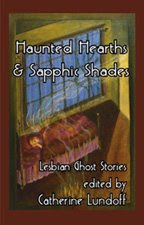
Haunted Hearths

I got the cover for Haunted Hearths today. I'm really excited about this anthology (and love the company I'm in.) It's gone to the printer, so it should be out soon. This is my first experience with Lethe Press, but they've been coming on strong while most independent publishers have been closing shop.
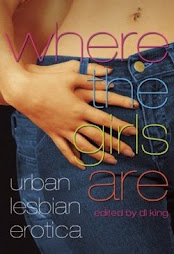
Where the Girls Are
Dear friend D.L. King (who else would I let flog me in public?) is editing an anthology for Cleis Press. I told her I'd list her call for submissions here. (BTW - If you're an editor with a call, I'll gladly post it.) If you write lesbian eroitca, send her something!
Where The Girls Are: Lesbian Erotic Stories
Edited by D. L. King
To be published by Cleis Press
Deadline: August 15, 2008
Payment: $50 and 2 copies of the anthology
D. L. King is looking for urban-centered lesbian erotica.
Is sex really better in the city?
No matter where you grow up, there's a mystique about the big city.
The girls are different there, right? They have secret ways of making
you scream for more, known only to sophisticated urbanites—don' t they?
They'll see you coming a mile away and they'll be ready and waiting
for you.
Whether coming of age in the city, moving to the city or just
visiting, lust, luck and love could be just around the corner. Look,
here she comes now and she's got her eye on the country mouse getting
off the bus; the girl sitting at the end of the bar; standing in line
for basketball tickets; reading at the table for one; loitering in the
perfume section... Send me stories that are sweet, kinky, sexy,
romantic and/or dangerous but most of all, hot. All characters must
be at least 18.
Stories should be between 2,000 and 4,500 words, double-spaced, 12 pt
Times New Roman or Courier New. Please indent the first line of each
paragraph one-half inch and do not include extra lines between paragraphs.
Send your story as a .doc or .rtf attachment and include the title,
pseudonym (if applicable) and your legal name and mailing address to
girlsantho@yahoo. com. Subject line should read: Submission: TITLE.
Please include a 50 to 75-word bio and direct any questions to the
same address. Original stories only, no reprints please.
Where The Girls Are: Lesbian Erotic Stories
Edited by D. L. King
To be published by Cleis Press
Deadline: August 15, 2008
Payment: $50 and 2 copies of the anthology
D. L. King is looking for urban-centered lesbian erotica.
Is sex really better in the city?
No matter where you grow up, there's a mystique about the big city.
The girls are different there, right? They have secret ways of making
you scream for more, known only to sophisticated urbanites—don' t they?
They'll see you coming a mile away and they'll be ready and waiting
for you.
Whether coming of age in the city, moving to the city or just
visiting, lust, luck and love could be just around the corner. Look,
here she comes now and she's got her eye on the country mouse getting
off the bus; the girl sitting at the end of the bar; standing in line
for basketball tickets; reading at the table for one; loitering in the
perfume section... Send me stories that are sweet, kinky, sexy,
romantic and/or dangerous but most of all, hot. All characters must
be at least 18.
Stories should be between 2,000 and 4,500 words, double-spaced, 12 pt
Times New Roman or Courier New. Please indent the first line of each
paragraph one-half inch and do not include extra lines between paragraphs.
Send your story as a .doc or .rtf attachment and include the title,
pseudonym (if applicable) and your legal name and mailing address to
girlsantho@yahoo. com. Subject line should read: Submission: TITLE.
Please include a 50 to 75-word bio and direct any questions to the
same address. Original stories only, no reprints please.
Thursday, April 24, 2008
Taking Amanda's Advice
A couple posts ago I talked about a story that wasn't working for me. Amanda suggested I try writing out a few paragraphs to see how it feels. I did that last night and was amazed - not that the story got any easier to tell, but how a seemingly small shift can mean such big changes.
The original - Japanese rope bondage demonstration, 3rd person from the audience POV
Current - Japanese rope bondage demonstration, 1st person from the fetish model's POV.
The events of the story have not changed. It begins the same. It ends the same. But between, it's a whole different world. You wouldn't think moving from the audience onto the stage would make such a dramatic shift, but it does. The story moves from voyeurism to exhibitionism. Think about the dynamics of what turns a person on. TV has made voyeurs of us all, so I think most people can relate to being turned on by something they see, but we're all made to feel bad about the way our bodies look and about being sexual beings that most people find the idea of exposing themselves (literally or figuratively) overwhelming - and not in a good way. So the focus of the story goes from something most people can relate to something most people fear. Can you feel the shift? So much changes that even though the "facts" remain the same, the emotional impact of the events is completely different. I'll have to draw the reader into understanding why it's a turn-on. That means getting much deeper into the MC's mindset, which is why I think I have to go to 1st person voice.
Hopefully, this will work, because I promised this story to someone. (Note to self: stop promising something you haven't written yet)
The original - Japanese rope bondage demonstration, 3rd person from the audience POV
Current - Japanese rope bondage demonstration, 1st person from the fetish model's POV.
The events of the story have not changed. It begins the same. It ends the same. But between, it's a whole different world. You wouldn't think moving from the audience onto the stage would make such a dramatic shift, but it does. The story moves from voyeurism to exhibitionism. Think about the dynamics of what turns a person on. TV has made voyeurs of us all, so I think most people can relate to being turned on by something they see, but we're all made to feel bad about the way our bodies look and about being sexual beings that most people find the idea of exposing themselves (literally or figuratively) overwhelming - and not in a good way. So the focus of the story goes from something most people can relate to something most people fear. Can you feel the shift? So much changes that even though the "facts" remain the same, the emotional impact of the events is completely different. I'll have to draw the reader into understanding why it's a turn-on. That means getting much deeper into the MC's mindset, which is why I think I have to go to 1st person voice.
Hopefully, this will work, because I promised this story to someone. (Note to self: stop promising something you haven't written yet)
Monday, April 21, 2008
Catherine Lundoff's musing
Catherine says:
I think the point of writing a scene in which one character desires another is entirely about seducing the reader. The reader needs to be drawn in, to identify with the desire to one degree or another. That identification may have little or nothing to do with anything the reader wants to do in real life, but it should be something that creates a fantasy for them.
That said, there are myriad ways to make a character sexy to a reader and not everything that works for you will work for every reader. Personally, I like to see the person who is the object of desire through the protagonist's eyes. I want to know what his/hir/her voice sounds like, how they smell, how they might taste. I want to see the protagonist long for them until I can feel their response to their fantasies.
In order to make that happen, the protagonist also needs to be one that a reader can identify with to some extent. Otherwise, seeing through their eyes is a less effective technique. This is not the same thing as writing the story in first person, something many erotic authors opt to do in order to create that immediacy for the reader. It’s important to remember that immediate to you is not necessarily the same as immediate to anyone else.
Making your point of view character sympathetic can be trickier than doing the same with her/hir/his object of desire. First versus third or second person is not a guarantee. Neither is making that person model/actor gorgeous and indefatigable. Writing the character as a complete human being, warts and all, on the other hand, gives the reader something to relate to. Who hasn’t wondered whether or not their object of desire is interested in them? Giving the character some insecurities and some sort of life apart from their desire goes a long way toward building a good protag.
Erotic writing should, at its best, call forth a strong reaction from the reader, even a negative one. That's its purpose. To merely describe one character wanting another without letting the reader feel that through your words puts the story outside the realm of erotic fiction, for good or bad.
KB: Catherine is the editor of Haunted Hearths and Sapphic Shades: Lesbian Ghost Stories, due out in May, 2008 from Lethe Press. I had the pleasure of meeting her at Saints and Sinners last year.
I think the point of writing a scene in which one character desires another is entirely about seducing the reader. The reader needs to be drawn in, to identify with the desire to one degree or another. That identification may have little or nothing to do with anything the reader wants to do in real life, but it should be something that creates a fantasy for them.
That said, there are myriad ways to make a character sexy to a reader and not everything that works for you will work for every reader. Personally, I like to see the person who is the object of desire through the protagonist's eyes. I want to know what his/hir/her voice sounds like, how they smell, how they might taste. I want to see the protagonist long for them until I can feel their response to their fantasies.
In order to make that happen, the protagonist also needs to be one that a reader can identify with to some extent. Otherwise, seeing through their eyes is a less effective technique. This is not the same thing as writing the story in first person, something many erotic authors opt to do in order to create that immediacy for the reader. It’s important to remember that immediate to you is not necessarily the same as immediate to anyone else.
Making your point of view character sympathetic can be trickier than doing the same with her/hir/his object of desire. First versus third or second person is not a guarantee. Neither is making that person model/actor gorgeous and indefatigable. Writing the character as a complete human being, warts and all, on the other hand, gives the reader something to relate to. Who hasn’t wondered whether or not their object of desire is interested in them? Giving the character some insecurities and some sort of life apart from their desire goes a long way toward building a good protag.
Erotic writing should, at its best, call forth a strong reaction from the reader, even a negative one. That's its purpose. To merely describe one character wanting another without letting the reader feel that through your words puts the story outside the realm of erotic fiction, for good or bad.
KB: Catherine is the editor of Haunted Hearths and Sapphic Shades: Lesbian Ghost Stories, due out in May, 2008 from Lethe Press. I had the pleasure of meeting her at Saints and Sinners last year.
Saturday, April 19, 2008
Why Won't This Work?
Feel free to comment on this if you have an idea.
I'm trying to write a story that will not work for me. This is my third pass through
and it's still not clicking right. The basic story is an audience at a BDSM club watching a Japanese rope bondage demonstration.
First pass - third person POV with the audience treated as a singular character.
Second pass - third person POV concentrating on the reactions of several specific characters in the audience.
Third pass - third person POV concentrating on one specific character in the audience.
At this point, it still feels disconnected. I like voyeurism stories, but this reminds me why I don't write them more often. They are difficult to write well. So I'm wondering if I should switch to first person POV of the fetish model on stage. That way, I have the input of the sensation of the rope and bondage on her mentally and physically. What do you think?
I'm trying to write a story that will not work for me. This is my third pass through
and it's still not clicking right. The basic story is an audience at a BDSM club watching a Japanese rope bondage demonstration.
First pass - third person POV with the audience treated as a singular character.
Second pass - third person POV concentrating on the reactions of several specific characters in the audience.
Third pass - third person POV concentrating on one specific character in the audience.
At this point, it still feels disconnected. I like voyeurism stories, but this reminds me why I don't write them more often. They are difficult to write well. So I'm wondering if I should switch to first person POV of the fetish model on stage. That way, I have the input of the sensation of the rope and bondage on her mentally and physically. What do you think?
Thursday, April 17, 2008
I Have My Reading Slot
I'll be reading Sunday, May 11 at 2:30 PM at Saints and Sinners in New Orleans.
Sunday, May 11
2:30 P.M.
SAINTS AND SINNERS READING SERIES: WRITERS READ
Come hear Festival authors read from their latest works. Join Dale
Chase, Jolie du Pre, Amie M. Evans, Gene Kahn, Jay Lygon, and Jerry Wheeler
as they thrill, entertain, educate, or stimulate the literary mind
with that most powerful instrument: the written word.
I
know Dale, Jolie, and Amie. It could be that I've met Gene and Jerry,
but their names aren't familiar. 2:30 is probably the last panel slot
before the closing reception. Still no word on how long we have to
read. I'm going to hope for 5 minutes. 10 is a long time to talk
non-stop. No one ever complained about someone running short, so I'm
going to prepare for 5. That gives me just enough time to read the
beginning part of my ghost story and leave off at a good place. (plus I
have to allow time for audience reaction. I didn't at my last reading,
and stuff I only chuckled at got these long breaks of laughter, so I've
learned my lesson.)
Sunday, May 11
2:30 P.M.
SAINTS AND SINNERS READING SERIES: WRITERS READ
Come hear Festival authors read from their latest works. Join Dale
Chase, Jolie du Pre, Amie M. Evans, Gene Kahn, Jay Lygon, and Jerry Wheeler
as they thrill, entertain, educate, or stimulate the literary mind
with that most powerful instrument: the written word.
I
know Dale, Jolie, and Amie. It could be that I've met Gene and Jerry,
but their names aren't familiar. 2:30 is probably the last panel slot
before the closing reception. Still no word on how long we have to
read. I'm going to hope for 5 minutes. 10 is a long time to talk
non-stop. No one ever complained about someone running short, so I'm
going to prepare for 5. That gives me just enough time to read the
beginning part of my ghost story and leave off at a good place. (plus I
have to allow time for audience reaction. I didn't at my last reading,
and stuff I only chuckled at got these long breaks of laughter, so I've
learned my lesson.)
Wednesday, April 16, 2008
Roxy Katt talks about sexy characters
Roxy says:
"What makes a character sexy? Is it enough that
another character desires him/her/hir, or should the reader be
seduced too?"
Maybe my tastes are a little crude somehow, but I am
not usually turned on much by a character's arousal to
begin with. As a reader, I guess I want to be seduced
directly. A character who desires a sexy character
may well be important as a fictional device, but no
matter how much the desiring character wants someone I
do not find attractive, the desirer's desire is
unlikely to affect me much.
But as for what makes a character sexy, I like a
combination of strength and vulnerability. I like
women or phallogynes who are basically strong but who
have some kind of Achilles heel. I enjoy the subtle
or not so subtle turn that makes an apparent top
unexpectedly into a bottom.
Straightforward strength or straightforward weakness
are not usually interesting to me.
KB: BTW - feel free to post in the comments if you have something to say about one of these entries, or to e-mail me directly.
I'm
trying to think how long I've know Roxy. Maybe two years? She has a story in Best Lesbian Erotica 2008, and one in the Mammoth Book of
Lesbian Erotica 2007. Roxy describes herself: "I am a writer of f/f and
transgender fetish erotica, including a genre I refer to as VHF:
Vaudeville Humiliation Fetishism, or UHF: Unusual Humiliation
Fetishism. This genre of erotica involves women in comically and
erotically humiliating situations." If you read much of my blog musing, you know how much I think about gender and sexuality. There aren't many writers who can transcend hetero fetishism of transgenders, but Roxy does, and for that, I'll always be cheering her on.
"What makes a character sexy? Is it enough that
another character desires him/her/hir, or should the reader be
seduced too?"
Maybe my tastes are a little crude somehow, but I am
not usually turned on much by a character's arousal to
begin with. As a reader, I guess I want to be seduced
directly. A character who desires a sexy character
may well be important as a fictional device, but no
matter how much the desiring character wants someone I
do not find attractive, the desirer's desire is
unlikely to affect me much.
But as for what makes a character sexy, I like a
combination of strength and vulnerability. I like
women or phallogynes who are basically strong but who
have some kind of Achilles heel. I enjoy the subtle
or not so subtle turn that makes an apparent top
unexpectedly into a bottom.
Straightforward strength or straightforward weakness
are not usually interesting to me.
KB: BTW - feel free to post in the comments if you have something to say about one of these entries, or to e-mail me directly.
I'm
trying to think how long I've know Roxy. Maybe two years? She has a story in Best Lesbian Erotica 2008, and one in the Mammoth Book of
Lesbian Erotica 2007. Roxy describes herself: "I am a writer of f/f and
transgender fetish erotica, including a genre I refer to as VHF:
Vaudeville Humiliation Fetishism, or UHF: Unusual Humiliation
Fetishism. This genre of erotica involves women in comically and
erotically humiliating situations." If you read much of my blog musing, you know how much I think about gender and sexuality. There aren't many writers who can transcend hetero fetishism of transgenders, but Roxy does, and for that, I'll always be cheering her on.
Tuesday, April 15, 2008
Helen Madden chimes in
Helen writes:
Attitude. More than anything else, it's attitude that makes a character sexy and it's the character's attitude that will seduce the reader (and yes, the reader must always be seduced, or where would the fun be in the writing?). But what kind of attitude? I like bad boys who can get away with anything, but I also like shy little minxes who coyly lead their lovers along. The character's attitude shines through in their dialogue, their actions, their motivations. In
fact, I say it is the character. I'm writing a story right now about a main character who has a lot of attitude - spoiled, frustrated, wants way more than his fifteen minutes of fame but he's never earned - and damn if that little strumpet isn't sexy as hell. Makes me want to put him over my knee and spank his bottom.
KB: Helen is the most energetic writer I know. She's into podcasting. She's a features editor for the Erotica Readers and Writers Association. Her first novel - Demon By Day- is coming out soon from Mojo Castle. She makes animated short movies. She designed my Jay Lygon website. She's active at science fiction cons, has a black belt in... remind me Helen..., and she volunteers for EPIC. Whew! And that's only what she does during the day. I think by night she fights crime.
Attitude. More than anything else, it's attitude that makes a character sexy and it's the character's attitude that will seduce the reader (and yes, the reader must always be seduced, or where would the fun be in the writing?). But what kind of attitude? I like bad boys who can get away with anything, but I also like shy little minxes who coyly lead their lovers along. The character's attitude shines through in their dialogue, their actions, their motivations. In
fact, I say it is the character. I'm writing a story right now about a main character who has a lot of attitude - spoiled, frustrated, wants way more than his fifteen minutes of fame but he's never earned - and damn if that little strumpet isn't sexy as hell. Makes me want to put him over my knee and spank his bottom.
KB: Helen is the most energetic writer I know. She's into podcasting. She's a features editor for the Erotica Readers and Writers Association. Her first novel - Demon By Day- is coming out soon from Mojo Castle. She makes animated short movies. She designed my Jay Lygon website. She's active at science fiction cons, has a black belt in... remind me Helen..., and she volunteers for EPIC. Whew! And that's only what she does during the day. I think by night she fights crime.
Monday, April 14, 2008
D.L. King's answer
D.L. writes:
What Makes a Character Sexy?
You asked if it was enough that another character desired that character or found him/her/hir sexy, or if the reader must be seduced as well?
First, I think characters must find each other sexy, or at least one must find
the other sexy or seductive in order for the reader to be seduced at
all. But sometimes one character being attracted to anotherisn’t enough for the reader to be seduced.
When I write I’m, in effect, the reader. I tell myself a story. I get
completely wrapped up in it. My characters pretty much do what they
want, go where they want and are attracted to each other for their own
quirky reasons. Sometimes I don’t fully understand their motivations (I
suppose I must subconsciously or Iwouldn’t have written them) or agree with their choices. But then, if the character is well drawn enough, he or she will grow on me.
A good example of this is Susan, who was meant to be a minor character in my first novel, The Melinoe Project. When I wrote her, she scared me. I didn’t find her sexually attractive, I found her dangerous and frightening, but that didn’t
stop me writing her into my main character’s life and he found her
utterly seductive and attractive, even to his extreme detriment at
times. I think it was a combination of his intense attraction to her,
regardless of the consequences and my growing identification with her
that she grew on me and I too began to find her hot. Hot enough that
she became a main character and wound up in the sequel as well.
Does she seduce the reader? I know she seduces some readers. We all have
different attractants, as do our characters. I may not be at all
attracted to the usual hunky alpha male or typical dominant man, but I
may find myself utterly in thrall over the earnestness and dedication
of a characters need to place himself in the service of another.
We (and by that, I mean characters and readers, alike) are all different.
What one finds sexy, another may find revolting. My adage has always
been that if something, or someone, is sexy to me, they will be to
someone else too. We are not islands. We have more in common with each
other than we know.
And I suppose that was a completely round-about way of not answering your question!
KB: D.L. King is the fearless leader of Erotica Revealed. Her interview with the L.A. Times about literary erotica should be out this week, so look for it! Besides running Erotica Revealed, her short stories appear in many anthologies, and her femdomme novels The Melinoe Project and The Art of Melinoe are available from Renaissance E-Books.
What Makes a Character Sexy?
You asked if it was enough that another character desired that character or found him/her/hir sexy, or if the reader must be seduced as well?
First, I think characters must find each other sexy, or at least one must find
the other sexy or seductive in order for the reader to be seduced at
all. But sometimes one character being attracted to anotherisn’t enough for the reader to be seduced.
When I write I’m, in effect, the reader. I tell myself a story. I get
completely wrapped up in it. My characters pretty much do what they
want, go where they want and are attracted to each other for their own
quirky reasons. Sometimes I don’t fully understand their motivations (I
suppose I must subconsciously or Iwouldn’t have written them) or agree with their choices. But then, if the character is well drawn enough, he or she will grow on me.
A good example of this is Susan, who was meant to be a minor character in my first novel, The Melinoe Project. When I wrote her, she scared me. I didn’t find her sexually attractive, I found her dangerous and frightening, but that didn’t
stop me writing her into my main character’s life and he found her
utterly seductive and attractive, even to his extreme detriment at
times. I think it was a combination of his intense attraction to her,
regardless of the consequences and my growing identification with her
that she grew on me and I too began to find her hot. Hot enough that
she became a main character and wound up in the sequel as well.
Does she seduce the reader? I know she seduces some readers. We all have
different attractants, as do our characters. I may not be at all
attracted to the usual hunky alpha male or typical dominant man, but I
may find myself utterly in thrall over the earnestness and dedication
of a characters need to place himself in the service of another.
We (and by that, I mean characters and readers, alike) are all different.
What one finds sexy, another may find revolting. My adage has always
been that if something, or someone, is sexy to me, they will be to
someone else too. We are not islands. We have more in common with each
other than we know.
And I suppose that was a completely round-about way of not answering your question!
KB: D.L. King is the fearless leader of Erotica Revealed. Her interview with the L.A. Times about literary erotica should be out this week, so look for it! Besides running Erotica Revealed, her short stories appear in many anthologies, and her femdomme novels The Melinoe Project and The Art of Melinoe are available from Renaissance E-Books.
Sunday, April 13, 2008
Ashley Lister
I've tried responding to this question half a dozen times now and then
deleted each response because it wasn't quite right.
I think I find characters in erotic fiction "sexy" purely because of
the way and the circumstances in which they are written. The majority of us
(as characters outside fiction) shroud our sexualness with the mundanity of
civilised repression. The characters in erotic fiction are usually
presented with their souls (and other things) bared for inspection and
examination. This (in my opinion) makes them inherently sexy because
they are showing an aspect of their character that we seldom get to see
except with those whom we have been/are being intimate. By the fact that we
are presented with a character's innermost thoughts and private sexual
aspirations, we (the readers) are also seduced and aroused.
I hope this answer makes sense ;-)
Ashley
www.ashleylister.co.uk
KB: Ashley is another reviewer from Erotica Revealed. Be sure to check out Swingers: True Confessions from Today's Modern Swinging Scene
deleted each response because it wasn't quite right.
I think I find characters in erotic fiction "sexy" purely because of
the way and the circumstances in which they are written. The majority of us
(as characters outside fiction) shroud our sexualness with the mundanity of
civilised repression. The characters in erotic fiction are usually
presented with their souls (and other things) bared for inspection and
examination. This (in my opinion) makes them inherently sexy because
they are showing an aspect of their character that we seldom get to see
except with those whom we have been/are being intimate. By the fact that we
are presented with a character's innermost thoughts and private sexual
aspirations, we (the readers) are also seduced and aroused.
I hope this answer makes sense ;-)
Ashley
www.ashleylister.co.uk
KB: Ashley is another reviewer from Erotica Revealed. Be sure to check out Swingers: True Confessions from Today's Modern Swinging Scene
Saturday, April 12, 2008
Lisabet Sarai has me musing
Lisabet writes:
You ask:
What makes a character sexy? Is it enough that another
character desires him/her/hir, or should the reader be
seduced too?
Here are my thoughts. A character can be sexy as an object or as a
subject. The object case involves a character as the focus of some
other character's desire. We see the "sexy" character through the
second character's eyes, and find him/her attractive because (if) we
can identify with the second character.
One measure of an author's skill is his/her ability to make us
desire (or at least feel the appeal of) a character who would
not traditionally be viewed as sexy. An example that comes to
mind is a wonderful story by Robert Buckley in which
the narrator finds himself drawn to a woman who looks like a young
version of a bag lady, a nerdy, shy person whom everyone ridicules.
(I can never recall the titles of stories! But if you ask Bob,
I'm sure he'll know the one I'm talking about.) She works with him,
in the "morgue" of a newspaper, and one day he happens to catch
a glimpse of her bare abdomen as she's reaching for something on
a shelf. He finds himself fascinated by her, seduced by this
fleeting view of naked flesh.
A character is sexy as a subject when he or she feels attractive and
desirable. My novel Incognito opens with the character of
Miranda hanging around in a club, dressed in her roommate's
suggestive clothes, but not feeling in tune with her costume at
all. Everyone ignores or rejects her.
As the book progresses, she becomes more sexually open and also
more accepting of her own desires. As a result she becomes (I
hope!) a sexy character, though she was not at the start of
the novel.
The prototypical Dom character is sexy because he's sure of
himself, sure of his ability to bring his submissives to ecstasy.
Often, characters who know that they are irresistible, are.
Lisabet Sarai
KB: Lisabet also reviews erotica at Erotica Revealed. She's
written several novels (Raw Silk, Ruby's Rules) and has two collections of short stories out (Fire, and Rough Caress).
When I read this in Lisabet's answer: "One measure of an author's skill is his/her ability to make us desire (or at least feel the appeal of) a character who would not traditionally be viewed as sexy." my thoughts went to comments about the film Notes On A Scandal. Someone said, "Thank goodness the British made this movie, because Hollywood would have cast a 23-year old hunk of god flesh as the 15-year old student, and everyone would be saying, "Yeah, he was hot, totally worth the risk," but by casting someone who could look the part of agangly , pimply teen, the audience was wondering, "What the hell is she thinking," which changes the emotional
impact of the story. I like stories that make inexplicable desire interesting. (which makes me think of Lolita...)
You ask:
What makes a character sexy? Is it enough that another
character desires him/her/hir, or should the reader be
seduced too?
Here are my thoughts. A character can be sexy as an object or as a
subject. The object case involves a character as the focus of some
other character's desire. We see the "sexy" character through the
second character's eyes, and find him/her attractive because (if) we
can identify with the second character.
One measure of an author's skill is his/her ability to make us
desire (or at least feel the appeal of) a character who would
not traditionally be viewed as sexy. An example that comes to
mind is a wonderful story by Robert Buckley in which
the narrator finds himself drawn to a woman who looks like a young
version of a bag lady, a nerdy, shy person whom everyone ridicules.
(I can never recall the titles of stories! But if you ask Bob,
I'm sure he'll know the one I'm talking about.) She works with him,
in the "morgue" of a newspaper, and one day he happens to catch
a glimpse of her bare abdomen as she's reaching for something on
a shelf. He finds himself fascinated by her, seduced by this
fleeting view of naked flesh.
A character is sexy as a subject when he or she feels attractive and
desirable. My novel Incognito opens with the character of
Miranda hanging around in a club, dressed in her roommate's
suggestive clothes, but not feeling in tune with her costume at
all. Everyone ignores or rejects her.
As the book progresses, she becomes more sexually open and also
more accepting of her own desires. As a result she becomes (I
hope!) a sexy character, though she was not at the start of
the novel.
The prototypical Dom character is sexy because he's sure of
himself, sure of his ability to bring his submissives to ecstasy.
Often, characters who know that they are irresistible, are.
Lisabet Sarai
KB: Lisabet also reviews erotica at Erotica Revealed. She's
written several novels (Raw Silk, Ruby's Rules) and has two collections of short stories out (Fire, and Rough Caress).
When I read this in Lisabet's answer: "One measure of an author's skill is his/her ability to make us desire (or at least feel the appeal of) a character who would not traditionally be viewed as sexy." my thoughts went to comments about the film Notes On A Scandal. Someone said, "Thank goodness the British made this movie, because Hollywood would have cast a 23-year old hunk of god flesh as the 15-year old student, and everyone would be saying, "Yeah, he was hot, totally worth the risk," but by casting someone who could look the part of agangly , pimply teen, the audience was wondering, "What the hell is she thinking," which changes the emotional
impact of the story. I like stories that make inexplicable desire interesting. (which makes me think of Lolita...)
Chloe Devlin offers her opinion
Chloe says:
There's a whole boatload of things that makes a character sexy -- from his appearance to his sense of humor to his intelligence to his gentle touch. If these things are described well and shown during the story then I, as the reader, will find him as sexy as the other character. And that simply makes for a better story.
Chloe Devlin
Short and Sassy Erotica
chloedevlin.blogspot.com
www.myspace.com/authorchloedevlin
There's a whole boatload of things that makes a character sexy -- from his appearance to his sense of humor to his intelligence to his gentle touch. If these things are described well and shown during the story then I, as the reader, will find him as sexy as the other character. And that simply makes for a better story.
Chloe Devlin
Short and Sassy Erotica
chloedevlin.blogspot.com
www.myspace.com/authorchloedevlin
Friday, April 11, 2008
Remittance Girl's answer
Remittance Girl writes:
"No, it's not enough (that another character finds the character sexy) and I think this is the real flaw in a lot of erotica writing. Being told that a character is sexy, hot, whatever,
doesn't convince me, as a reader, that they are. Having another character think they're hot, sexy, whatever...ditto.
As a reader, I need to be seduced. I need to be shown something, inside
the character, that makes them attractive for me, as a reader. For that, I need flaws."
Remittance Girl's website.
KB: RG, as she's known to us on ERWA,
writes some of my favorite erotica. She's always pushing out on the
artistic edge, challenging both herself and the reader. Take a look at
her website. Most of her stories are there.
"No, it's not enough (that another character finds the character sexy) and I think this is the real flaw in a lot of erotica writing. Being told that a character is sexy, hot, whatever,
doesn't convince me, as a reader, that they are. Having another character think they're hot, sexy, whatever...ditto.
As a reader, I need to be seduced. I need to be shown something, inside
the character, that makes them attractive for me, as a reader. For that, I need flaws."
Remittance Girl's website.
KB: RG, as she's known to us on ERWA,
writes some of my favorite erotica. She's always pushing out on the
artistic edge, challenging both herself and the reader. Take a look at
her website. Most of her stories are there.
Thursday, April 10, 2008
Shift In Focus
Lately, I've been thinking about this blog and what I want to do with it. If you read it often, you know that I think a lot about the craft of writing, with an emphasis on erotica. Last month, I had a flash of insight that I should focus on that, but if you know me, you know that I make no move without examining something from every angle - twice.
I don't want to talk about the usual basics. Those are covered lots of places. But beyond that there's a whole lot of nothing to help experienced writers who still want to think about and work on the craft of writing. So I thought I'd transition my blog to a continuing conversation about writing. (I will still probably resort to occasional cat posts. I'm sorry, but cat happens.)
Once I decided it was the right thing to do, I sent out an email to many of the erotica writers I know and asked them to answer a question. When they get back to me - if any do - I'll let them be the guest blogger of the day with their answer. Now - If you didn't get an email, that doesn't mean I don't want your input. It only means that I didn't have a good email address for you in my address book. So if you want to answer, please do.
My question for this month was:
What makes a character sexy? Is it enough that another
character desires him/her/hir, or should the reader be
seduced too?
Hopefully, I'll see some interesting answers.
I don't want to talk about the usual basics. Those are covered lots of places. But beyond that there's a whole lot of nothing to help experienced writers who still want to think about and work on the craft of writing. So I thought I'd transition my blog to a continuing conversation about writing. (I will still probably resort to occasional cat posts. I'm sorry, but cat happens.)
Once I decided it was the right thing to do, I sent out an email to many of the erotica writers I know and asked them to answer a question. When they get back to me - if any do - I'll let them be the guest blogger of the day with their answer. Now - If you didn't get an email, that doesn't mean I don't want your input. It only means that I didn't have a good email address for you in my address book. So if you want to answer, please do.
My question for this month was:
What makes a character sexy? Is it enough that another
character desires him/her/hir, or should the reader be
seduced too?
Hopefully, I'll see some interesting answers.
Wednesday, April 09, 2008
For A Dear Friend
Funeral Blues
Stop all the clocks, cut off the telephone,
Prevent the dog from barking with a juicy bone,
Silence the pianos and with muffled drum
Bring out the coffin, let the mourners come.
Let aeroplanes circle moaning overhead
Scribbling on the sky the message He is Dead.
Put crepe bows round the white necks of the public doves,
Let the traffic policemen wear black cotton gloves.
He was my North, my South, my East and West,
My working week and my Sunday rest,
My noon, my midnight, my talk, my song;
I thought that love would last forever: I was wrong.
The stars are not wanted now; put out every one,
Pack up the moon and dismantle the sun,
Pour away the ocean and sweep up the woods;
For nothing now can ever come to any good.
W.H. Auden
I am so terribly sorry for your loss.
Stop all the clocks, cut off the telephone,
Prevent the dog from barking with a juicy bone,
Silence the pianos and with muffled drum
Bring out the coffin, let the mourners come.
Let aeroplanes circle moaning overhead
Scribbling on the sky the message He is Dead.
Put crepe bows round the white necks of the public doves,
Let the traffic policemen wear black cotton gloves.
He was my North, my South, my East and West,
My working week and my Sunday rest,
My noon, my midnight, my talk, my song;
I thought that love would last forever: I was wrong.
The stars are not wanted now; put out every one,
Pack up the moon and dismantle the sun,
Pour away the ocean and sweep up the woods;
For nothing now can ever come to any good.
W.H. Auden
I am so terribly sorry for your loss.
Monday, April 07, 2008
Rejection
I don't think I'm getting rejected enough.
That sounds very odd, but a friend asked how things were going, and I crowed a bit about my acceptance rate. Then I starting thinking about it. Sure, I've placed everything lately, but that's mostly because people have asked for those stories. They can reject them, but I can see why they they'd feel the pressure to take the story anyway. If you have a perfect record, there's nowhere to go but down. That might seem like a negative viewpoint, but it's also freeing. What do I have to lose? My acceptance rate can't possibly stay this good, unless I quit or never take a risk. Pffft to that.
So all the sudden, I have a lot of energy to focus on submissions, and I'm loving it. For the first time in months, I'm hitting all the sites that list calls and I'm looking for likely suspects. Some of the deadlines are coming up quickly, so I can't think about it too long. I have to jump, and jump now. The pressure is part of the energy I'm feeling.
I don't have many stories in reserve. It's not as if I can dig into my files, blow the virtual dust off something, and send it out. Okay - that worked for one submission only because I wrote a very specific piece for an anthology that never made it to print, and the story was too short for most calls, so it sat, unloved, until I saw this new one with a very low word count limit. A couple of the calls ask for work that's already been published, so I have to see what's been published in the past year (this is where not submitting much last year comes back to haunt me) and decide if it will fit what they're asking for. Those are the easier ones. Then there are the ones I really like to make it into, like the Best Women's Erotica series. That deadline is fast approaching, and even though it's a best of, the editor wants unpublished pieces. I'll have to make a time call here. If I can come up with something in the next few days and if it flows well, then I might make that deadline, but I'm not going to force it. There's always next year for that one. (besides, I seem only submit to it once every three years anyway, and I'm only two years out at this point).
It's not that I want my stories to be rejected, but it won't destroy me to see a thanks-but-no-thanks note, and at least I'll have tried. Better to have submitted and been rejected than never to have submitted at all.
I'm putting my perfect record on notice. I'm not going to protect it.
That sounds very odd, but a friend asked how things were going, and I crowed a bit about my acceptance rate. Then I starting thinking about it. Sure, I've placed everything lately, but that's mostly because people have asked for those stories. They can reject them, but I can see why they they'd feel the pressure to take the story anyway. If you have a perfect record, there's nowhere to go but down. That might seem like a negative viewpoint, but it's also freeing. What do I have to lose? My acceptance rate can't possibly stay this good, unless I quit or never take a risk. Pffft to that.
So all the sudden, I have a lot of energy to focus on submissions, and I'm loving it. For the first time in months, I'm hitting all the sites that list calls and I'm looking for likely suspects. Some of the deadlines are coming up quickly, so I can't think about it too long. I have to jump, and jump now. The pressure is part of the energy I'm feeling.
I don't have many stories in reserve. It's not as if I can dig into my files, blow the virtual dust off something, and send it out. Okay - that worked for one submission only because I wrote a very specific piece for an anthology that never made it to print, and the story was too short for most calls, so it sat, unloved, until I saw this new one with a very low word count limit. A couple of the calls ask for work that's already been published, so I have to see what's been published in the past year (this is where not submitting much last year comes back to haunt me) and decide if it will fit what they're asking for. Those are the easier ones. Then there are the ones I really like to make it into, like the Best Women's Erotica series. That deadline is fast approaching, and even though it's a best of, the editor wants unpublished pieces. I'll have to make a time call here. If I can come up with something in the next few days and if it flows well, then I might make that deadline, but I'm not going to force it. There's always next year for that one. (besides, I seem only submit to it once every three years anyway, and I'm only two years out at this point).
It's not that I want my stories to be rejected, but it won't destroy me to see a thanks-but-no-thanks note, and at least I'll have tried. Better to have submitted and been rejected than never to have submitted at all.
I'm putting my perfect record on notice. I'm not going to protect it.
Sunday, April 06, 2008
Squeee!
This shouldn't have me so excited, but it does.
After finishing Love Runes, I swore I'd take time off to write short stories because I had nothing coming out in anthologies this year. I saw many calls for submission that interested me, but the next thing I know, the books were in my TBR file for reviews. That got depressing. In the past year, I've sold only three short stories, and only because editors asked for them. If they hadn't, the total would be zero. But instead of moving on to shorts in December, I plunged ahead into the great time suck that is writing the first draft of a novel, and three and a half months passed - as did more calls for submission that I would have loved to have written to.
This weekend, I sent off two stories for submission. One was an older story that fit a specific call, so no work there other than reviewing it. I changed maybe five words. The other was one an editor asked for. Then, suddenly, my work time was free. (Sure, I have one story I need to finish that I promised someone, but I need to give that one a few more days to stew in my brain before I finish it.) So for the first time in ages, I looked at all the calls for submission I'd been lamenting over, found something that looked promising, sat down, and wrote a fresh story for it. Man, did that feel good. I have to let it sit a couple days before I go over it again, clean it up, and then that sucker is out the door. Yee-ha! Dance of joy!
After finishing Love Runes, I swore I'd take time off to write short stories because I had nothing coming out in anthologies this year. I saw many calls for submission that interested me, but the next thing I know, the books were in my TBR file for reviews. That got depressing. In the past year, I've sold only three short stories, and only because editors asked for them. If they hadn't, the total would be zero. But instead of moving on to shorts in December, I plunged ahead into the great time suck that is writing the first draft of a novel, and three and a half months passed - as did more calls for submission that I would have loved to have written to.
This weekend, I sent off two stories for submission. One was an older story that fit a specific call, so no work there other than reviewing it. I changed maybe five words. The other was one an editor asked for. Then, suddenly, my work time was free. (Sure, I have one story I need to finish that I promised someone, but I need to give that one a few more days to stew in my brain before I finish it.) So for the first time in ages, I looked at all the calls for submission I'd been lamenting over, found something that looked promising, sat down, and wrote a fresh story for it. Man, did that feel good. I have to let it sit a couple days before I go over it again, clean it up, and then that sucker is out the door. Yee-ha! Dance of joy!
Saturday, April 05, 2008
The Writer Observed Outside His Natural Habitat
Even if the date weren't seared on my soul, I'd know that Saints and Sinners was coming simply for the emails.
Writers are a solitary group. Well, group may not be the right word. Given the choice, I think most of us would either run away to the mountains or hide ourselves in plain sight in huge metropolitans where our cunning day disguises never hint that, "Hey, you wanked over my words last night." So imagine our frisson of terror when it seems we're going to be gathered in one place and have to be - gasp - social.
My sister often points out that we were raised by the two most socially inept people on the planet and grew up socially retarded. Three years of cotillion only put a nice facade over the fact that we have no idea how real people talk to each other, much less make friends. Sure, I have a buttload of gracious manners- when I choose to use them- and I'm never in doubt of which fork to use even if the line-up stretches two feet down the linen-clad table, but a backyard bar-b-que mystifies me.
Now that SNS is approaching, everyone is trying to get into a comfort zone. No one wants to eat dinner alone. I don't blame them. Either do I. Still, I think it's a little funny that so many people are checking in with me, world's most inept social butterfly, to make sure I'll be there so that we can meet up. Maybe they need to know which fork to use. In that case, I'm golden.
Writers are a solitary group. Well, group may not be the right word. Given the choice, I think most of us would either run away to the mountains or hide ourselves in plain sight in huge metropolitans where our cunning day disguises never hint that, "Hey, you wanked over my words last night." So imagine our frisson of terror when it seems we're going to be gathered in one place and have to be - gasp - social.
My sister often points out that we were raised by the two most socially inept people on the planet and grew up socially retarded. Three years of cotillion only put a nice facade over the fact that we have no idea how real people talk to each other, much less make friends. Sure, I have a buttload of gracious manners- when I choose to use them- and I'm never in doubt of which fork to use even if the line-up stretches two feet down the linen-clad table, but a backyard bar-b-que mystifies me.
Now that SNS is approaching, everyone is trying to get into a comfort zone. No one wants to eat dinner alone. I don't blame them. Either do I. Still, I think it's a little funny that so many people are checking in with me, world's most inept social butterfly, to make sure I'll be there so that we can meet up. Maybe they need to know which fork to use. In that case, I'm golden.
Thursday, April 03, 2008
Crazy Busy
I guess it's a good thing that I'm looking at my schedule over the next month and it's crazy busy. My biggest priority is Saints and Sinners. No, wait, it's getting my story for the flogger anthology polished way before the due date. Unless it's finishing the first draft of my genderqueer Japanese rope bondage tale. And then there are the readings, the Lammys, starting the rewrite of my novel, following up on another novel submission, getting to work on an anthology, BookExpo America...
This is when my time starts looking like puzzle pieces and I have to try to find a way to make everything interlock and fit. Either that, or take hammer to it and force the issue.
I finally finished my first draft on the flogger story. It took longer than it should have because I had to go back and make the dialog and thoughts fit the narrator's background. I didn't usually have that problem, but I started it off in third person, where I can use my vocabulary, and switched it to first person. That's another thing I don't usually do. Stories come to me in a certain way and they normally work in that voice. This one didn't.
It's hard to explain what makes a story work or not work for me. Words are ideas and ideas have no weight, but on the page, they either feel cumbersome or they have what I call deep edges. When I first sat down to write this, the words stumbled across the page with all the grace of a bear on roller skates. Like the bear, I felt like the words were grumpily going through the routine, but only if I kept prodding them. Switching into first person was like switching from clay wheels on grass to polyurethane on oiled wood (if I'm going to keep the roller skating idea here). Suddenly, it flowed much better. Once I fixed the problem with putting my voice into the character's mouth and let him have his own, it came together like... okay, I'm out of roller skating ideas here. I thought of going back and changing it to ice skating and throwing in a triple lutz, but I'm sure you get the idea.
Oh - I have a reading slot at Saints and Sinners, but I'm not sure which day yet. I am, of course, terrified. Thank the gods that I'll know almost everyone in the room. Oh wait - that might not be a good thing. I was going to read some boy smut, but since Haunted Hearths is coming out soon, I think I'll read from Words Like Candy Conversation Hearts. It lends itself to performance better than my smut pieces do.
I'll also be reading at A Different Light in North Hollywood the same night as the Lammys with some other writers. If you want more details, drop me a private line.
This is when my time starts looking like puzzle pieces and I have to try to find a way to make everything interlock and fit. Either that, or take hammer to it and force the issue.
I finally finished my first draft on the flogger story. It took longer than it should have because I had to go back and make the dialog and thoughts fit the narrator's background. I didn't usually have that problem, but I started it off in third person, where I can use my vocabulary, and switched it to first person. That's another thing I don't usually do. Stories come to me in a certain way and they normally work in that voice. This one didn't.
It's hard to explain what makes a story work or not work for me. Words are ideas and ideas have no weight, but on the page, they either feel cumbersome or they have what I call deep edges. When I first sat down to write this, the words stumbled across the page with all the grace of a bear on roller skates. Like the bear, I felt like the words were grumpily going through the routine, but only if I kept prodding them. Switching into first person was like switching from clay wheels on grass to polyurethane on oiled wood (if I'm going to keep the roller skating idea here). Suddenly, it flowed much better. Once I fixed the problem with putting my voice into the character's mouth and let him have his own, it came together like... okay, I'm out of roller skating ideas here. I thought of going back and changing it to ice skating and throwing in a triple lutz, but I'm sure you get the idea.
Oh - I have a reading slot at Saints and Sinners, but I'm not sure which day yet. I am, of course, terrified. Thank the gods that I'll know almost everyone in the room. Oh wait - that might not be a good thing. I was going to read some boy smut, but since Haunted Hearths is coming out soon, I think I'll read from Words Like Candy Conversation Hearts. It lends itself to performance better than my smut pieces do.
I'll also be reading at A Different Light in North Hollywood the same night as the Lammys with some other writers. If you want more details, drop me a private line.
Monday, March 31, 2008
Pitch-Perfect Characters
I recently read L if For Leather for my April review at Erotica Revealed. (The website has been updated and looks fantastic). One of the stories in the anthology is Mike Kimera's Other Bonds Then Leather. In my review, I talked about how Mike's strength has always been his characters. They are pitch-perfect. They talk, react, and think like real people.
Writers, good ones, read a lot. I'm sure that poor writers read a lot too, but I cringe whenever a writer (usually a very poor one) comments that s/he hardly ever reads. How does s/he ever expect to improve his/her craft without reading? It isn't about imitation. It's about reading a well wrought piece of work and reflect one what made it so good, and then applying that to one's own writing.
After reading Mike's story, I went back to the piece I'm working on. The first thing that struck me is that my narrator is off-pitch. The language I'm using for his thoughts doesn't match with his background. So now I'm going through each line and working to keep the same ideas but express them in words that a former street kid would use. I'm not dumbing him down. I'm just simplifying his vocabulary. That doesn't make what he thinks and feels any less complex.
It seems as if a writer can say "This is so because I say it is," but the truth is that readers will only suspend disbelief for so long before they lose patience. The craft isn't really about making them suspend disbelief as much as it is pulling them into a world and then not jarring them out of it. That's the unforgivable sin. And the quickest way to do it is pull a deus ex machina, or make your characters behave, well, out of character (unless it's part of the plot and you spend the rest of the story convincing the reader that uncharacteristic moment was actually in character, but that's such an awful lot of work).
Setting doesn't have to seem real. Speculative fiction (that's science fiction and fantasy to you non-geeks) proves that. Plot doesn't even have to be terribly real either (how many dead bodies turn up in locked rooms in English country houses during dinner parties in real life?) but you better keep up a relentless pace, because the moment a reader gets to stop and think, they're going to. But characters - they have to be pitch-perfect, always, or nobody will believe a word you write.
Writers, good ones, read a lot. I'm sure that poor writers read a lot too, but I cringe whenever a writer (usually a very poor one) comments that s/he hardly ever reads. How does s/he ever expect to improve his/her craft without reading? It isn't about imitation. It's about reading a well wrought piece of work and reflect one what made it so good, and then applying that to one's own writing.
After reading Mike's story, I went back to the piece I'm working on. The first thing that struck me is that my narrator is off-pitch. The language I'm using for his thoughts doesn't match with his background. So now I'm going through each line and working to keep the same ideas but express them in words that a former street kid would use. I'm not dumbing him down. I'm just simplifying his vocabulary. That doesn't make what he thinks and feels any less complex.
It seems as if a writer can say "This is so because I say it is," but the truth is that readers will only suspend disbelief for so long before they lose patience. The craft isn't really about making them suspend disbelief as much as it is pulling them into a world and then not jarring them out of it. That's the unforgivable sin. And the quickest way to do it is pull a deus ex machina, or make your characters behave, well, out of character (unless it's part of the plot and you spend the rest of the story convincing the reader that uncharacteristic moment was actually in character, but that's such an awful lot of work).
Setting doesn't have to seem real. Speculative fiction (that's science fiction and fantasy to you non-geeks) proves that. Plot doesn't even have to be terribly real either (how many dead bodies turn up in locked rooms in English country houses during dinner parties in real life?) but you better keep up a relentless pace, because the moment a reader gets to stop and think, they're going to. But characters - they have to be pitch-perfect, always, or nobody will believe a word you write.
Tuesday, March 18, 2008
Thinking Aloud
Or rambling in print.
I'm working on a story with a main character of indeterminate gender. That's not what I really mean though. What I mean is that the audience for hir performance and the reader will never know what gender ze is, but that makes use of the idea that there are two genders. I don't believe in that. I think gender is a lazy classification for people who like things black and white. If it were so cut and dried (I cringe at that), why are so many babies assigned a gender at birth and then forced into Box M of box F via medical mutilation of non-conforming genitalia?
Back when society had a great interest in determining if your were a ruling class male (a human worthy of rights) or a not ruling class or not male (property), I can see why people would be anxious to determine where you fit in the strata and so you didn't get your hands onto any rights you weren't entitled to. The upper echelon had a vested interest in keeping the club exclusive. I'm not saying it's right, but I understand their thinking. It was the entire basis for their civilization.
Now that those privileges have been extended to everyone in theory, I can't understand why society clings so tenaciously to the male/ not male determination. Sure, it makes things so easy for society, but it rides roughshod over the individual. (I've come to the conclusion that what's good for society is usually fatal to the individual.)
So what is all this rambling about? I'm torn about writing a piece that reinforces the idea that Ze must be male or female. Ze is hir own person. Ze transcends bi-genderism. At least, that's the character I'd like to create. It would be wonderful if I knew I could prod readers into thinking outside the M and F boxes, but that's an awful lot to ask of a short story without getting preachy.
I don't mind being prodded to examine ideas, and I love being shaken out of lazy thinking habits, but I draw the line at lectures. Lectures berate people for their modes of thought, but should people be ridiculed simply because they'd never imagined that there were other ways of viewing the world? I don't think so. Besides, most lectures (sermons) tell people what to think and feel instead of opening up an internal or external dialog.
For me, the challenge is to show that between points M and F on the graph of gender, there isn't just empty space. There's a continuum. All I want to do is open up that line of thinking and then have enough faith in people to let them explore the idea at their own pace.
That assumes people give as much thought to gender as I do.
Maybe Ze will make at least one reader pause for a second over those M and F boxes the next time she/he/ze fills out a form and wonder why it matters to anyone what gender she/he/hir is. I hope so.
(For the record, I haven't checked a gender box in years. No one seems to notice.)
I'm working on a story with a main character of indeterminate gender. That's not what I really mean though. What I mean is that the audience for hir performance and the reader will never know what gender ze is, but that makes use of the idea that there are two genders. I don't believe in that. I think gender is a lazy classification for people who like things black and white. If it were so cut and dried (I cringe at that), why are so many babies assigned a gender at birth and then forced into Box M of box F via medical mutilation of non-conforming genitalia?
Back when society had a great interest in determining if your were a ruling class male (a human worthy of rights) or a not ruling class or not male (property), I can see why people would be anxious to determine where you fit in the strata and so you didn't get your hands onto any rights you weren't entitled to. The upper echelon had a vested interest in keeping the club exclusive. I'm not saying it's right, but I understand their thinking. It was the entire basis for their civilization.
Now that those privileges have been extended to everyone in theory, I can't understand why society clings so tenaciously to the male/ not male determination. Sure, it makes things so easy for society, but it rides roughshod over the individual. (I've come to the conclusion that what's good for society is usually fatal to the individual.)
So what is all this rambling about? I'm torn about writing a piece that reinforces the idea that Ze must be male or female. Ze is hir own person. Ze transcends bi-genderism. At least, that's the character I'd like to create. It would be wonderful if I knew I could prod readers into thinking outside the M and F boxes, but that's an awful lot to ask of a short story without getting preachy.
I don't mind being prodded to examine ideas, and I love being shaken out of lazy thinking habits, but I draw the line at lectures. Lectures berate people for their modes of thought, but should people be ridiculed simply because they'd never imagined that there were other ways of viewing the world? I don't think so. Besides, most lectures (sermons) tell people what to think and feel instead of opening up an internal or external dialog.
For me, the challenge is to show that between points M and F on the graph of gender, there isn't just empty space. There's a continuum. All I want to do is open up that line of thinking and then have enough faith in people to let them explore the idea at their own pace.
That assumes people give as much thought to gender as I do.
Maybe Ze will make at least one reader pause for a second over those M and F boxes the next time she/he/ze fills out a form and wonder why it matters to anyone what gender she/he/hir is. I hope so.
(For the record, I haven't checked a gender box in years. No one seems to notice.)
Monday, March 17, 2008
Egads, Another Cat Post
I've finally figured out why writers have cats. They supply blog entry stories.
I think the cats are trying to apologize for playing tag across the bed, and my body, at 3AM today, and the following hissing-spitting-scratching-growling-under-the-bed-for-twenty-minutes cat fight that followed, because when they started up again this evening I went over to them, glowered, and told them to knock it off. And they did. Not only that, but an hour later, I found Loki's treasured "pelt" on my pillow. (It's a 6X10 inch abandoned knitting project from one of the nieces. Considering the amount of cat spit on it, I don't blame her for abandoning it - any more than you can blame me for using tongs to move it off my pillow.) After that, Skitters dropped a small stuffed animal at my feet and did that weird meowing that always follows one of her kills. I praised her for her mighty hunting skills, admired the toy, and promised to cherish it. She went away but came back a little later and mewled some more. Maybe I'm wrong. Maybe she isn't looking for praise. Maybe that's her way of saying, "Cook it up already, bitch. I'm waiting." And maybe Loki's seen the Godfather and thinks he's leaving the equivalent of a horse head in my bed. "Tell us to knock it off, will she? I'll show her who she should fear." Hmmm. Skitters just walked to the couch, looked over her shoulder to make sure I was watching, and clawed the crap out of the upholstery. I think maybe I should ask her how she'd like her stuffed toy cooked.
I think the cats are trying to apologize for playing tag across the bed, and my body, at 3AM today, and the following hissing-spitting-scratching-growling-under-the-bed-for-twenty-minutes cat fight that followed, because when they started up again this evening I went over to them, glowered, and told them to knock it off. And they did. Not only that, but an hour later, I found Loki's treasured "pelt" on my pillow. (It's a 6X10 inch abandoned knitting project from one of the nieces. Considering the amount of cat spit on it, I don't blame her for abandoning it - any more than you can blame me for using tongs to move it off my pillow.) After that, Skitters dropped a small stuffed animal at my feet and did that weird meowing that always follows one of her kills. I praised her for her mighty hunting skills, admired the toy, and promised to cherish it. She went away but came back a little later and mewled some more. Maybe I'm wrong. Maybe she isn't looking for praise. Maybe that's her way of saying, "Cook it up already, bitch. I'm waiting." And maybe Loki's seen the Godfather and thinks he's leaving the equivalent of a horse head in my bed. "Tell us to knock it off, will she? I'll show her who she should fear." Hmmm. Skitters just walked to the couch, looked over her shoulder to make sure I was watching, and clawed the crap out of the upholstery. I think maybe I should ask her how she'd like her stuffed toy cooked.
Sunday, March 16, 2008
At Least It Ended Well
The SO is out of town again. Despite missing his company, the other thing I hate about him being gone is that something always happens. The past two times, it's been the garage door opener breaking. Okay, I can park on the street for a week, but hauling in groceries when it's pouring down rain isn't as much fun as it sounds. Not to mention the fact that people love to wipe sticky crap on my car that doesn't come off with soap and water. I bet they're the same people who steal my Sunday newspaper every other week. Or at least I hope they are. I'd hate to think there are two different sets of boorish jerks running around my neighborhood.
This time, it's the stove that's not working. Or perhaps it was working too well. My office is right off the kitchen, so I can hear anything that happens in there like the cats opening the cabinet and knocking glasses to the floor. I don't think I can blame the cats for this one though. Two of the electric igniters on the stovetop started clicking. I checked the knobs. Everything was in an off position, but they were firing away. I turned on the gas. They kept sparking. I turned off the gas. They kept going. I pulled all my pots and pans out from underneath the stovetop, crawled into the cabinet, and pulled the plug. They shut off. But now I can't cook unless I crawl back under there and plug it in again. Grrrr.
Did I mention that all this happened while I was doing a load of laundry? Not such a big deal to normal folks, but the drainage pipe for the clothes washer started overflowing when it drains, so I have to sit there and open, close, open, close, the lid about twenty times while it drains to let the pipe keep up with the flow of water or it floods the laundry room. So there I am, dragging out ten thousand pots and pans from under the stovetop when I hear the washer start to drain. Cursing mightily, I got up and raced to the laundry room in time to see the great flood of aught 8 pouring into the bathroom. I took the load of clean towels from the dryer and threw them down on the floor to mop it up. Can you say re-do on that load?
I've had better days.
On the other hand, since I finished the rough draft of Personal Demons, I decided to treat myself to a short story. I owe two to a couple editors, but this was the one I promised first, so I started working with my idea. Things always seem cool in your head, but when it hits the paper (computer) is when you find out if it will really work or not. The MC is Ze, a person of indeterminate gender. Ze dresses like a cross between Marlena Dietrich in her tuxedo and Joel Grey in Cabaret, and does a rope bondage show. Sure, there's going to be sex, but like the audience in the story, I want the reader to obsess on sussing out Ze's gender. Hopefully I can pull that off. I'm having fun playing around with it.
This time, it's the stove that's not working. Or perhaps it was working too well. My office is right off the kitchen, so I can hear anything that happens in there like the cats opening the cabinet and knocking glasses to the floor. I don't think I can blame the cats for this one though. Two of the electric igniters on the stovetop started clicking. I checked the knobs. Everything was in an off position, but they were firing away. I turned on the gas. They kept sparking. I turned off the gas. They kept going. I pulled all my pots and pans out from underneath the stovetop, crawled into the cabinet, and pulled the plug. They shut off. But now I can't cook unless I crawl back under there and plug it in again. Grrrr.
Did I mention that all this happened while I was doing a load of laundry? Not such a big deal to normal folks, but the drainage pipe for the clothes washer started overflowing when it drains, so I have to sit there and open, close, open, close, the lid about twenty times while it drains to let the pipe keep up with the flow of water or it floods the laundry room. So there I am, dragging out ten thousand pots and pans from under the stovetop when I hear the washer start to drain. Cursing mightily, I got up and raced to the laundry room in time to see the great flood of aught 8 pouring into the bathroom. I took the load of clean towels from the dryer and threw them down on the floor to mop it up. Can you say re-do on that load?
I've had better days.
On the other hand, since I finished the rough draft of Personal Demons, I decided to treat myself to a short story. I owe two to a couple editors, but this was the one I promised first, so I started working with my idea. Things always seem cool in your head, but when it hits the paper (computer) is when you find out if it will really work or not. The MC is Ze, a person of indeterminate gender. Ze dresses like a cross between Marlena Dietrich in her tuxedo and Joel Grey in Cabaret, and does a rope bondage show. Sure, there's going to be sex, but like the audience in the story, I want the reader to obsess on sussing out Ze's gender. Hopefully I can pull that off. I'm having fun playing around with it.
Saturday, March 15, 2008
Grit
Marcy Sheiner was kind enough to feature my story Grit on her blog.
Grit was the first story I sold. At the time, I didn't think voyeurism was sort of out there as a kink, but then again, the first story I published (The ERWA website asked for it. A huge moment in this writer's life) was an extreme kink story with a lesbian protagonist, and I thought it was kind of sweet, so that tells you how naively kinky I was going into the world of erotica. (afterthought on this comment: I assumed that people who read erotica would be open minded about sexuality. Uh. No. Apparently, many hetrosexuals who have no problem reading or writing any level of kink with straight characters get violently angry about anything GLBT, even though there was no "on screen" sex in my story. One reader haughtility reminded me that decent people read erotica, and I shouldn't subject them to such things. Um. Okay. So don't read my work. I'd hate to think I was doing something irreparable to your mind, like opening it.)
I've mentioned this before, but it bears repeating - I owe a great deal of my writing success to Marcy. Not because she bought my story, but because of the way she edited it. That was the best writing class I ever took. Yes, it hurt my little ego to see the pages dripping with red ink (And she liked this story? was my first comment), but I decided to learn from what she'd done instead of having a diva moment. And man, did I ever learn. Marcy changed the way I told stories. She taught me to sharpen my focus and get into it instead of taking a long running start at it (A problem I still struggle with, but at least I'm aware that it's a problem.) She made me tighten up repetitive lines. She edited out passages of narrative interference and stay on the action.
Now that I've sold many more stories, I'm aware of how unusual it is for an editor to put that kind of time and effort into a story. That was a real gift from her, one that I appreciate every time I write a story and see my bad habits creeping in. So thanks again, Marcy, and thank you for featuring my story.
Grit was the first story I sold. At the time, I didn't think voyeurism was sort of out there as a kink, but then again, the first story I published (The ERWA website asked for it. A huge moment in this writer's life) was an extreme kink story with a lesbian protagonist, and I thought it was kind of sweet, so that tells you how naively kinky I was going into the world of erotica. (afterthought on this comment: I assumed that people who read erotica would be open minded about sexuality. Uh. No. Apparently, many hetrosexuals who have no problem reading or writing any level of kink with straight characters get violently angry about anything GLBT, even though there was no "on screen" sex in my story. One reader haughtility reminded me that decent people read erotica, and I shouldn't subject them to such things. Um. Okay. So don't read my work. I'd hate to think I was doing something irreparable to your mind, like opening it.)
I've mentioned this before, but it bears repeating - I owe a great deal of my writing success to Marcy. Not because she bought my story, but because of the way she edited it. That was the best writing class I ever took. Yes, it hurt my little ego to see the pages dripping with red ink (And she liked this story? was my first comment), but I decided to learn from what she'd done instead of having a diva moment. And man, did I ever learn. Marcy changed the way I told stories. She taught me to sharpen my focus and get into it instead of taking a long running start at it (A problem I still struggle with, but at least I'm aware that it's a problem.) She made me tighten up repetitive lines. She edited out passages of narrative interference and stay on the action.
Now that I've sold many more stories, I'm aware of how unusual it is for an editor to put that kind of time and effort into a story. That was a real gift from her, one that I appreciate every time I write a story and see my bad habits creeping in. So thanks again, Marcy, and thank you for featuring my story.
Monday, March 10, 2008
So Close I Can Taste It
I could have used that extra hour this weekend.
In reality, I probably needed another 24 hours. Because, you see, I'm close to the end of my first draft on Personal Demons. I'm 3 scenes away from it. 3. My word count is in the mid 70,000s. I'm clicking along right on track. I simply ran out of time. UGH!
The worst part is that I know the last 800 words I wrote last night have to go. That's sort of how it's been going every time I sit down to write. I delete my last 800-1000 words and go from there. If I didn't have to do that, I'd be done by now. Double Ugh! On the good side, I realized that the final scenes I've been envisioning for months now will work just the way I wanted them to.
Now all I need is the time to write it out.
I think I'll be doing the Yay I'm Done dance by next weekend.
Then, of course, I have to do the re-write.
In reality, I probably needed another 24 hours. Because, you see, I'm close to the end of my first draft on Personal Demons. I'm 3 scenes away from it. 3. My word count is in the mid 70,000s. I'm clicking along right on track. I simply ran out of time. UGH!
The worst part is that I know the last 800 words I wrote last night have to go. That's sort of how it's been going every time I sit down to write. I delete my last 800-1000 words and go from there. If I didn't have to do that, I'd be done by now. Double Ugh! On the good side, I realized that the final scenes I've been envisioning for months now will work just the way I wanted them to.
Now all I need is the time to write it out.
I think I'll be doing the Yay I'm Done dance by next weekend.
Then, of course, I have to do the re-write.
Sunday, March 09, 2008
At Some Point, You Have To Suspect You're Odd
This news item had me wondering. At what point do you stop qualifying for standard deviations from the norm and simpy become a bell curve unto yourself? Porch swings in your hotel room? Dead body on dry ice in a container? Empty saki containers with light sockets shoved into the necks? Sadly, dead bodies aren't all that unique. It was almost more remarkable that he hadn't chopped her to pieces. I might even spot him the saki lamps. That isn't all that far of chianti straw bottles with drippy candles. Porch swings though? That's some sick fucker.
Friday, March 07, 2008
Fans Demand Kisses
As The World Turns is getting an earful from its fans about the lack of on-screen lovin' for its gay couple. Read about it here. In support of the fans, the writers of Torquere Press are staging a Kiss-In tomorrow (Saturday, March 8) on Torquere's live journal. Come read snippets of kissing scenes.
Monday, March 03, 2008
March reviews at Erotica Revealed
Is it spring yet?
Don’t you feel like shaking off winter’s grip like a hug from your perfume-doused great aunt? We’re looking ahead to better days too, and promise that something warm is just around the corner. Erotica Revealed has a few suggestions for you to embrace:
Or browse our reviews from previous months.
Don’t you feel like shaking off winter’s grip like a hug from your perfume-doused great aunt? We’re looking ahead to better days too, and promise that something warm is just around the corner. Erotica Revealed has a few suggestions for you to embrace:
Art of Melinoe by D.L.King
Best Gay Erotica 08, Edited by Richard Labonté, selected and introduced by Emanuel Xavier
Best Lesbian Erotica 08, Edited by Tristan Taormino, selected and introduced by Ali Liebegott
One Breath at a Time by Gwen Masters
Sex & Candy, Edited by Rachel Kramer Bussel
Or browse our reviews from previous months.
If you're a writer or publisher and would like us to review your book, contact D. L. King through Erotica Revealed
Thursday, February 28, 2008
On A Roll
I hit 65,000 words in my newest MS last night. While I don't adhere strictly to word counts, I like for my novels to be around 80,000 words and my short stories to be about 4,000. So what does 65,0000 words do for me? Well, it tells me that it's time to start bringing things to a head. 10,000 words of steadily building conflict and then about 5,000 of resolution.
I tried not to rewrite while I was still doing the first draft, but I realized I'd fallen back on my usual bad habit of compartmentalizing the set-up of the story and the conflict, so I moved the timeline up on the conflict and interspersed it with the rest so that the pace is better and it flows. (And I'm sure none of that made sense to anyone except me.)
Anyway, it feels as if this story is falling together so quickly, but in reality, I've been working on it since December. I don't keep good track of when I begin and end a project. Maybe I should. Then maybe I'd figure out how to schedule my time a little more efficiently.
I tried not to rewrite while I was still doing the first draft, but I realized I'd fallen back on my usual bad habit of compartmentalizing the set-up of the story and the conflict, so I moved the timeline up on the conflict and interspersed it with the rest so that the pace is better and it flows. (And I'm sure none of that made sense to anyone except me.)
Anyway, it feels as if this story is falling together so quickly, but in reality, I've been working on it since December. I don't keep good track of when I begin and end a project. Maybe I should. Then maybe I'd figure out how to schedule my time a little more efficiently.
Tuesday, February 26, 2008
Movies From Books
One of my writer's lists is discussing movies adaptations from books. One of the topics is "Has anyone seen a movie version that was better than the book?"
I'm not sure this is ever going to be a fair comparison. While any screenwriter who changes the ending or basic plot elements of a story for the adaptation should be condemned to writing late night infomercials for the rest of his/her/hir life, film is a different medium and what works in books won't always work on screen. Books can have scope and scale in setting that no movie special effects wizard can ever match, because books tap into a reader's imagination, which has no budget and isn't limited by those pesky laws of physics. Not to mention that every reader internalizes and interprets a writer's words through a unique filter, so even if a movie were able to capture one reader's vision of the story, every other reader would still be saying, "Hey, that's all wrong." Movies, however, convey action in a way that books can never match.
Books aren't limited by time, so they can go into detail that simply can't make the translation onto the screen. A great example of this is the Harry Potter movies. Much of the conflict with his Aunt, Uncle, and cousin had to be cut. So did a lot of other stuff, sometimes to the point where I wonder if someone who hasn't read the books can follow the movie. Ten or twenty years from now, someone will make new Harry Potter movies. Maybe they'll do it in a mini-series format that explores the interpersonal relationships in more detail, but even that version would have to sacrifice something from the books (probably the special effects).
I've seen one movie adaptation that I felt transcended the source book - The Grifters. Maybe because I saw the movie first and it remains one of my all time favorite movies. On the other hand, I saw a couple film versions of Rebeca before I read the book, and I don't think any film version does the novel justice. And to even it out - I love the movie Blade Runner, and I'm a huge fan of Do Androids Dream of Electric Sheep (theoretically the source book), as long as I don't try to compare the two. Not that they can be compared. They're not the same story. But each is an example of outstanding work in their respective mediums.
I'm not sure this is ever going to be a fair comparison. While any screenwriter who changes the ending or basic plot elements of a story for the adaptation should be condemned to writing late night infomercials for the rest of his/her/hir life, film is a different medium and what works in books won't always work on screen. Books can have scope and scale in setting that no movie special effects wizard can ever match, because books tap into a reader's imagination, which has no budget and isn't limited by those pesky laws of physics. Not to mention that every reader internalizes and interprets a writer's words through a unique filter, so even if a movie were able to capture one reader's vision of the story, every other reader would still be saying, "Hey, that's all wrong." Movies, however, convey action in a way that books can never match.
Books aren't limited by time, so they can go into detail that simply can't make the translation onto the screen. A great example of this is the Harry Potter movies. Much of the conflict with his Aunt, Uncle, and cousin had to be cut. So did a lot of other stuff, sometimes to the point where I wonder if someone who hasn't read the books can follow the movie. Ten or twenty years from now, someone will make new Harry Potter movies. Maybe they'll do it in a mini-series format that explores the interpersonal relationships in more detail, but even that version would have to sacrifice something from the books (probably the special effects).
I've seen one movie adaptation that I felt transcended the source book - The Grifters. Maybe because I saw the movie first and it remains one of my all time favorite movies. On the other hand, I saw a couple film versions of Rebeca before I read the book, and I don't think any film version does the novel justice. And to even it out - I love the movie Blade Runner, and I'm a huge fan of Do Androids Dream of Electric Sheep (theoretically the source book), as long as I don't try to compare the two. Not that they can be compared. They're not the same story. But each is an example of outstanding work in their respective mediums.
Friday, February 22, 2008
When Your Editor Says: "Huh?"
Editors are either gods or demons to writers. There isn't much middle ground.
I got my first edits back on Love Ruins along with comments from my editor. She is questioning part of my story that isn't clear to her. Now, while I did explain it to her, I've given this some serious thought and I think a rewrite of that entire section is called for. Why? Because if your editor is saying, "Huh?" then so will all your readers. So you have the choice of going around to each reader and explaining what you meant, or you make it clear in the book and save everyone time and confusion.
It does have a cascade effect. It changes a later scene, and it changes some stuff in the third novel, but honestly, while I love my readers, I don't want to have to go to each one and have to explain that scene.
This is what being a published writer means - taking critique and acting on it to improve the story. Forget having a diva moment. Forget wailing about art. The editor is right. It has to be fixed.
I got my first edits back on Love Ruins along with comments from my editor. She is questioning part of my story that isn't clear to her. Now, while I did explain it to her, I've given this some serious thought and I think a rewrite of that entire section is called for. Why? Because if your editor is saying, "Huh?" then so will all your readers. So you have the choice of going around to each reader and explaining what you meant, or you make it clear in the book and save everyone time and confusion.
It does have a cascade effect. It changes a later scene, and it changes some stuff in the third novel, but honestly, while I love my readers, I don't want to have to go to each one and have to explain that scene.
This is what being a published writer means - taking critique and acting on it to improve the story. Forget having a diva moment. Forget wailing about art. The editor is right. It has to be fixed.
Saturday, February 16, 2008
More Hammett
I read Red Harvest by Dashiell Hammett today. Great story, by the way. Gotta love a detective novel with a chapter titled The Seventeenth Murder, and it's only part way through the book.
What is it that the puppeteer says in Tom Stoppard's play Rosencrantz & Guildenstern Are Dead?
Puppeteer: "It's a regular bloodbath. Seven dead." (speaking of the play Hamlet. I'm paraphrasing here from Rosencrantz & Guildenstern Are Dead because I can't find the exact quote)
Rosencrantz: (counts on his fingers) "No. Only five."
Cut to scene of Rosencrantz & Guildenstern hanging from the gallows.
Anyway, about Hammett's writing, I was curious to see if all his stories were as heavy on dialog and short on setting as The Thin Man. So I read his earlier novel Red Harvest. It's much more like your typical novel, which makes me wonder a couple things.1) Did he develop into a sparser writing style later on OR 2) Did he know that The Thin Man was destined to be a movie, and saved himself the work of writing a screenplay from the novel by writing the novel more like a screenplay? (Thank goodness it isn't written in present tense like a screenplay though.) He apparently worked in Hollywood for several years, so it's possible.
Briefly glancing through the Glass Key, it also seems heavy on dialog. If I have time this weekend, I'll dip into the Maltese Falcon.
What is it that the puppeteer says in Tom Stoppard's play Rosencrantz & Guildenstern Are Dead?
Puppeteer: "It's a regular bloodbath. Seven dead." (speaking of the play Hamlet. I'm paraphrasing here from Rosencrantz & Guildenstern Are Dead because I can't find the exact quote)
Rosencrantz: (counts on his fingers) "No. Only five."
Cut to scene of Rosencrantz & Guildenstern hanging from the gallows.
Anyway, about Hammett's writing, I was curious to see if all his stories were as heavy on dialog and short on setting as The Thin Man. So I read his earlier novel Red Harvest. It's much more like your typical novel, which makes me wonder a couple things.1) Did he develop into a sparser writing style later on OR 2) Did he know that The Thin Man was destined to be a movie, and saved himself the work of writing a screenplay from the novel by writing the novel more like a screenplay? (Thank goodness it isn't written in present tense like a screenplay though.) He apparently worked in Hollywood for several years, so it's possible.
Briefly glancing through the Glass Key, it also seems heavy on dialog. If I have time this weekend, I'll dip into the Maltese Falcon.
Friday, February 15, 2008
The Thin Man
Two summers ago, I got on a hard-boiled detective reading jag and bought Dashell Hammett's novels in a collection, but never got around to reading it. I spent all my time on Raymond Chandler (excellent writer). A couple weeks ago though, friends were discussing favorite movies and K mentioned The Thin Man, which I also adored. Then suddenly I was jonesing for a Thin Man fix, but I figured "Why not read the novel?" After searching my many reading stacks (and sighing over the truly great books I have and plan to read - some day.) I found it last weekend and read it.
One of the things that worries me about my writing sometimes is how little description I give of settings. The reader needs to be anchored somewhere. S/he needs a sense of time and place or else dialog is just floating heads yapping and it can be disorienting. Besides, a conversation that sounds dull as dishwater over lunch at a diner may be fraught with tension if it's being spoken as someone diffuses a bomb - setting does matter. So one of the first things I noticed about Dashell Hammett's writing is how few words he wastes on setting. He doesn't even write that much description of action. He must not have been paid by the word. It was amazing to see how much of The Thin Man was simply dialog. Being a very good writer, Hammett manages to get a lot of mileage out of every word even in dialog. His characterizations are in the words his characters speak, not in their physical descriptions or actions.
I read The Thin Man the first time through as a reader, but now I think I'm going to go through as a writer and study how he did it. I like that sparse delivery. I'm going to try to figure out how, with so few words, he was able to evoke full, detailed settings in my mind - and then I'll have to think carefully about the image I'm envisioning and compare it to the settings in the movie version. A better test of this will be to read his other novels - the ones I haven't seen on film. (But I'll read the Maltese Flacon anyway.)
One of the things that worries me about my writing sometimes is how little description I give of settings. The reader needs to be anchored somewhere. S/he needs a sense of time and place or else dialog is just floating heads yapping and it can be disorienting. Besides, a conversation that sounds dull as dishwater over lunch at a diner may be fraught with tension if it's being spoken as someone diffuses a bomb - setting does matter. So one of the first things I noticed about Dashell Hammett's writing is how few words he wastes on setting. He doesn't even write that much description of action. He must not have been paid by the word. It was amazing to see how much of The Thin Man was simply dialog. Being a very good writer, Hammett manages to get a lot of mileage out of every word even in dialog. His characterizations are in the words his characters speak, not in their physical descriptions or actions.
I read The Thin Man the first time through as a reader, but now I think I'm going to go through as a writer and study how he did it. I like that sparse delivery. I'm going to try to figure out how, with so few words, he was able to evoke full, detailed settings in my mind - and then I'll have to think carefully about the image I'm envisioning and compare it to the settings in the movie version. A better test of this will be to read his other novels - the ones I haven't seen on film. (But I'll read the Maltese Flacon anyway.)
Friday, February 08, 2008
Haunted Hearths
I just got word that my short story Words Like Candy Conversation Hearts will be in Lethe Press's Haunted Hearths, edited by Catherine Lundoff. I've sold nearly 40 short stories by now, so you'd think I'd be used to it, but every sale feels good.
I didn't set out to be an erotica writer. However, since sexuality, gender, and identity are important themes to me, most of my characters have been revealed through sex and sexuality. My work is therefore erotica. I've been perfectly happy in that genre. But - and there's always a but - I primarily consider myself to be a speculative fiction writer. Certainly some of my stories: Red By Any Other Name, She Comes Stars, Blue Girl, Kells, Feed, Sex Karma, Nations, and both my novels: Chaos Magic and Love Runes, would be considered horror or speculative fiction if it weren't for the graphic sex. Science fiction and fantasy writers are not amused when someone gets smut on their peanut butter though. I've been told (by some rather haughty writers) that my work shouldn't be mentioned in the same breath as their genre.
Haunted Hearths isn't erotica. It's lesbian ghost stories. Words Like Candy Conversation Hearts will be my first story to be marketed as horror, I presume. Maybe paranormal. It feels great to finally make that leap into the speculative fiction genre (and subgenres).
I doubt I'll ever leave erotica behind. My characters have a way of wandering into bedrooms and stripping down to their souls, and I'm comfortable following them there. Besides, I'm proud to say that I write smut. But I can't help that frisson of excitement as I finally have an indisputable claim to speculative fiction too.
Now - about that mystery I've been meaning to write...
I didn't set out to be an erotica writer. However, since sexuality, gender, and identity are important themes to me, most of my characters have been revealed through sex and sexuality. My work is therefore erotica. I've been perfectly happy in that genre. But - and there's always a but - I primarily consider myself to be a speculative fiction writer. Certainly some of my stories: Red By Any Other Name, She Comes Stars, Blue Girl, Kells, Feed, Sex Karma, Nations, and both my novels: Chaos Magic and Love Runes, would be considered horror or speculative fiction if it weren't for the graphic sex. Science fiction and fantasy writers are not amused when someone gets smut on their peanut butter though. I've been told (by some rather haughty writers) that my work shouldn't be mentioned in the same breath as their genre.
Haunted Hearths isn't erotica. It's lesbian ghost stories. Words Like Candy Conversation Hearts will be my first story to be marketed as horror, I presume. Maybe paranormal. It feels great to finally make that leap into the speculative fiction genre (and subgenres).
I doubt I'll ever leave erotica behind. My characters have a way of wandering into bedrooms and stripping down to their souls, and I'm comfortable following them there. Besides, I'm proud to say that I write smut. But I can't help that frisson of excitement as I finally have an indisputable claim to speculative fiction too.
Now - about that mystery I've been meaning to write...
Wednesday, February 06, 2008
Tornado Alley
We moved around a lot when I was a kid. Many of those places were tornado prone, but none more than Oklahoma. No one ever had to tell me a tornado was coming. I could feel it. To this day, I associate that feeling with dread. The sky would get a certain color and my stress induced asthma kicked in. I fought for every breath as the air grew dense and pressed down on me.
Then either the claxons would go off, or Pop would announce, "Everyone out to the car," and I knew a funnel cloud had been sighted. His hands would grip the steering wheel until his knuckles went white and he'd peer into the rear view mirror more than he'd look at the road as we headed for shelter.
We were lucky to live in a college town. The Student Union was built of red brick and the first story was underground. It was built to be a tornado shelter. When we got there, half the kids we knew from school would already be sitting on the white tile floor with their backs to the bricks. Some did homework, some played, some read. The adults stood in clusters and spoke quietly while sipping coffee. Late comers would come in with wind-whipped hair and tense faces. WOur groups scooted closer togehter to make room. Even though we were underground, if the claxons went off again, everyone would look up, as if we expected to see sky.
I never knew how word got out that the danger was past. Sometimes we'd only spend an hour at the University and then everyone would suddenly pick up their stuff and head for their cars. Some nights we used our coats and school books as pillows only to be shaken awake in the early morning hours.
The drive home always seemed to be in the dark. Usually it rained, or hailed. Sometimes, we passed destruction. Most of the time there was nothing to see. We'd hold our breaths the entire way home. No sounds. No fidgeting. Then we'd pull into the driveway and exhale great relief that our house, our block, our neighborhood still stood.
Back then, we didn't snicker like people do now when we saw mobile home parks ripped to shreds. It didn't occur to us that it was funny that kids we went to school with had no home left to go home to. We didn't realize that poor people somehow deserved that. Oh wait - I still don't.
Tornados always seemed to happen at night, but once, as the final bell for school rang and we swarmed the doors, our teachers suddenly pulled us back and told us to shelter in place. We could see it coming. A great column of twisting dust was headed right for the school, and for our mothers parked outside in their station wagons. Some kids broke free and ran for their mothers. The rest of us did as we were told. We shoved our desks into formation against an interior wall and climbed underneath, pulling the end ones down to seal off our little fortress. It was claustrophobic and the smell of dirty kids was overpowering. Maybe that was the scent of fear. My ears popped. We could hear glass shattering. Kids cried. So did my teacher. Then it passed, and we bolted for the doors to see if our mothers were still alive. It was the longest twenty minutes of my life.
I have a reasonable fear of what nature can do. I'm grateful now that I live in a place where tornados are rare. But they do happen. One touched down in Malibu a couple weeks ago, and even though that's miles away, I still felt that old dread creeping over my skin when they told people to seek shelter immediately. I couldn't even bear to look at the news on TV. I felt the same way when I heard about the tornados in Tennessee last night - that horrible feeling of helplessness while waiting for it to pass. My heart goes out to you if you were in the path.
Then either the claxons would go off, or Pop would announce, "Everyone out to the car," and I knew a funnel cloud had been sighted. His hands would grip the steering wheel until his knuckles went white and he'd peer into the rear view mirror more than he'd look at the road as we headed for shelter.
We were lucky to live in a college town. The Student Union was built of red brick and the first story was underground. It was built to be a tornado shelter. When we got there, half the kids we knew from school would already be sitting on the white tile floor with their backs to the bricks. Some did homework, some played, some read. The adults stood in clusters and spoke quietly while sipping coffee. Late comers would come in with wind-whipped hair and tense faces. WOur groups scooted closer togehter to make room. Even though we were underground, if the claxons went off again, everyone would look up, as if we expected to see sky.
I never knew how word got out that the danger was past. Sometimes we'd only spend an hour at the University and then everyone would suddenly pick up their stuff and head for their cars. Some nights we used our coats and school books as pillows only to be shaken awake in the early morning hours.
The drive home always seemed to be in the dark. Usually it rained, or hailed. Sometimes, we passed destruction. Most of the time there was nothing to see. We'd hold our breaths the entire way home. No sounds. No fidgeting. Then we'd pull into the driveway and exhale great relief that our house, our block, our neighborhood still stood.
Back then, we didn't snicker like people do now when we saw mobile home parks ripped to shreds. It didn't occur to us that it was funny that kids we went to school with had no home left to go home to. We didn't realize that poor people somehow deserved that. Oh wait - I still don't.
Tornados always seemed to happen at night, but once, as the final bell for school rang and we swarmed the doors, our teachers suddenly pulled us back and told us to shelter in place. We could see it coming. A great column of twisting dust was headed right for the school, and for our mothers parked outside in their station wagons. Some kids broke free and ran for their mothers. The rest of us did as we were told. We shoved our desks into formation against an interior wall and climbed underneath, pulling the end ones down to seal off our little fortress. It was claustrophobic and the smell of dirty kids was overpowering. Maybe that was the scent of fear. My ears popped. We could hear glass shattering. Kids cried. So did my teacher. Then it passed, and we bolted for the doors to see if our mothers were still alive. It was the longest twenty minutes of my life.
I have a reasonable fear of what nature can do. I'm grateful now that I live in a place where tornados are rare. But they do happen. One touched down in Malibu a couple weeks ago, and even though that's miles away, I still felt that old dread creeping over my skin when they told people to seek shelter immediately. I couldn't even bear to look at the news on TV. I felt the same way when I heard about the tornados in Tennessee last night - that horrible feeling of helplessness while waiting for it to pass. My heart goes out to you if you were in the path.
Sunday, February 03, 2008
New Reviews Up at Erotica Revealed
The February reviews are up at Erotica Revealed.
And thanks to Syd for this. It doesn't show me my score though. Does this mean I got them all right?
And thanks to Syd for this. It doesn't show me my score though. Does this mean I got them all right?
| You Are a Smart American |
 You know a lot about US history, and you're opinions are probably well informed. Congratulations on bucking stereotypes. Now go show some foreigners how smart Americans can be. |
Friday, February 01, 2008
Three and a Half Months
Since it's coming up soon, but not quickly enough, I thought I'd make my annual Saints and Sinners spiel.
If you write, or want to write, and are GLBT, write GLBT stories, or are GLBT friendly, the annual Saints and Sinners Literary conference is a must.
I've been to many writer's conferences. Most of them promise insights into the publishing world and access to publishers and agents. While these conferences have some panels about writing, most of them are geared to the business of writing, and that's okay, but... The panels are usually aimed at people who are real beginners. The information, while true, is so basic that it's a waste of time for anyone who has read 12 Writer's Digest's issues. (Which is about the point where Writer's Digest cycles through their articles and starts repeating.) If you have zero idea about how publishing works, go to one of those conferences. You'll probably find some helpful information. Just don't keep going in the hope that you'll get deeper insight.
One of the great strengths of Saints and Sinners is that it's focused on writing, not publishing. While some panels give the same sort of general information about getting published that you can get at other writer's conferences, these are aimed at GLBT writers. The world of GLBT writing is fairly small, so the advice is much more specific. The rest of the panels tend to be focused on genre fiction. Since the audiences are manageable, everyone can get in a question or two, and some of those questions evolve into great discussions. Some of the writers leading panels or workshops are professors and know how to teach a subject. The first day Master Classes have never disappointed in depth or breadth.
By the second day of SNS, I'm so energized about writing that it's hard to sleep. Even though this will be my fourth year, I'm confident that I'll gain new insights on how to look at my writing and how to improve it. I take notes like mad and still refer to them.
It's not just the panels and classes though. It's the people. Many are friends who I only see at SNS. Talking with other writers face to face is such an incredible exchange of ideas and information. Everyone is accessible, from the people who teach Master Classes to editors, publishers, and well-known writers. Even if you paid for a one-on-one at another writer's conference, you'd never get the quality, and quantity, of face time with the people who buy novels like you do at Saints and Sinners.
While attendance grows every year as word spreads, it's still a small enough conference that it feels personal. Part (or all) of the praise for this incredible event goes to Paul Willis, who does it as an unpaid volunteer. The man is so sweet, so smart, so sharp, and he is the soul of SNS. Of course, he probably couldn't do it without his right hand - Karissa Kary, who is an extraordinary, vivacious person.
Did I mention that the conference is held in New Orleans? As you stroll around the French Quarter, you see people from the conference, exchange nods, and suddenly it's like being home. But with better architecture. And better food. And your author-idol standing two feet away from you in the mad crush of the Ambush Magazine welcome party.
But the best reason I can give for attending Saints and Sinners is that it's such a relief to be in a room full of queer writers and feel that self-censoring weight lift away. You have no idea - but you would if you went.
If you write, or want to write, and are GLBT, write GLBT stories, or are GLBT friendly, the annual Saints and Sinners Literary conference is a must.
I've been to many writer's conferences. Most of them promise insights into the publishing world and access to publishers and agents. While these conferences have some panels about writing, most of them are geared to the business of writing, and that's okay, but... The panels are usually aimed at people who are real beginners. The information, while true, is so basic that it's a waste of time for anyone who has read 12 Writer's Digest's issues. (Which is about the point where Writer's Digest cycles through their articles and starts repeating.) If you have zero idea about how publishing works, go to one of those conferences. You'll probably find some helpful information. Just don't keep going in the hope that you'll get deeper insight.
One of the great strengths of Saints and Sinners is that it's focused on writing, not publishing. While some panels give the same sort of general information about getting published that you can get at other writer's conferences, these are aimed at GLBT writers. The world of GLBT writing is fairly small, so the advice is much more specific. The rest of the panels tend to be focused on genre fiction. Since the audiences are manageable, everyone can get in a question or two, and some of those questions evolve into great discussions. Some of the writers leading panels or workshops are professors and know how to teach a subject. The first day Master Classes have never disappointed in depth or breadth.
By the second day of SNS, I'm so energized about writing that it's hard to sleep. Even though this will be my fourth year, I'm confident that I'll gain new insights on how to look at my writing and how to improve it. I take notes like mad and still refer to them.
It's not just the panels and classes though. It's the people. Many are friends who I only see at SNS. Talking with other writers face to face is such an incredible exchange of ideas and information. Everyone is accessible, from the people who teach Master Classes to editors, publishers, and well-known writers. Even if you paid for a one-on-one at another writer's conference, you'd never get the quality, and quantity, of face time with the people who buy novels like you do at Saints and Sinners.
While attendance grows every year as word spreads, it's still a small enough conference that it feels personal. Part (or all) of the praise for this incredible event goes to Paul Willis, who does it as an unpaid volunteer. The man is so sweet, so smart, so sharp, and he is the soul of SNS. Of course, he probably couldn't do it without his right hand - Karissa Kary, who is an extraordinary, vivacious person.
Did I mention that the conference is held in New Orleans? As you stroll around the French Quarter, you see people from the conference, exchange nods, and suddenly it's like being home. But with better architecture. And better food. And your author-idol standing two feet away from you in the mad crush of the Ambush Magazine welcome party.
But the best reason I can give for attending Saints and Sinners is that it's such a relief to be in a room full of queer writers and feel that self-censoring weight lift away. You have no idea - but you would if you went.
Thursday, January 31, 2008
Apparently, I'm a Night Fairy

The Night Fairy is smart, no doubt about it. She's strong-willed, direct, and goes after what she wants. Though definitely not anti-social, she likes spending her time reading books, studying, or just lying under the stars working out a thought. She likes to dream, but she also likes to figure out how to logically make her dreams come true. The Night Fairy has an intense dislike of ignorance. She's impatient, and even if she doesn't show it, she's more often than not frustrated or annoyed. Still, people respect her, and she's respectful to other people. She enjoys having long, interesting, discussions with other people.
Fairy yourself.
I think this is a nice way of saying that I don't suffer fools gladly.
Oh, BTW totally off topic, but my King Cake was delivered today. Coffee tomorrow morning is going to be nice. About this time of year, I start getting that Saints and Sinners vibe. May seems so far off. I'm not going to make it to Portland for EPICon this year, or the Washington D.C. for Gaylaxicon, so Saints and Sinners is my single indulgence. *sigh* May. At least tomorrow is February.
Wednesday, January 30, 2008
I'm Chatting! (cross post)
As Jay Lygon, I'll be chatting at:
Friday, February 1: Torquere Press Authors Authors scheduled: Mychael Black, Syd McGinley, Jay Lygon, James Buchanan, Stevie Woods, Jodi Payne, Kit Zheng, Misa Izanaki, H.B. Kurtzwilde, Angela Benedetti, Cassidy Ryan, Sean Michael, Margaret Leigh, Kiernan Kelly, AJ Wilde, Tory Temple, and others!http://groups. yahoo.com/ group/Chatting_ with_Joyfully_ Reviewed/
And February 4th I'll be at Realms of Love with other Manlove Romance authors such as the dynamic Laura Baumbach.
Friday, February 1: Torquere Press Authors Authors scheduled: Mychael Black, Syd McGinley, Jay Lygon, James Buchanan, Stevie Woods, Jodi Payne, Kit Zheng, Misa Izanaki, H.B. Kurtzwilde, Angela Benedetti, Cassidy Ryan, Sean Michael, Margaret Leigh, Kiernan Kelly, AJ Wilde, Tory Temple, and others!http://groups. yahoo.com/ group/Chatting_ with_Joyfully_ Reviewed/
And February 4th I'll be at Realms of Love with other Manlove Romance authors such as the dynamic Laura Baumbach.
Writer's Resources
On the ERWA writer's list, people have been sharing some great writer's resources. Google Images, YouTube, Flicker... Even writers know what a single picture is worth. Diaries are great. I've heard that there's an annotated copy of Pride and Prejudice that explains in great detail things like the carriages and the dresses, which is an incredible resource if you write historical fiction. (Love to read them, would die if I tried to write one.) Newspaper archives are tricky, because while we like to think that newspaper exist to present an unbiased account, that's a myth newspapers perpetuate but have never delivered on. But it's sort of fun to see how the writers hyped the stories. They're like ad copy writers with a longer word limit. Other writers are a great resource too.
Where do you turn for information?
Where do you turn for information?
Saturday, January 26, 2008
Egads, I'm Going to Talk About A Celeb
Am I the only person on earth who isn't wallowing is gleeful schadenfreude over Britney Spears' current life situation?
I'm not a fan of her work, and on the whole I couldn't care less about her, her music, and her poor life choices, but it's constantly thrust into my face, so I'm aware of it. It could be that she's genuinely mentally ill. How hilarious! Maybe she'll develop breast cancer and the world can celebrate that too. Maybe the Dr. Phils of this world can seize it as an opportunity to take further advantage of the situation too. I just can't wait.
Gathering from the number of people who posted a new YouTube video making fun of Britney's latest woes to the comments section of my MySpace pages, kicking Brit when she's down is the new national sport. I guess it's easier to aim low than high. I'd say thanks for sharing, but really, I could have done without seeing that cruel streak. So I deleted the comments. And yes, I think a little less of those posters as human beings. I expect more from people I "friend."
I'm not a fan of her work, and on the whole I couldn't care less about her, her music, and her poor life choices, but it's constantly thrust into my face, so I'm aware of it. It could be that she's genuinely mentally ill. How hilarious! Maybe she'll develop breast cancer and the world can celebrate that too. Maybe the Dr. Phils of this world can seize it as an opportunity to take further advantage of the situation too. I just can't wait.
Gathering from the number of people who posted a new YouTube video making fun of Britney's latest woes to the comments section of my MySpace pages, kicking Brit when she's down is the new national sport. I guess it's easier to aim low than high. I'd say thanks for sharing, but really, I could have done without seeing that cruel streak. So I deleted the comments. And yes, I think a little less of those posters as human beings. I expect more from people I "friend."
Thursday, January 24, 2008
1st and 3rd Person
Debates are raging on several of my lists about writing in 1st versus 3rd person. I'm amazed at how vehemently opposed some people are to 1st person. I suppose they don't read many literary works.
For those of you who missed the lecture:
1st person is I.
First paragraph of Huckleberry Finn:
YOU don't know about me without you have read a book by the name of The Adventures of Tom Sawyer; but that ain't no matter. That book was made by Mr. Mark Twain, and he told the truth, mainly. There was things which he stretched, but mainly he told the truth. That is nothing. I never seen anybody but lied one time or another, without it was Aunt Polly, or the widow, or maybe Mary. Aunt Polly -- Tom's Aunt Polly, she is -- and Mary, and the Widow Douglas is all told about in that book, which is mostly a true book, with some stretchers, as I said before.
3rd person is fly on the wall.
First two paragraphs of Anna Karenina
Happy families are all alike; every unhappy family is unhappy in its own way.
Everything was in confusion in the Oblonskys' house. The wife had discovered that the husband was carrying on an intrigue with a French girl, who had been a governess in their family, and she had announced to her husband that she could not go on living in the same house with him. This position of affairs had now lasted three days, and not only the husband and wife themselves, but all the members of their family and household, were painfully conscious of it. Every person in the house felt that there was no sense in their living together, and that the stray people brought together by chance in any inn had more in common with one another than they, the members of the family and household of the Oblonskys . The wife did not leave her own room, the husband had not been at home for three days. The children ran wild all over the house; the English governess quarreled with the housekeeper, and wrote to a friend asking her to look out for a new situation for her; the man-cook had walked of the day before just at dinner-time; the kitchen-maid, and the coachman had given warning.
Thereare variations of 1st (ancillary, protagonist) and 3rd (Limited,
omniscient, objective), but we'll keep it simple. I won't even mention 2nd. Okay, I will.
2nd is You.
First sentences of Bright Lights, Big City
You are not the kind of guy who would be at a place like this at this time of the morning. But here you are, and you cannot say that the terrain is entirely unfamiliar, although the details are fuzzy. You are at a nightclub talking to a girl with a shaved head...
Second is really hard to write. I find it hard to read, although it doesn't throw me when people speak in 2nd. (Listen. Many people do. Speech grammar is much more fluid and forgiving than written grammar. People switch between past and present tense all the time in speech, and you have no problem following them, but if you read it in a book, it would drive you nuts. The same holds true for Person.)
Voice is one of my least favorite debates. To be irrational about it, the discussion dredges up a bad writing memory for me. When I was in high school, several of my
teachers banded together and paid my way to a writer's conference because they believed that much in my talent. The first session I went to was about voice. After a rather lofty conversation in which the terms were never explained, the facilitator spun around and jabbed his finger at my face. "I hope you think about how the voice will affect your entire work before you sit down to write." This roomful of adults,
many of them professional writers, stared, so I decided it was a question. I shrugged and said, "I just let the story come out naturally, in the same voice it came to me." "Wrong!" he bellowed, jabbing his finger at my face some more. "Wrong. All WRONG. You don't know what you're doing." So I quit writing. That's right. I let a pompous college professor (and probably failed writer) destroy my ability to write for years. (There were plenty of other pressures
on me to give it up, but his words were the tipping point.) Some way to thank those teachers for spending their hard-earned money on me, wasn't it? But that experience left me paralysed. Any time a story would come to me, I'd want to write it down, but then I remembered that I was supposed to debate voice and have a solid, defensible reason for that choice before I wrote word one.
So now when people talk about voice, I often picture that professor screeching about it, and I simply can't join the conversation. I can read it, I can listen, but I won't, or can't, defend my position.
Now that I've overcome that little mental block (and a few bigger ones)I still don't think too much about 1st or 3rd. I let the story roll out the way it comes to me. I have rewritten a story and changed it from 1st to 3rd, but I've never been happy with the result. I suppose there are writers who sit down and think about which voice to use and how it affects the story before they write. That's a good thing to be aware
of. 1st is intimate. 3rd is more objective. But despite what Professor Jabby-Fingers
said, I don't think it has to be a momentous event. The decision can be made as the story is rolling out and it naturally fits into a certain voice.
As a reader, I'd never let the voice the author chose sway my opinion of the story. I'd never, as one person said, "Chuck that book against a wall and go get something that's well written." (I suppose she thinks Huckleberry Finn and Moby Dick aren't well written.) Every voice exists for a reason. There's a right one for a story. I can't see making a blanket decision that all 1st Person sucks and refusing to ever read a story written in that voice. Then again, I have to consider the source of that statement. *bites tongue*
For those of you who missed the lecture:
1st person is I.
First paragraph of Huckleberry Finn:
YOU don't know about me without you have read a book by the name of The Adventures of Tom Sawyer; but that ain't no matter. That book was made by Mr. Mark Twain, and he told the truth, mainly. There was things which he stretched, but mainly he told the truth. That is nothing. I never seen anybody but lied one time or another, without it was Aunt Polly, or the widow, or maybe Mary. Aunt Polly -- Tom's Aunt Polly, she is -- and Mary, and the Widow Douglas is all told about in that book, which is mostly a true book, with some stretchers, as I said before.
3rd person is fly on the wall.
First two paragraphs of Anna Karenina
Happy families are all alike; every unhappy family is unhappy in its own way.
Everything was in confusion in the Oblonskys' house. The wife had discovered that the husband was carrying on an intrigue with a French girl, who had been a governess in their family, and she had announced to her husband that she could not go on living in the same house with him. This position of affairs had now lasted three days, and not only the husband and wife themselves, but all the members of their family and household, were painfully conscious of it. Every person in the house felt that there was no sense in their living together, and that the stray people brought together by chance in any inn had more in common with one another than they, the members of the family and household of the Oblonskys . The wife did not leave her own room, the husband had not been at home for three days. The children ran wild all over the house; the English governess quarreled with the housekeeper, and wrote to a friend asking her to look out for a new situation for her; the man-cook had walked of the day before just at dinner-time; the kitchen-maid, and the coachman had given warning.
Thereare variations of 1st (ancillary, protagonist) and 3rd (Limited,
omniscient, objective), but we'll keep it simple. I won't even mention 2nd. Okay, I will.
2nd is You.
First sentences of Bright Lights, Big City
You are not the kind of guy who would be at a place like this at this time of the morning. But here you are, and you cannot say that the terrain is entirely unfamiliar, although the details are fuzzy. You are at a nightclub talking to a girl with a shaved head...
Second is really hard to write. I find it hard to read, although it doesn't throw me when people speak in 2nd. (Listen. Many people do. Speech grammar is much more fluid and forgiving than written grammar. People switch between past and present tense all the time in speech, and you have no problem following them, but if you read it in a book, it would drive you nuts. The same holds true for Person.)
Voice is one of my least favorite debates. To be irrational about it, the discussion dredges up a bad writing memory for me. When I was in high school, several of my
teachers banded together and paid my way to a writer's conference because they believed that much in my talent. The first session I went to was about voice. After a rather lofty conversation in which the terms were never explained, the facilitator spun around and jabbed his finger at my face. "I hope you think about how the voice will affect your entire work before you sit down to write." This roomful of adults,
many of them professional writers, stared, so I decided it was a question. I shrugged and said, "I just let the story come out naturally, in the same voice it came to me." "Wrong!" he bellowed, jabbing his finger at my face some more. "Wrong. All WRONG. You don't know what you're doing." So I quit writing. That's right. I let a pompous college professor (and probably failed writer) destroy my ability to write for years. (There were plenty of other pressures
on me to give it up, but his words were the tipping point.) Some way to thank those teachers for spending their hard-earned money on me, wasn't it? But that experience left me paralysed. Any time a story would come to me, I'd want to write it down, but then I remembered that I was supposed to debate voice and have a solid, defensible reason for that choice before I wrote word one.
So now when people talk about voice, I often picture that professor screeching about it, and I simply can't join the conversation. I can read it, I can listen, but I won't, or can't, defend my position.
Now that I've overcome that little mental block (and a few bigger ones)I still don't think too much about 1st or 3rd. I let the story roll out the way it comes to me. I have rewritten a story and changed it from 1st to 3rd, but I've never been happy with the result. I suppose there are writers who sit down and think about which voice to use and how it affects the story before they write. That's a good thing to be aware
of. 1st is intimate. 3rd is more objective. But despite what Professor Jabby-Fingers
said, I don't think it has to be a momentous event. The decision can be made as the story is rolling out and it naturally fits into a certain voice.
As a reader, I'd never let the voice the author chose sway my opinion of the story. I'd never, as one person said, "Chuck that book against a wall and go get something that's well written." (I suppose she thinks Huckleberry Finn and Moby Dick aren't well written.) Every voice exists for a reason. There's a right one for a story. I can't see making a blanket decision that all 1st Person sucks and refusing to ever read a story written in that voice. Then again, I have to consider the source of that statement. *bites tongue*
Tuesday, January 22, 2008
All Hail the Sucky First Draft
Once upon a time, I hated rewrites. I have since seen the light.
Part of my conversion from doubter to kool-aid drinking barefoot pilgrim came about because of word processing programs. Sure, Jack Kerouac could tape page after page of paper together so that his flow wasn't interrupted by something as distracting as inserting a new page into a typewriter, but for us mere humans, stories don't come out perfect the first time like that. Not to mention that I'm a lousy typist. Oh, I took a typing course. My high school teacher watched over my shoulder as I laboriously tried to duplicate a business letter, patted my shoulder, and said, "It's a good thing you're in MENSA, hon, 'cause you'd never cut it at an hourly job."
As a side note, one of my most irksome memories of high school was the career aptitude test. It was part SAT, part pounding square blocks into round holes with a timer going. Number one on the list of careers I had no aptitude for: writer. Not that it asked for a writing sample. No. It was all about dexterity. I have yet to figure out what pegs and holes have to do with the ability to write a coherent story. Maybe Jack Kerouac held the world's record for peg pounding. Not that his stories are completely coherent. Strangely enough, according to our profiles, the military was the best career fit for every Senior in my high school. And the test was sponsored by the Army. What were the odds? (Those of us who could calculate that number in our heads were told we were officer material. Those who made their square pegs fit by brute force were told they had a shinning future ahead of them ascannon fodder enlisted men.)
Worse than composing on a typewriter was having to write by hand. Can you imagine the Bronte sisters, Jane Austin, and Mary Shelley with their quills? Good lord. Maybe they had fountain pens. Oh yes, that would have made it so much easier. *rolls eyes* At least with typewriters we had correction fluid. I swear that some papers I turned in to college professors were 99% white-out. If they could have chiseled away the layers micron by micron, it would have been like a literary archaeological dig, complete with one instance of blood sacrifice. (My cuticle was torn once while manually fixing mangled keys. Bled like a some-bitch all over my gushing essay/ love letter extolling the virtues of Joseph Conrad.) I remember when cut and paste meant literally taking scissors to an essay and taping the rearranged paragraphs on another sheet. (God I sound old)
Maybe I didn't hate to rewrite. Maybe I hated to retype. But one led to another, so I grew an aversion to reading my completed work. I preferred to hand it in and pray that the five papers before mine were so bad that my typos would be forgivable in comparison. The one girl on my dorm floor who was studying to be a secretary was publicly scorned most of the semester, but the night before papers were due, offerings were laid at her feet by humbled math majors. (There's a lesson there. Math majors are submissives. Okay, that's what I took away from it. Your take may differ.)
Ego is another reason why I hated rewriting. It seemed as if the story should come out perfect the first time. Maybe that attitude was simply inexperience. Maybe it was from sniffing too much correction fluid. Whatever the reason, the idea that the first draft had to be perfect hampered my writing for years. (Well, that and the people I grew up with. Don't get me started on them.)
Have you ever seen James Burke's The Day The Universe Changed series on PBS? It followed scientific thought through history and showed how disparate ideas improbably came together at a certain moment to create a breakthrough technology. Fascinating stuff if you're a geek girl like me. Anyway, the day I sneaked into my father's office and wrote a story on his KayPro's temperamental word processing software was the Day The Universe Changed for me. Cut and paste took about seven DOS commands, but it could be done. Hell, I was happy to be able to type without committing anything to paper until I hit the print button. From then on, composition would never be the same.
However, even having this miraculously easy way to edit my work didn't cure me of my dislike for rewrites. By then, it was a deeply ingrained prejudice. So How Did I Learn to Stop Worrying and Learn to Love the Rewrite? It took an editor who cared enough to splash red ink all over my story. It must have taken her hours. Considering what editors make on anthologies, editing my story with that much care was far beyond the call of duty. Instead of throwing a Diva fit when I saw all those suggestions, I studied what she'd done and incorporated them into my story. Oh. My. God. What a difference. That was the best writing class I ever took. I learned more from having that one story edited than I did in any of my college courses. It changed the way I looked at telling a story. It changed the way I write. It changed my entire mindset about rewrites.
Now I embrace rewrites. It makes writing the first draft so much easier. If a chapter isn't flowing just right, I don't sweat it. I don't let it block me. I simply soldier through it as best I can, admit that it sucks, have a Scarlet O'Hara, "I'll worry about it tomorrow," moment, and move on. I know that in the rewrite I can fix anything. Letting my writing suck on the first draft is freeing. I embrace it. What is that quote? "Even F. Scott Fitzgerald wasn't F. Scott Fitzgerald until the rewrite." Yeah. Like that.
Part of my conversion from doubter to kool-aid drinking barefoot pilgrim came about because of word processing programs. Sure, Jack Kerouac could tape page after page of paper together so that his flow wasn't interrupted by something as distracting as inserting a new page into a typewriter, but for us mere humans, stories don't come out perfect the first time like that. Not to mention that I'm a lousy typist. Oh, I took a typing course. My high school teacher watched over my shoulder as I laboriously tried to duplicate a business letter, patted my shoulder, and said, "It's a good thing you're in MENSA, hon, 'cause you'd never cut it at an hourly job."
As a side note, one of my most irksome memories of high school was the career aptitude test. It was part SAT, part pounding square blocks into round holes with a timer going. Number one on the list of careers I had no aptitude for: writer. Not that it asked for a writing sample. No. It was all about dexterity. I have yet to figure out what pegs and holes have to do with the ability to write a coherent story. Maybe Jack Kerouac held the world's record for peg pounding. Not that his stories are completely coherent. Strangely enough, according to our profiles, the military was the best career fit for every Senior in my high school. And the test was sponsored by the Army. What were the odds? (Those of us who could calculate that number in our heads were told we were officer material. Those who made their square pegs fit by brute force were told they had a shinning future ahead of them as
Worse than composing on a typewriter was having to write by hand. Can you imagine the Bronte sisters, Jane Austin, and Mary Shelley with their quills? Good lord. Maybe they had fountain pens. Oh yes, that would have made it so much easier. *rolls eyes* At least with typewriters we had correction fluid. I swear that some papers I turned in to college professors were 99% white-out. If they could have chiseled away the layers micron by micron, it would have been like a literary archaeological dig, complete with one instance of blood sacrifice. (My cuticle was torn once while manually fixing mangled keys. Bled like a some-bitch all over my gushing essay/ love letter extolling the virtues of Joseph Conrad.) I remember when cut and paste meant literally taking scissors to an essay and taping the rearranged paragraphs on another sheet. (God I sound old)
Maybe I didn't hate to rewrite. Maybe I hated to retype. But one led to another, so I grew an aversion to reading my completed work. I preferred to hand it in and pray that the five papers before mine were so bad that my typos would be forgivable in comparison. The one girl on my dorm floor who was studying to be a secretary was publicly scorned most of the semester, but the night before papers were due, offerings were laid at her feet by humbled math majors. (There's a lesson there. Math majors are submissives. Okay, that's what I took away from it. Your take may differ.)
Ego is another reason why I hated rewriting. It seemed as if the story should come out perfect the first time. Maybe that attitude was simply inexperience. Maybe it was from sniffing too much correction fluid. Whatever the reason, the idea that the first draft had to be perfect hampered my writing for years. (Well, that and the people I grew up with. Don't get me started on them.)
Have you ever seen James Burke's The Day The Universe Changed series on PBS? It followed scientific thought through history and showed how disparate ideas improbably came together at a certain moment to create a breakthrough technology. Fascinating stuff if you're a geek girl like me. Anyway, the day I sneaked into my father's office and wrote a story on his KayPro's temperamental word processing software was the Day The Universe Changed for me. Cut and paste took about seven DOS commands, but it could be done. Hell, I was happy to be able to type without committing anything to paper until I hit the print button. From then on, composition would never be the same.
However, even having this miraculously easy way to edit my work didn't cure me of my dislike for rewrites. By then, it was a deeply ingrained prejudice. So How Did I Learn to Stop Worrying and Learn to Love the Rewrite? It took an editor who cared enough to splash red ink all over my story. It must have taken her hours. Considering what editors make on anthologies, editing my story with that much care was far beyond the call of duty. Instead of throwing a Diva fit when I saw all those suggestions, I studied what she'd done and incorporated them into my story. Oh. My. God. What a difference. That was the best writing class I ever took. I learned more from having that one story edited than I did in any of my college courses. It changed the way I looked at telling a story. It changed the way I write. It changed my entire mindset about rewrites.
Now I embrace rewrites. It makes writing the first draft so much easier. If a chapter isn't flowing just right, I don't sweat it. I don't let it block me. I simply soldier through it as best I can, admit that it sucks, have a Scarlet O'Hara, "I'll worry about it tomorrow," moment, and move on. I know that in the rewrite I can fix anything. Letting my writing suck on the first draft is freeing. I embrace it. What is that quote? "Even F. Scott Fitzgerald wasn't F. Scott Fitzgerald until the rewrite." Yeah. Like that.
Tuesday, January 15, 2008
I'm Sure I've Mentioned Before
At Saints and Sinners one year, Poppy Z Brite said, "You don't learn how to write A novel, you learn how to write this one." He probably doesn't remember saying something that useful, but that's okay. I'll remember for him. It's amazing how many times those words come back to me and how profoundly true I find them each time for completely different reasons. It's like a koan of writing.
My previous entry, I talked about linear writing versus - well, what should I call it? Smoke jumping? Passionate writing? Carpe sceneium (yes, that's fake Latin)? Okay, I'll call it non-linear writing. The topic on my mind right now is chapters.
When I wrote Chaos Magic II, I didn't break it into chapters as I wrote. There were some natural chapter breaks, but not all of them were clear. Also, I played around with the time line a lot because I felt as if I were front-loading a lot of information, and I wanted to avoid the dreaded info dump and get on with the damn story. Everything hinged on something else happening first , so I couldn't have the reaction before the action, but I didn't want chapter after chapter of heavy drama. Who wants to read that? Even Russian literature pauses in the gloom to breathe occasionally. (although the Russian version of "lightening things up" is still pretty grim)
Instead of numbering and renumbering chapters as I cut and paste huge blocks of text to get the sequence the way I wanted it, I left the chapter breaks out. When I was satisfied that everything balanced, the last thing I did was go in and create chapters.
The problem with that was that chapter breaks make it easier to rewrite. They're nice signposts in the middle of all those words. I tend to remember scenes by unique strings of words, so I had no problem moving around my document without the chapters marked. However, I think that if I had specific chapter separations in mind as I wrote, it might have helped me regulate the length of my chapters. I don't see anything wrong with varying chapter lengths, but it never hurts to get a scene wrapped up instead of going on too long.
The real question is: Would I write like that again? Well, I'm doing chapter breaks this time around, but there are big differences between this novel and the previous one. The final chapters of CM II had to fall on Beltane, but the time line of the rest of the story was open. For CM III, every chapter is tied to a major film festival or event in the Wiccan calender. I have to make things happen in a very specific order and by certain dates. That makes chapter breaks obvious and also stops me from moving events in the story back and forth through time. Rigid chapter breaks work for this novel. That's what I've learned writing this one. What will work for my next novel? I have no idea. I'll figure it out as I'm doing it.
My previous entry, I talked about linear writing versus - well, what should I call it? Smoke jumping? Passionate writing? Carpe sceneium (yes, that's fake Latin)? Okay, I'll call it non-linear writing. The topic on my mind right now is chapters.
When I wrote Chaos Magic II, I didn't break it into chapters as I wrote. There were some natural chapter breaks, but not all of them were clear. Also, I played around with the time line a lot because I felt as if I were front-loading a lot of information, and I wanted to avoid the dreaded info dump and get on with the damn story. Everything hinged on something else happening first , so I couldn't have the reaction before the action, but I didn't want chapter after chapter of heavy drama. Who wants to read that? Even Russian literature pauses in the gloom to breathe occasionally. (although the Russian version of "lightening things up" is still pretty grim)
Instead of numbering and renumbering chapters as I cut and paste huge blocks of text to get the sequence the way I wanted it, I left the chapter breaks out. When I was satisfied that everything balanced, the last thing I did was go in and create chapters.
The problem with that was that chapter breaks make it easier to rewrite. They're nice signposts in the middle of all those words. I tend to remember scenes by unique strings of words, so I had no problem moving around my document without the chapters marked. However, I think that if I had specific chapter separations in mind as I wrote, it might have helped me regulate the length of my chapters. I don't see anything wrong with varying chapter lengths, but it never hurts to get a scene wrapped up instead of going on too long.
The real question is: Would I write like that again? Well, I'm doing chapter breaks this time around, but there are big differences between this novel and the previous one. The final chapters of CM II had to fall on Beltane, but the time line of the rest of the story was open. For CM III, every chapter is tied to a major film festival or event in the Wiccan calender. I have to make things happen in a very specific order and by certain dates. That makes chapter breaks obvious and also stops me from moving events in the story back and forth through time. Rigid chapter breaks work for this novel. That's what I've learned writing this one. What will work for my next novel? I have no idea. I'll figure it out as I'm doing it.
Sunday, January 13, 2008
Writing Habits
I used to write whatever scene had the strongest hold on my imagination. There's a lot to be said for that. It's passion and creativity and everything flows so well. But... You have to know where your story is going, don't you? If you're an out liners and can stick to your outline, then you can freely hop from scene to scene and chapter to chapter. If you're a purely organic writer who lets characters determine the story, then you're going to end up rewriting an awful lot.
I'm of the opinion that all writing is practice and it doesn't hurt to write 30,000 words that don't make it into the final draft, but your might be horrified at the thought of wasting that much time and effort.
Now I mostly work from the beginning to the end of the novel in a linear fashion. The advantage to writing linear is that when something changes the time line, a minor character becomes a major one, or the plot gets pulled in another direction, it mostly affects what happens after that point, which is stuff I haven't written yet.
However, linear is not a hard rule for me. I've been working on a novel and was at a spot where I was waiting on some information to finish a chapter. A future scene had pretty much taken over my daydreams. It got to the point where it had such a strong grip on my imagination that the only way to exorcise it was to write it out. So I did. I know when I catch up to it in the linear timeline I'll have to rework a lot of small details. But what the heck. I had a lot of fun working on it and now it's out of my head so that I can concentrate on where I am in the linear timeline.
I do have one caveat to jumping around from scene to scene other than a warning that you may have to rewrite almost everything you've written, and that's to beware of skipping the "dull parts." If you story has dull parts that you can barely stand to write, how do you think your reader is going to slog through it? You need to examine what makes those parts of the story the dull. Do you really need those scenes? Maybe not. If you can't do away with them entirely, can you condense them or combine them with a better scene? Or can you find something about that scene to love? If, however, you're avoid scenes because they are emotionally difficult, then you need to grab your box of tissues and go for it. When you get uncomfortable, keep pushing. Don't gloss over anything. The more it makes you squirm, then better it is on the page. Come to think of it, that's true for erotic scenes too. Go figure.
Many writers I know started out writing whatever scene grabbed them, but after a couple years, they seem to have settled into linear writing. I'm not saying that's the only way or the right way to go, but I think it makes sense. It's the most efficient way to work. Then again, when you're talking about creativity, efficiency be damned. Do what ye will.
I'm of the opinion that all writing is practice and it doesn't hurt to write 30,000 words that don't make it into the final draft, but your might be horrified at the thought of wasting that much time and effort.
Now I mostly work from the beginning to the end of the novel in a linear fashion. The advantage to writing linear is that when something changes the time line, a minor character becomes a major one, or the plot gets pulled in another direction, it mostly affects what happens after that point, which is stuff I haven't written yet.
However, linear is not a hard rule for me. I've been working on a novel and was at a spot where I was waiting on some information to finish a chapter. A future scene had pretty much taken over my daydreams. It got to the point where it had such a strong grip on my imagination that the only way to exorcise it was to write it out. So I did. I know when I catch up to it in the linear timeline I'll have to rework a lot of small details. But what the heck. I had a lot of fun working on it and now it's out of my head so that I can concentrate on where I am in the linear timeline.
I do have one caveat to jumping around from scene to scene other than a warning that you may have to rewrite almost everything you've written, and that's to beware of skipping the "dull parts." If you story has dull parts that you can barely stand to write, how do you think your reader is going to slog through it? You need to examine what makes those parts of the story the dull. Do you really need those scenes? Maybe not. If you can't do away with them entirely, can you condense them or combine them with a better scene? Or can you find something about that scene to love? If, however, you're avoid scenes because they are emotionally difficult, then you need to grab your box of tissues and go for it. When you get uncomfortable, keep pushing. Don't gloss over anything. The more it makes you squirm, then better it is on the page. Come to think of it, that's true for erotic scenes too. Go figure.
Many writers I know started out writing whatever scene grabbed them, but after a couple years, they seem to have settled into linear writing. I'm not saying that's the only way or the right way to go, but I think it makes sense. It's the most efficient way to work. Then again, when you're talking about creativity, efficiency be damned. Do what ye will.
Thursday, January 10, 2008
Thought Of One!
Sort of. In my previous post, I mentioned that there were rare stories that began with the characters with similar POVs, but through shared experiences, their POVs diverged, which was the point of conflict. At the time I couldn't think of one. Now I have an example.
Underworld.
The main POV character, Selene, is in conflict with Kraven over how the vampire war against the lychans should be run, but she is completely faithful to their leader, Viktor. As her conflict with Kraven grows, she brings Viktor out of his slumber because she knows that she and Viktor have a similar desire to destroy the lycans, and she suspects that Kraven doesn't. However, as the story progresses, she learns the truth about the war between the vampires and werewolves. Her loyalty shifts. The man she once revered as a father becomes her enemy and she kills him to protect her werewolf/vampire lover.
Underworld is a fascinating story from a writer's perspective.
Somewhere along the line, vampires stopped being monsters. Now they're sexual fantasies. This story takes advantage of that. The vampires are portrayed as desire able. They have wealth, hot bodies, sexy leather clothes, cool guns and fast cars. The lycans are shown living as, well, beasts, in the sewers. Their medical space looks like something out of a Nazi nightmare. They're mangy men. So of course our sympathies are with the vamps. Beauty has it's advantages.
In the opening scene of the story, the lycans are hunting some hapless human. What's more despicable than that? The vamp Selene saves the human's ass and then gets sort of pissy about having to. Aww - how antihero. The story could have followed along those lines to a rather formulaic ending. But where this story got interesting was when Selene probed into the past and found out that the history she'd been taught wasn't the truth. The audience's sympathies shifted as hers did. By the end, it was pretty clear that the bad guys were the vamps and the lycans were the underdogs (sorry) to root for. I can't remember many stories that bring an audience along on a complete 180 change in POV like that. (The original short story I Am Legend does to some extent, as does We Have Always Lived in the Castle, which is a fascinating story. Highly recommended reading.)
Underworld.
The main POV character, Selene, is in conflict with Kraven over how the vampire war against the lychans should be run, but she is completely faithful to their leader, Viktor. As her conflict with Kraven grows, she brings Viktor out of his slumber because she knows that she and Viktor have a similar desire to destroy the lycans, and she suspects that Kraven doesn't. However, as the story progresses, she learns the truth about the war between the vampires and werewolves. Her loyalty shifts. The man she once revered as a father becomes her enemy and she kills him to protect her werewolf/vampire lover.
Underworld is a fascinating story from a writer's perspective.
Somewhere along the line, vampires stopped being monsters. Now they're sexual fantasies. This story takes advantage of that. The vampires are portrayed as desire able. They have wealth, hot bodies, sexy leather clothes, cool guns and fast cars. The lycans are shown living as, well, beasts, in the sewers. Their medical space looks like something out of a Nazi nightmare. They're mangy men. So of course our sympathies are with the vamps. Beauty has it's advantages.
In the opening scene of the story, the lycans are hunting some hapless human. What's more despicable than that? The vamp Selene saves the human's ass and then gets sort of pissy about having to. Aww - how antihero. The story could have followed along those lines to a rather formulaic ending. But where this story got interesting was when Selene probed into the past and found out that the history she'd been taught wasn't the truth. The audience's sympathies shifted as hers did. By the end, it was pretty clear that the bad guys were the vamps and the lycans were the underdogs (sorry) to root for. I can't remember many stories that bring an audience along on a complete 180 change in POV like that. (The original short story I Am Legend does to some extent, as does We Have Always Lived in the Castle, which is a fascinating story. Highly recommended reading.)
Subscribe to:
Posts (Atom)


 Posts
Posts





.jpg)